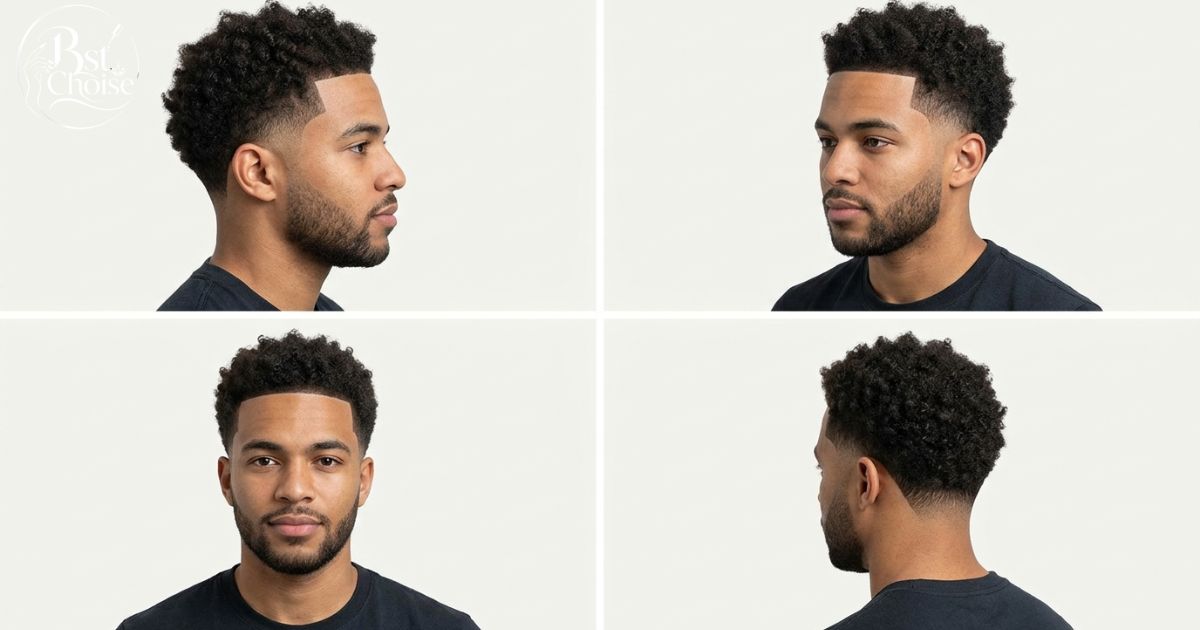

You have seen it all over your feed: a rounded fade that curves around the ear and leaves the back full. That is the burst fade. It looks sharp, but it is easy to get wrong if you walk into the shop with a vague request.
This guide fixes that. You will learn what a burst fade is, which of the 15 styles fits your hair and face, what to tell your barber, and how to keep the curve crisp. No fluff. Just what you need to leave the chair happy.
In this guide:
- What a burst fade is and how it is cut
- Why it is trending in 2026
- Pros and cons
- 15 styles to save for your next visit
- Hair type and face shape picks
- Barber scripts, common mistakes and maintenance
- Burst fade vs drop fade, plus 9 quick FAQs
What Is a Burst Fade?: The Rounded Fade Explained
A burst fade is a haircut where the sides blend from longer hair to very short hair in a rounded curve around the ear. The fade stops near the side of the neck, so the back and nape keep their length. Some barbers also call it a radial fade or a halo taper.
Think of it as a half circle drawn around your ear. Hair is longest at the outer edge of the curve and shortest right next to the ear.
It is a shape for the sides, not a full haircut. That is why you will see the same burst under a mullet, a mohawk, a crop or a head of curls.
How a barber cuts it (simple version):
- Sketch a curved guideline from the temple down behind the ear.
- Clip the lower section short, often with a #0.5 or #1 guard, or a bare skin finish.
- Blend upward through a #1, #2 and #3 so the curve melts into the longer hair.
- Leave the back and nape longer, then clean the neckline.
- Shape the top and add the lineup, if requested.
Quick guard reference:
| Guard | Length | Typical use in a burst fade |
| #0.5 | 1.5 mm | Tightest point by the ear |
| #1 | 3 mm | Soft skin-free finish |
| #2 | 6 mm | Middle of the blend |
| #3 | 10 mm | Outer edge of the curve |
Why the Burst Fade Is So Popular in 2026
The burst fade is popular because it gives a clean, modern edge without a total buzz. It frames the ear, keeps the back full and pairs with the biggest cuts right now: mullets, mohawks, curly tops and textured crops.
Here is what keeps it trending:
- It looks good from the side. Most fades are judged from the front. The burst is judged in profile, which is where phones and mirrors catch it.
- It is a barber showpiece. A smooth curve with no visible lines takes skill, so barbers post it often.
- It works with many textures. Curly, wavy, straight and thick hair can all wear it.
- It is easy to dress up or down. Go low and subtle for work. Go high and bold for weekends.
Burst Fade Pros and Cons: An Honest Look
A burst fade adds shape and contrast, but it needs regular upkeep and a barber who can blend a curve. Weigh both sides before you commit.
Pros
- Sharp, sculpted look that follows the shape of your head
- Keeps length at the back for mullets, flows and longer tops
- Works with curls, waves and straight hair
- Easy to customize: low, mid or high, skin or guard finish
- Looks great in photos and on social media
Cons
- The curve blurs in about two to three weeks
- Needs a barber with real blending skill
- High skin versions may feel too bold for strict dress codes
- Grows out unevenly if you skip cleanups
- Hard to cut yourself, since you cannot see the curve behind your ear
15 Best Burst Fade Styles: The Photo Gallery
Below are 15 burst fade styles, from subtle to bold. Save the photo that matches your pick and bring a side-profile shot to your barber. The curve is the part you are choosing, and side views show it best.
Photo note for publishing: add one original image per style. Use descriptive alt text such as “low burst fade with side part” and compress to WebP.
1. Classic Burst Fade
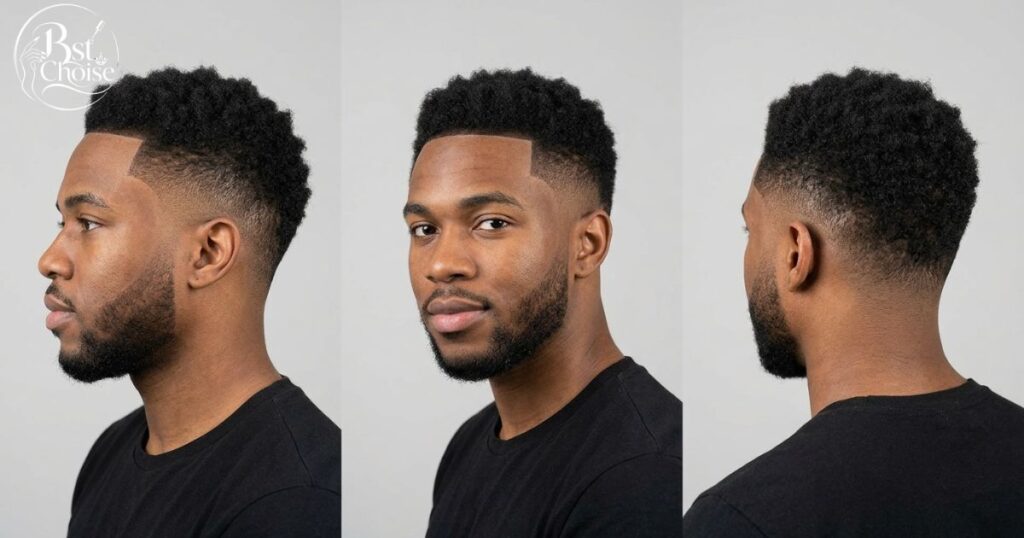
The original look. A rounded fade curves around the ear while the top stays short and lightly textured. It is a safe first pick if you are new to the cut.
Best for: first-timers who want the signature shape without extremes.
2. Low Burst Fade
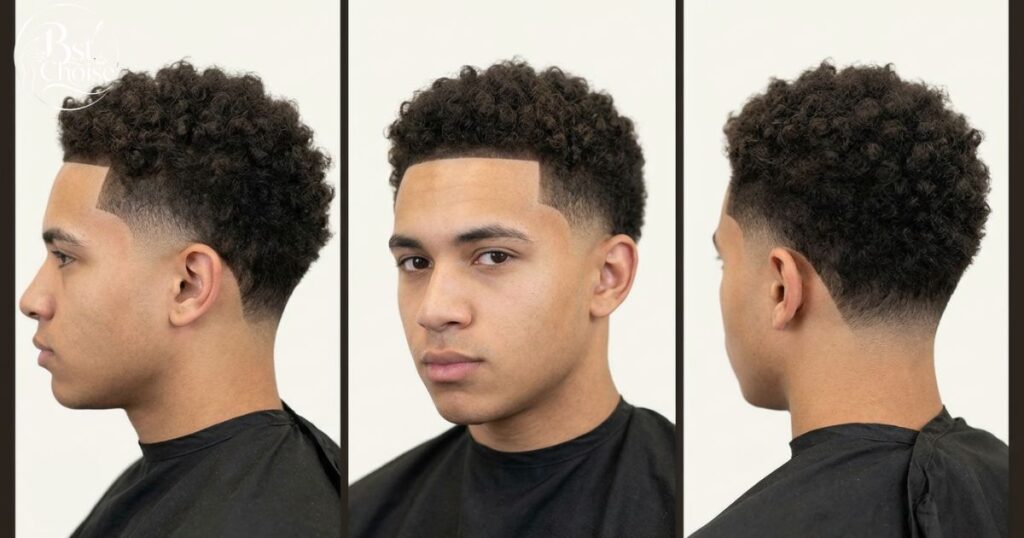
The fade sits low, close to the ear, and leaves most of the side hair alone. You get the curved shape without a big contrast. It is the easiest version to wear at work.
Best for: office settings and anyone testing the style.
3. Mid Burst Fade
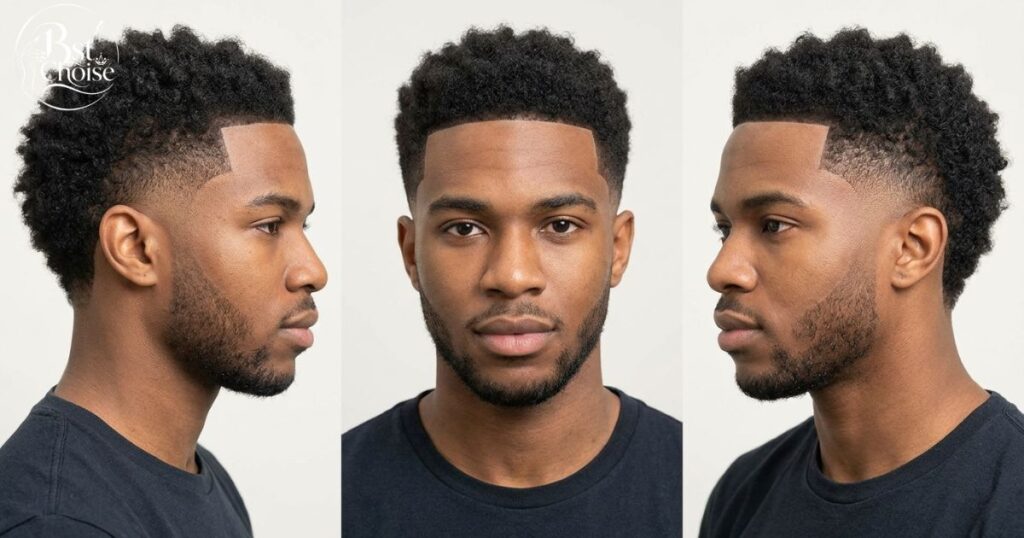
The arc sits around mid-ear height. It is visible enough to read as a burst yet still easy to live with. If you just say “burst fade,” many barbers will default to this.
Best for: most men who want clear contrast without drama.
Read More: Mid Taper Fade Buzz Cut — Styles, Clippers & At-Home Guide (2026)
4. High Burst Fade
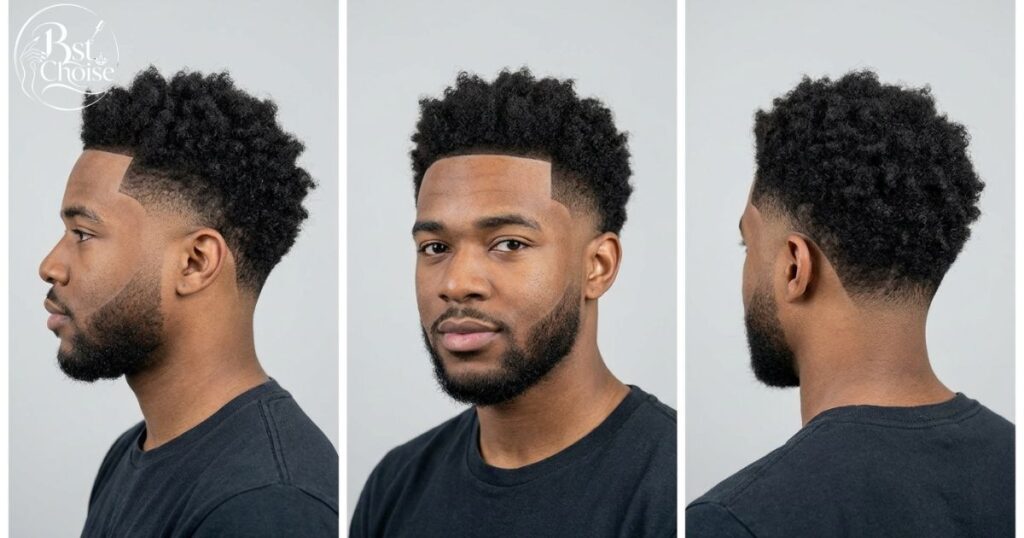
The curve climbs toward the temple and often blends to skin. It frames a longer top with strong contrast. It also needs the most frequent touch-ups.
Best for: thick hair and bold, statement looks.
5. Burst Fade with Curly Top
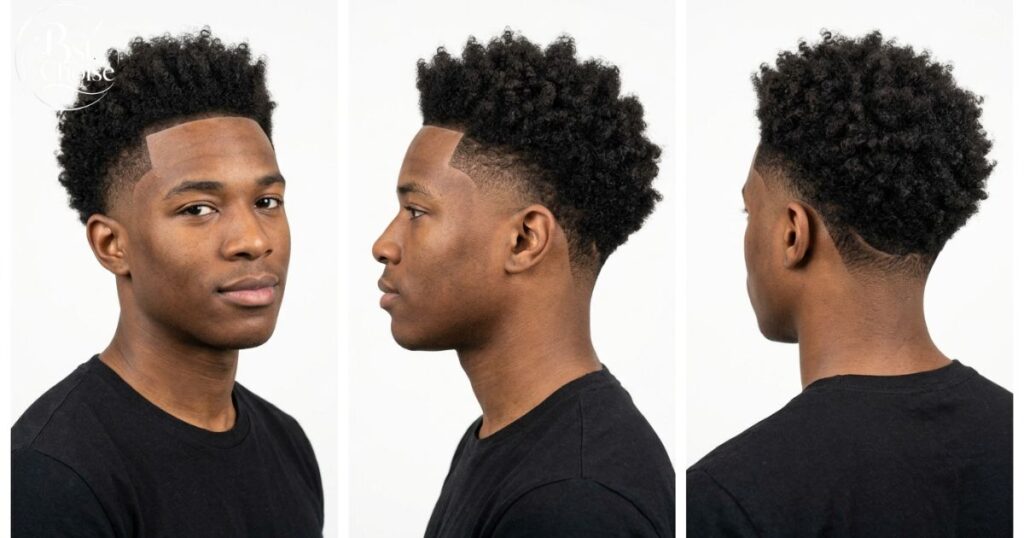
Tight sides and full curls make a natural match. The fade shapes the sides while the curls keep their volume. Use a light curl cream on damp hair to keep definition.
Best for: curly and coily hair.
6. Burst Fade Mohawk
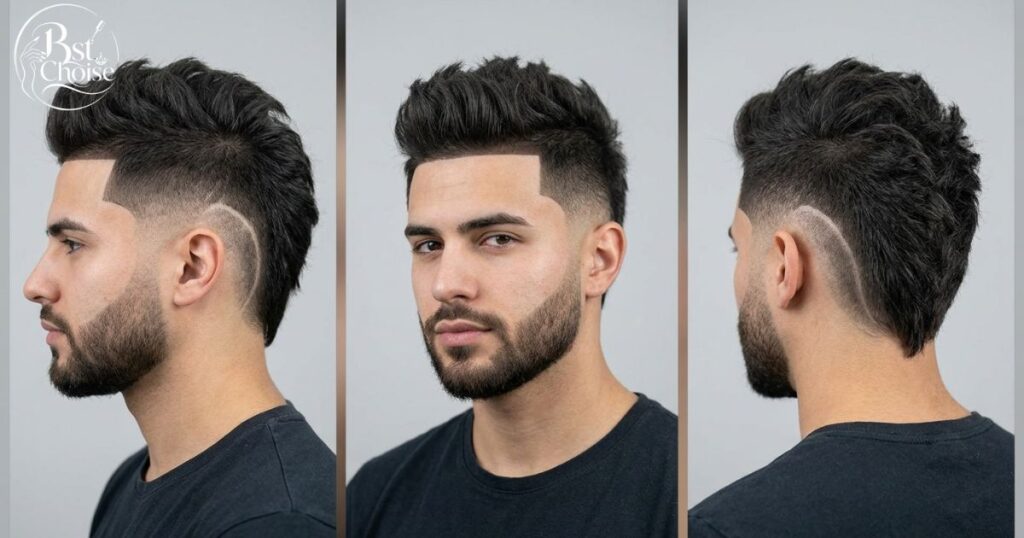
The burst carves out a strip of longer hair running front to back. Decide the width of the strip before cutting. A wider strip feels modern, and a narrow one feels punk.
Best for: men ready to commit to a loud cut.
7. Burst Fade Faux Hawk
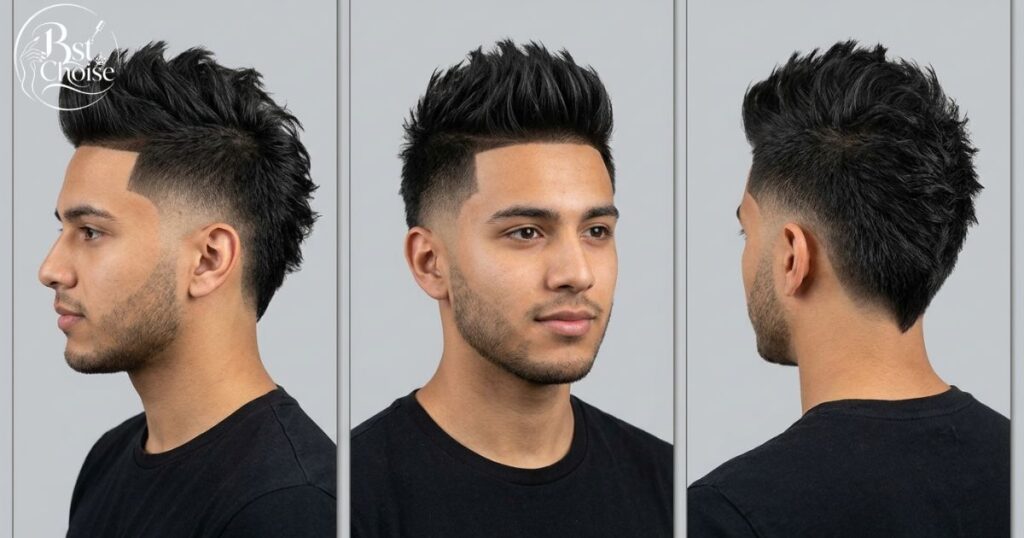
This is the softer cousin of the mohawk. The top is pushed up into a center ridge, and the sides stay clean. You can flatten it for formal days.
Best for: a bold look you can tone down when needed.
8. Textured Burst Fade
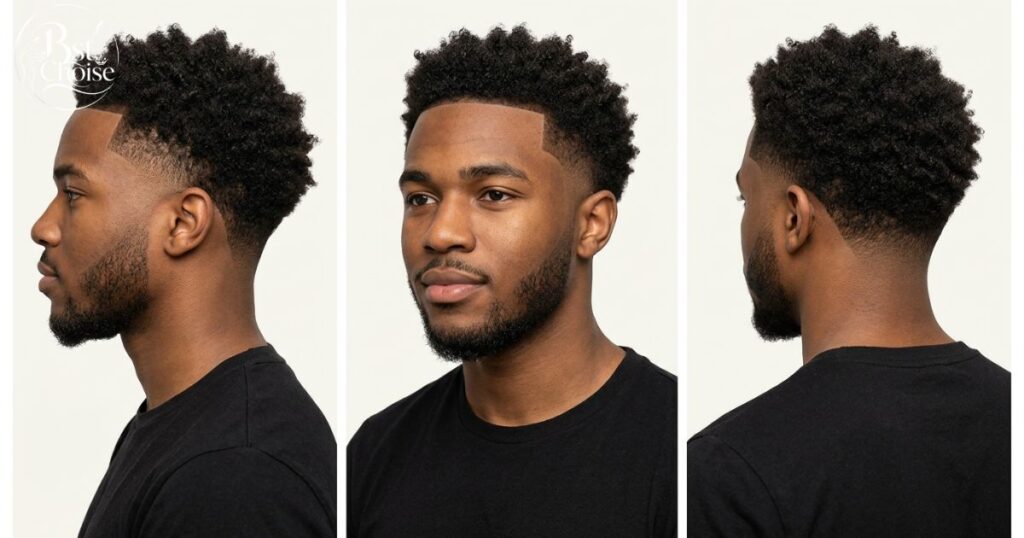
A choppy, point-cut crop sits on top of a clean curved fade. The texture adds movement that straight hair often lacks. A matte clay or paste adds separation without shine.
Best for: straight to wavy hair and quick mornings.
9. Burst Fade with Waves
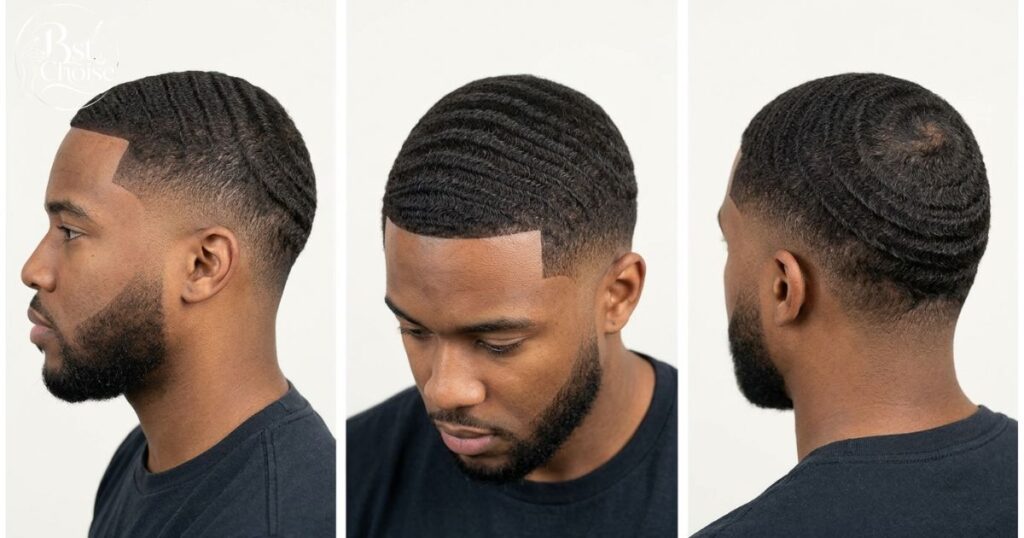
The fade frames your wave pattern and makes it look deeper. This cut rewards a steady brushing routine. Book it when your waves look their best so the barber blends to the true pattern.
Best for: guys already committed to wave training.
10. Subtle Burst Taper
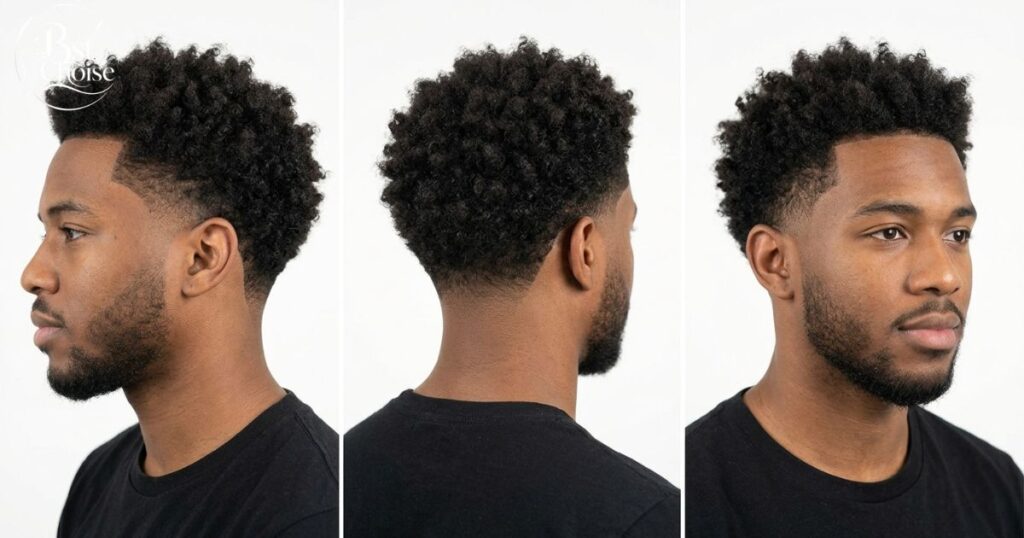
A soft, low burst taper tidies the ear area and keeps the top natural. Most people will simply notice that your hair looks neat. It is the gentlest way to try the shape.
Best for: professional settings and first visits.
11. Burst Fade Mullet
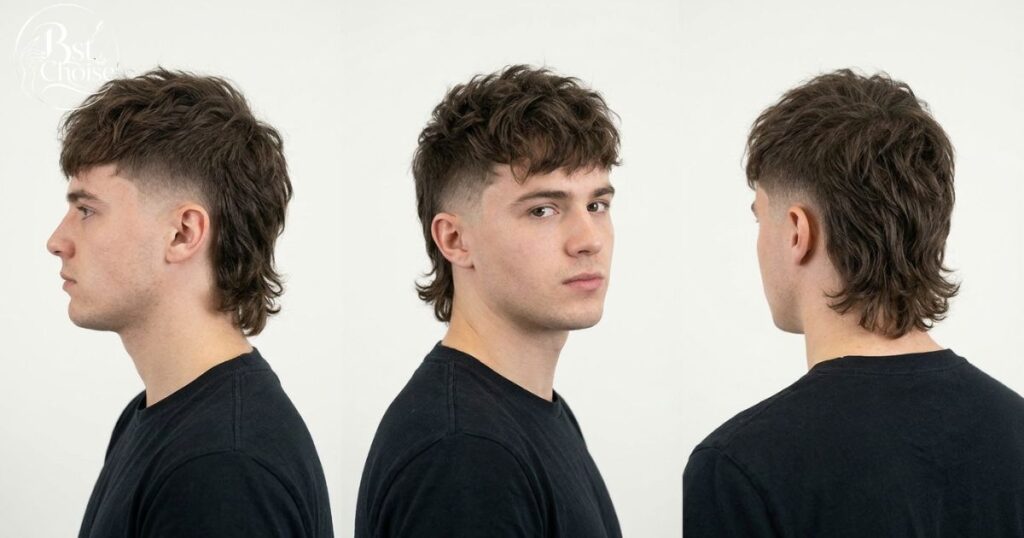
The burst fade gives a modern mullet a clear boundary between short sides and a longer back. Tell your barber the exact back length in inches before any cutting starts.
Best for: the full statement look.
12. Burst Fade with Hair Design
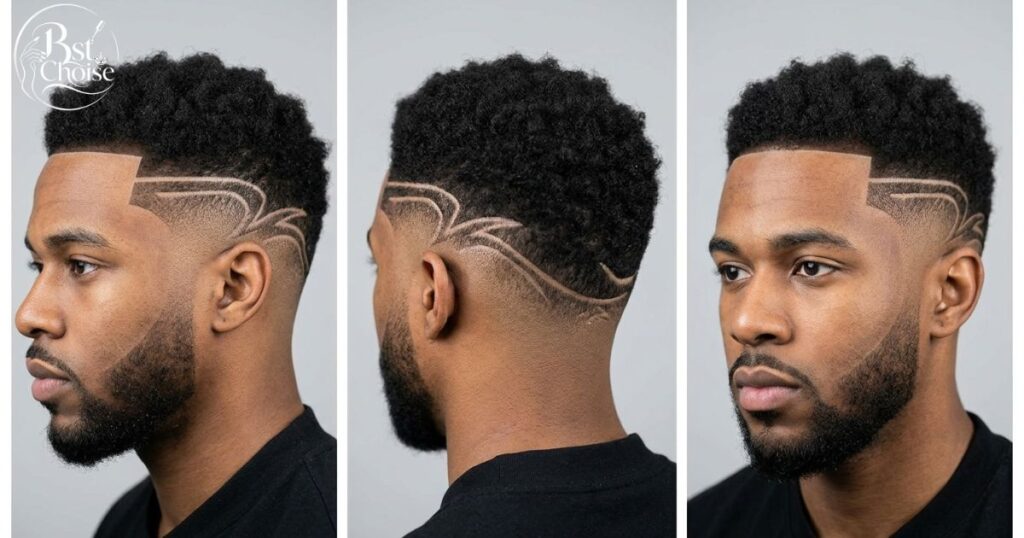
A shaved line or pattern sits inside the faded area. The smooth gradient makes the design stand out. Designs blur within about a week or two, so plan short refresh visits.
Best for: trend-driven cuts and creative looks.
13. Burst Fade with Long Top
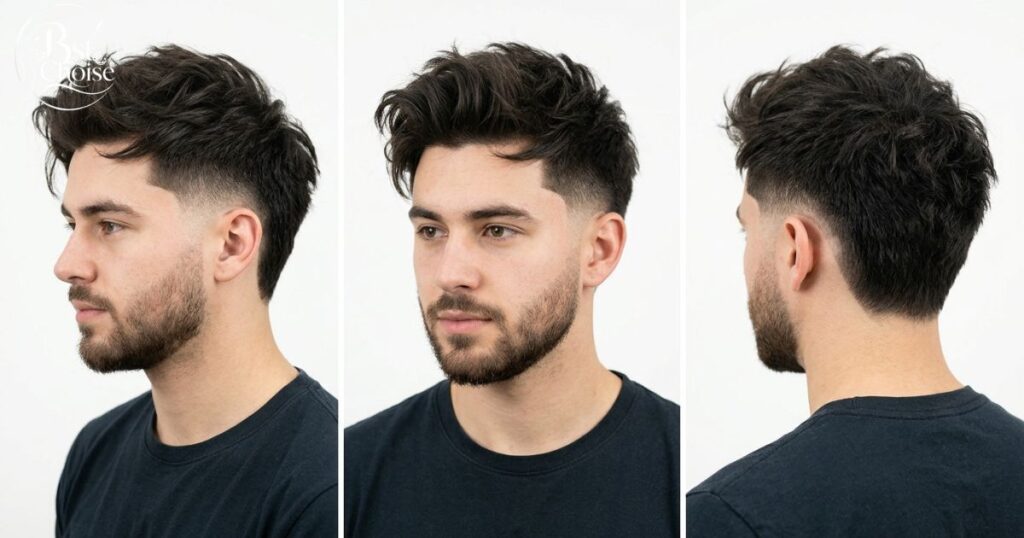
Length on top, discipline on the sides. The burst keeps longer hair looking styled instead of grown out. Slick it back, leave it loose or tie it up.
Best for: men growing out the top who want a clean frame.
14. Burst Fade with Lineup
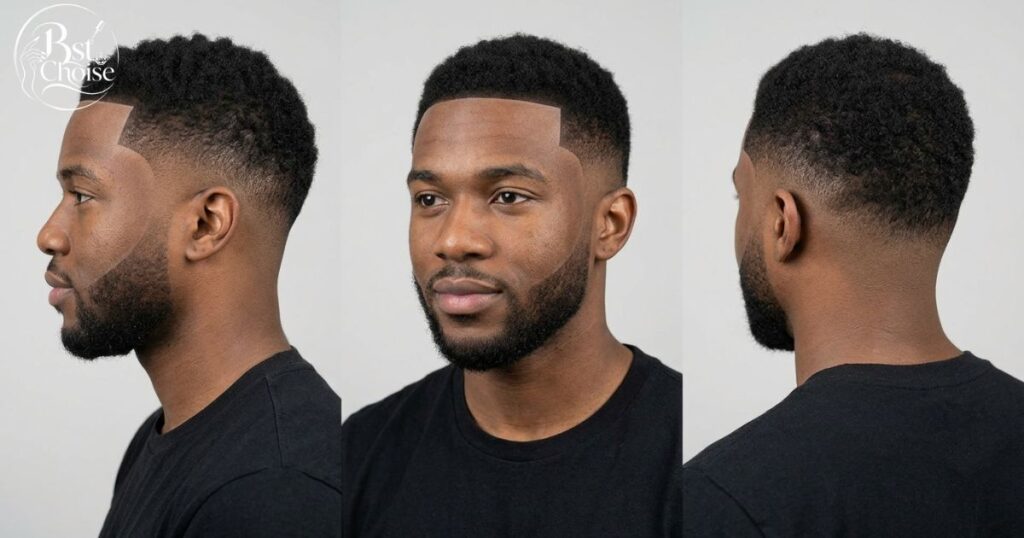
The curve is paired with a crisp lineup along the hairline and temples. It looks sharp from every angle. A detail trimmer helps keep the edges clean between visits.
Best for: a polished, high-definition finish.
15. Messy Burst Fade
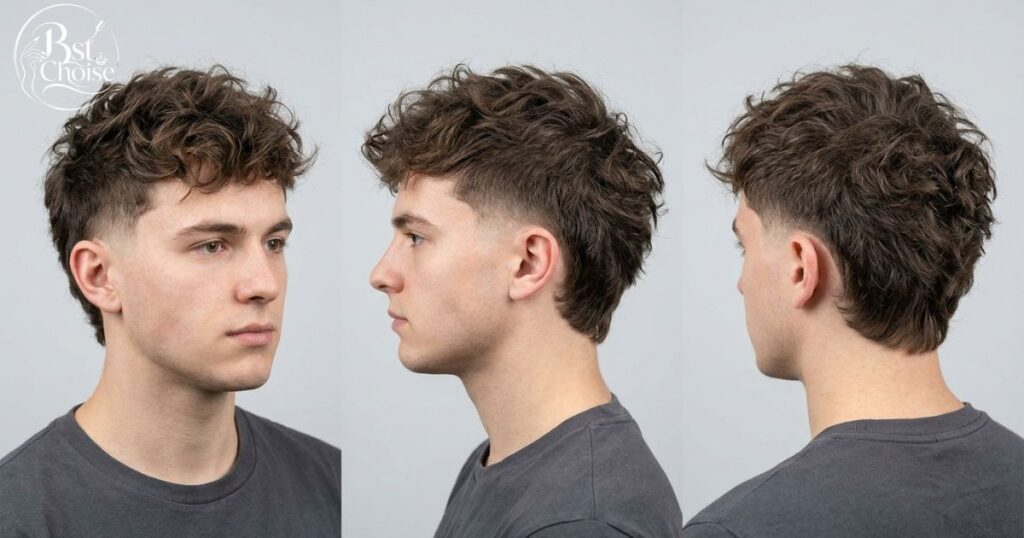
A tousled top over a precise curve. The contrast between loose and tidy is the whole point. Wavy hair does this one almost on its own.
Best for: wavy hair and relaxed daily styling.
Quick comparison of the 15 styles:
| Style | Contrast | Upkeep | Work-friendly |
| Classic | Medium | Medium | Yes |
| Low | Low | Low-medium | Yes |
| Mid | Medium | Medium | Yes |
| High | High | High | Depends |
| Curly top | Medium-high | Medium | Yes |
| Mohawk | High | High | Rarely |
| Faux hawk | Medium-high | Medium | Sometimes |
| Textured | Medium | Medium | Yes |
| Waves | Medium | High | Yes |
| Subtle taper | Low | Low | Yes |
| Mullet | Medium-high | Medium | Sometimes |
| Hair design | High | High | Rarely |
| Long top | Medium | Medium | Yes |
| Lineup | Medium-high | High | Yes |
| Messy | Medium | Medium | Yes |
How to Choose the Right Burst Fade for Your Hair Type: The Texture Guide
Match the burst fade to your texture. Curly hair gets the biggest payoff, straight hair needs texture on top, and fine hair does best with a low or mid curve.
| Hair type | Best placement | Best top | Tip |
| Curly | Mid or high | Defined curls, medium length | Use cream on damp hair |
| Straight | Low or mid | Choppy crop or crew | Ask for point cutting |
| Wavy | Mid | 2 to 3 inches, tousled | Use light cream or clay |
| Thick | Mid or high | Textured, debulked | Ask for thinning at the blend |
| Thin | Low or mid | Moderate length | Choose #1 over skin |
Curly
Curly hair and the burst fade pair well. Ask for a mid or high curve and keep the top long enough for curls to clump. Skip brushing when dry, since it breaks up the pattern.
Straight
Straight hair can wear a burst, but flat tops look unfinished. Ask for texture through point cutting and use matte clay for separation.
Wavy
Wavy hair is the easiest match. The natural bend adds movement, and the curve keeps the sides from puffing out.
Thick
Thick hair shows the strongest contrast. The risk is bulk at the blend line, so ask your barber to thin it out for a smooth transition.
Thin
Thin hair needs restraint. Stick to a low or mid curve, keep some length on top, and avoid a bare-skin finish that can make the top look sparse.
Best Burst Fade by Face Shape: What Suits You
The burst fade flatters most face shapes because the curve adds balance around the ear. Placement is the main variable: go lower for long faces and higher for round ones.
| Face shape | Best placement | Top pairing |
| Oval | Any | Any style |
| Round | Mid to high | Height on top |
| Square | Mid | Textured or wavy top |
| Heart | Low to mid | Fuller top |
| Long | Low | Moderate, controlled top |
| Diamond | Mid | Volume on top, faux hawk |
Oval
Oval faces suit almost every version. Choose by lifestyle and upkeep, not face geometry.
Round
Go mid or high and add height on top. This draws the eye upward and makes the face look longer.
Square
The rounded curve softens a strong jaw. Pair it with a textured top and skip overly harsh lineups.
Heart
Keep some volume at the sides instead of fading everything away. A low or mid curve with a fuller top balances a wider forehead.
Long
Stay low and keep the top short to medium. A tall top and high fade can stretch a long face further.
Diamond
A mid burst with volume on top balances wide cheekbones. A faux hawk is a strong option.
How to Ask Your Barber for a Burst Fade: Scripts That Work
To ask for a burst fade, state the placement (low, mid or high), the shortest guard or skin, and the top length. Say “burst” clearly, because without it many barbers default to a regular taper.
Script 1 – Classic mid burst: “I’d like a mid burst fade. Blend from a #2 down to a #0.5 around the ear, keep the curve rounded, leave the back longer and keep about two inches on top.”
Script 2 – Low and subtle: “Low burst fade, tight around the ear only. Shortest guard a #1, no skin. I want it neat, not dramatic.”
Script 3 – High skin burst: “High burst fade, down to skin by the ear. Take the arc up toward the temple and blend it clean. Leave the top length alone.”
Script 4 – Curly top: “Mid burst fade with my curls kept long on top. Use a #1 at the tightest point, not skin, so it grows out softly.”
Script 5 – Mullet: “Burst fade on the sides with a mullet back. I want about [X] inches at the nape. Please show me the back before you finish.”
Pro tips:
- Bring photos of the front, side and back.
- Point to where the curve should start and end.
- Confirm the nape plan before clippers touch your head.
Common Burst Fade Mistakes to Avoid: 6 Fixes
Most burst fade regrets come from vague requests and skipped upkeep. Here are six common errors and how to fix each one.
- No placement given. Low, mid and high are different cuts. Name one first.
- Going skin when you wanted soft. Skin looks sharp on day one and grows out harshly. Choose a #0.5 or #1 if you stretch visits.
- Ignoring the back. Say whether the nape stays natural, tapered or long.
- Picking the wrong barber. Check their portfolio for real burst fades, not just basic tapers.
- Skipping cleanups. The curve is the first thing to blur. Book a refresh every two to three weeks.
- Leaving the top unstyled. A sharp curve with a shapeless top looks unbalanced. Spend a minute with product.
How to Maintain a Burst Fade: The 2-Week Rule
A burst fade looks its best for about two to three weeks. After that, the curve softens. Book a cleanup every 14 to 21 days to keep the shape crisp.
| When | What to do |
| Daily | Style the top. Sides need no work. |
| Weekly | Check the ear area with a hand mirror. |
| Every 2 to 3 weeks | Get a barber cleanup of the curve and neckline. |
| Between visits | Light edge work with a trimmer, only along the existing line. |
| After 5 weeks | The shape is usually gone. Book a full cut. |
Styling basics:
- Use a light cream for curls and waves.
- Use matte clay or paste for textured and messy tops.
- Apply clay to dry hair for better separation.
- Wash with a gentle shampoo and keep the scalp moisturized, especially after skin fades.
Burst Fade vs Drop Fade: The Real Difference
A burst fade curves around the ear and stops, keeping the back longer. A drop fade arcs down behind the ear and keeps going across the back. Pick the burst for back length, and the drop for an all-around fade.
| Feature | Burst fade | Drop fade |
| Shape | Rounded curve around the ear | Line dips down behind the ear |
| Back | Stays long and full | Fades across the nape |
| Best for | Mullets, mohawks, curly tops | Even, short cuts |
| Upkeep | Every 2 to 3 weeks | Slightly more forgiving |
The Shape
The burst is a compact semicircle. The drop follows the curve of the skull downward.
The Back
The burst leaves the nape longer. The drop blends the back short.
Best For
Choose a burst for length at the back or a statement top. Choose a drop for a continuous fade.
Upkeep
Both need regular visits. The burst loses its focal curve faster, so plan on cleanups sooner.
Frequently Asked Questions About the Burst Fade
What is a burst fade?
A burst fade is a haircut where the sides fade in a rounded curve around the ear, leaving the back and nape longer. It pairs well with mohawks, mullets and curly tops.
How long does a burst fade last?
A burst fade stays sharp for about two to three weeks. After that, the curve softens and a cleanup is needed.
What guard numbers are used for a burst fade?
Barbers typically blend from a #3 or #2 at the outer edge down through a #1 to a #0.5 or skin near the ear. The shortest guard sets the level of contrast.
Does a burst fade work on straight hair?
Yes. Add texture on top with point cutting and matte clay so the cut does not look flat.
What is the difference between a burst fade and a taper fade?
A burst fade curves around the ear and leaves the back longer. A taper fade follows a straighter, subtler line with less contrast.
Can I cut a burst fade at home?
You can tidy edges at home, but a full burst fade is hard to cut yourself because you cannot see the curve behind your ear. Leave the shaping to a barber.
How much does a burst fade cost?
Prices vary by city and shop. Many shops in the US charge roughly $25 to $60, with designs or extras costing more. Check your local barber for exact rates.
Is a burst fade appropriate for a job interview?
A low or subtle burst fade looks neat and professional. Keep the contrast soft and skip designs for interviews.
Will a burst fade suit a round face?
Yes. A mid or high burst with some height on top lengthens a round face. Avoid a low, wide curve with a flat top.
Conclusion: Pick Your Burst and Book It
The burst fade gives you contrast, shape and room to personalize. The best result comes from clear details: placement, shortest guard, top length and back plan. Add a steady two-to-three-week cleanup routine and the curve stays sharp.
Save your favorite style from the gallery, bring a side-profile photo and use one of the scripts above. Then tell your barber how short you want the tightest point, and enjoy the cut.
Editorial note: Haircut results vary with hair density, growth patterns and barber skill. A licensed barber can adjust any style to suit your head shape and scalp.

