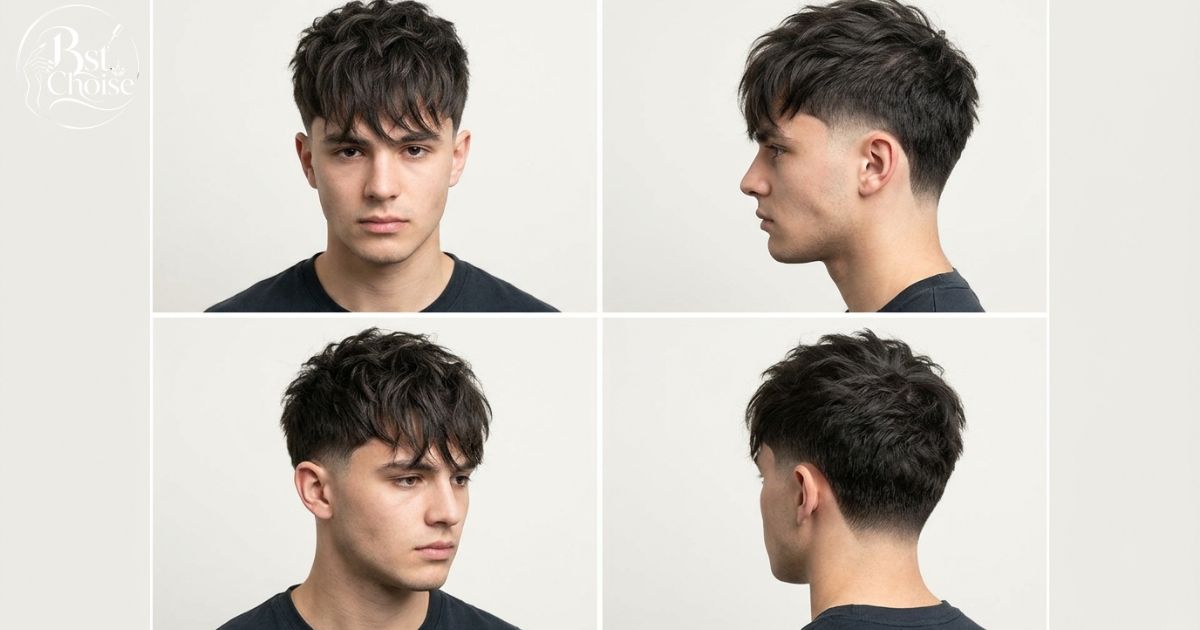

A mid taper fade fringe keeps the sides short and clean while the hair on top falls forward over your forehead. The taper starts around the temples, so it looks sharp without feeling harsh. It works on straight, wavy and curly hair, and the right fringe length makes it suit almost any face shape.
This guide covers six styles, the exact lengths to ask for, common mistakes, styling steps and the words that get a barber to cut what you actually want.
Quick answer: Ask for a mid taper on the sides, a guard 2 or 3 blending up, and 2–4 inches on top, point-cut so the fringe looks soft instead of blunt.
What Is a Mid Taper Fade Fringe Haircut?
A mid taper fade fringe is a short-back-and-sides cut with a forward-falling top. The sides and back get shorter gradually, starting near the temple and ending at the hairline. The top stays long enough to sit over the forehead.
Three parts make up the cut:
- The taper: a gradual blend from longer hair to short hair on the sides and back.
- The transition zone: the area around the temple and ear, where the blend begins.
- The fringe: the front section of hair, usually 2–4 inches, styled forward, to the side or in pieces.
The contrast is the point. Neat sides give the cut structure, and the fringe adds personality. That is why barbers and stylists often describe it as a textured fringe with a taper.
What’s the Difference Between a Mid Fade and a Mid Taper?
A mid fade blends down to bare skin, which creates strong contrast. A mid taper blends down to a short length of hair, which creates a softer, more natural finish. Both start at roughly the same height, around the temple.
| Feature | Mid Fade | Mid Taper |
| Blends down to | Skin (often a zero or foil shave) | Short hair (around guard 1–2) |
| Look | Sharp, high contrast | Soft, subtle |
| Maintenance | Looks grown-out in 2 weeks | Holds shape a little longer |
| Best with | Pompadours, quiffs, slick backs | Fringes, curtains, textured tops |
| Workplace friendly | Moderate | High |
For fringe styles, most barbers lean toward the taper. A hard skin fade can look cold next to a soft, forward-falling top. If you love the skin look, ask for a mid skin fade and tell your barber you want the fringe left long and textured to balance it.
Why Mid Taper Fade Fringe Is So Popular in 2026
The style solves a problem many men have: wanting length on top without looking untidy. Here is why it keeps showing up in barbershops:
- It suits most hair types. Straight hair gives a sleek fringe. Wavy and curly hair adds natural texture.
- It sits in the middle. A high fade can feel bold and a low taper can feel too quiet. The mid position balances both.
- It works almost anywhere. School, the office, a night out and the gym all suit it.
- It is easy to adjust. You can change the fringe length, parting and texture without redoing the sides.
- It grows out gracefully. The taper softens as it grows, so you are not stuck with an obvious line.
Style sites often point to the Beatles’ mop-top as an early ancestor of today’s textured fringe, and Timothée Chalamet is the celebrity most often named as the modern face of it.
6 Mid Taper Fade Fringe Styles to Try
Use this table to shortlist a style, then read the details below.
| Style | Best Face Shapes | Best Hair Types | Effort |
| Short fringe | Oval, round | Fine to medium | Low |
| Curtain fringe | Oval, long | Medium to thick, straight | Medium |
| Side-swept fringe | Square, oval, heart | Straight to wavy | Medium |
| Choppy fringe | Round, oval | Medium to thick | Low–medium |
| Blowout fringe | Oval, long | Medium to thick | High |
| Wavy fringe | Any | Wavy | Low |
1. Short Fringe with Mid Taper Fade
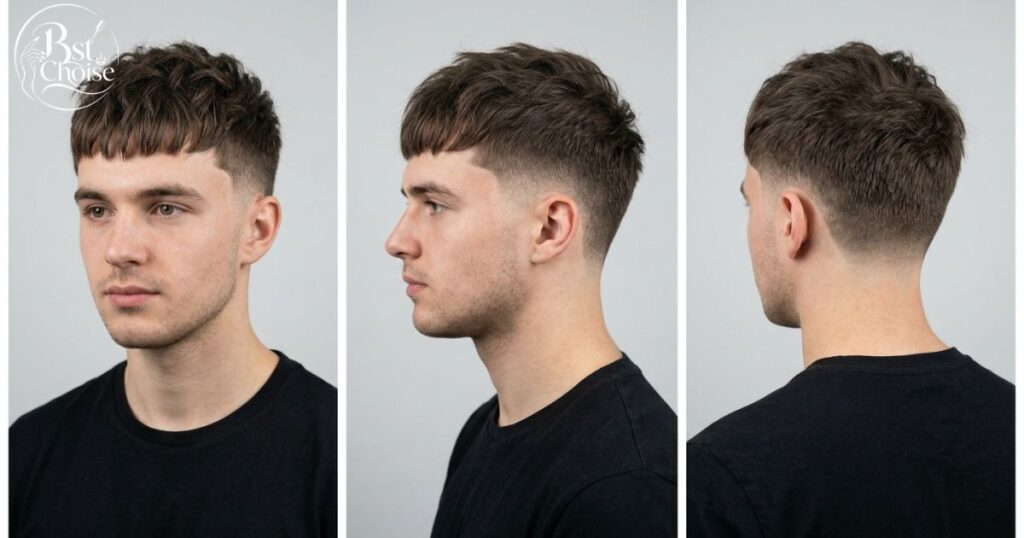
This version sits just above the eyebrows, around 1.5–2.5 inches. It is the easiest to live with, because there is less hair to style. It is a safe first step if you have never worn a fringe.
Best for: oval or round faces, fine to medium hair.
2. Curtain Fringe with Mid Taper Fade
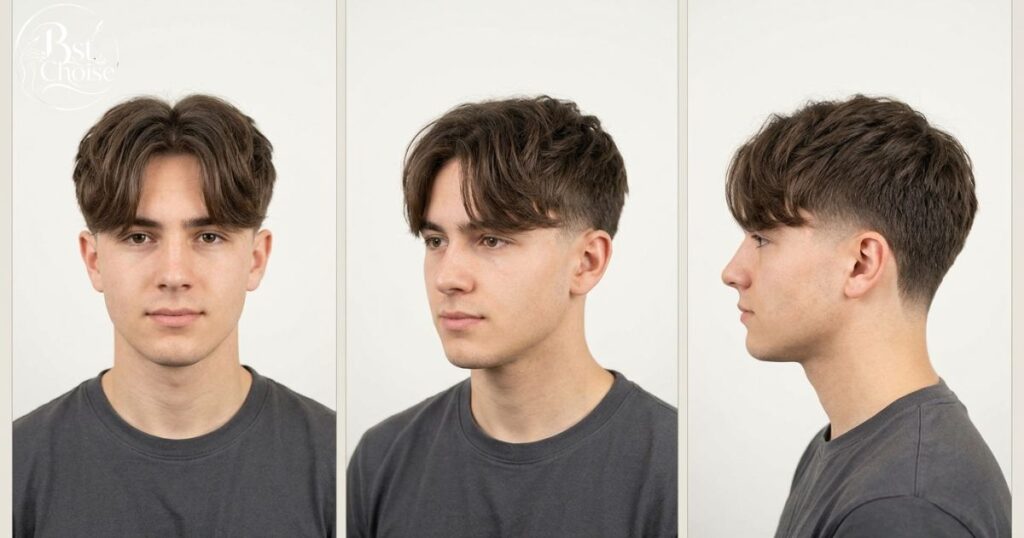
The hair parts down the middle and falls to both sides, framing the face like curtains. It needs about 3–4 inches and works best on straight or slightly wavy hair. The taper keeps the sides from getting bulky.
Best for: oval or long faces, medium to thick hair.
Read More: Burst Fade: 15 Styles, Tips & Photos (2026)
3. Side-Swept Fringe with Mid Taper Fade
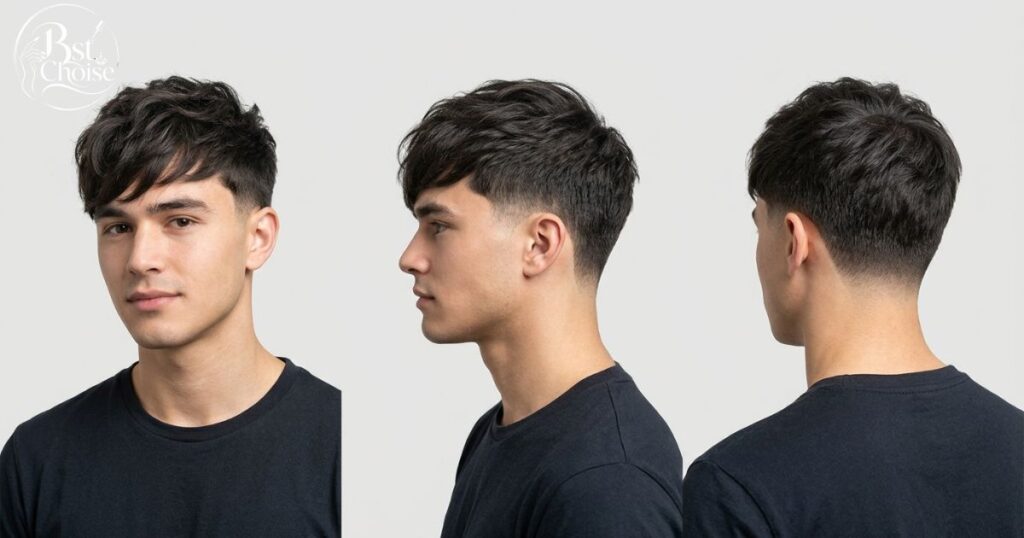
Here the fringe is combed across to one side. The angle adds structure and draws the eye off the center of the forehead. It is a polished choice for work.
Best for: square, oval or heart-shaped faces, straight to wavy hair.
Tip: Work a light pomade through damp hair and comb it into place before it dries. The hair learns the direction and holds it longer.
4. Choppy Fringe with Mid Taper Fade
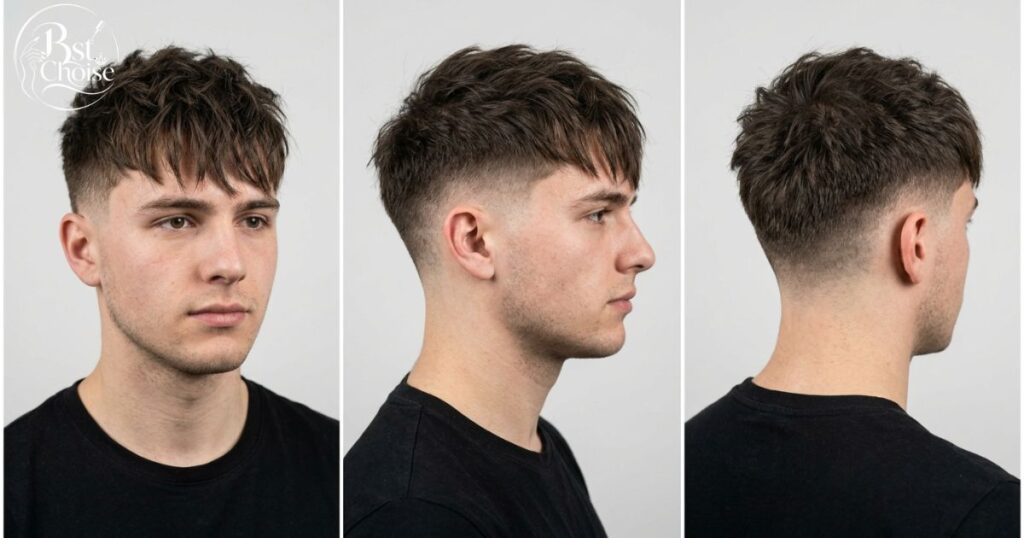
The ends are cut at uneven lengths with point cutting or a razor, which makes a lived-in, broken-up edge. It looks relaxed and a little edgy. A matte paste brings out the separation.
Best for: round or oval faces, medium to thick hair.
5. Fringe with Mid Taper Fade Blowout
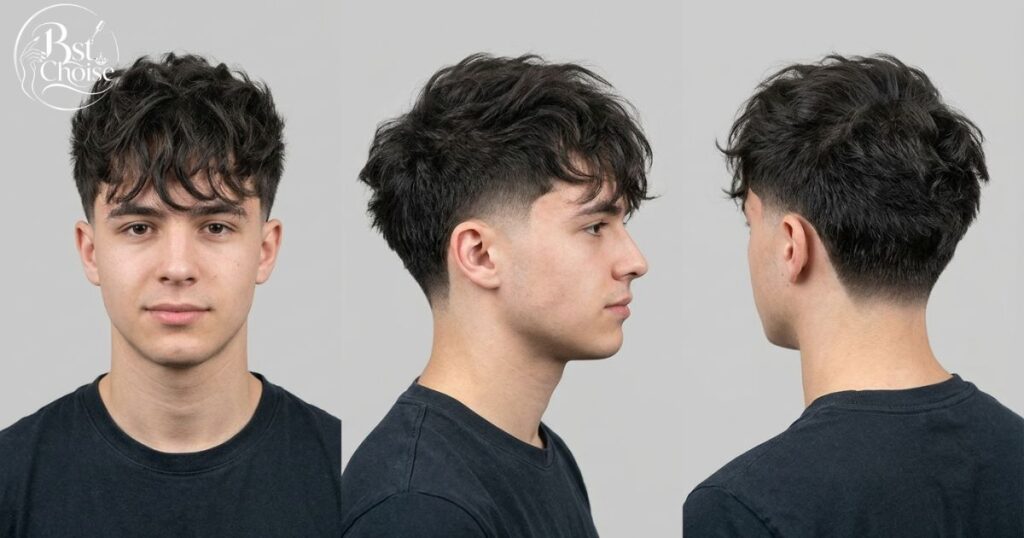
A blowout lifts the hair at the roots and pushes it forward, which builds volume. The tapered sides stay tight, so the top looks bigger by contrast. It takes a few extra minutes each morning, but the result is full and fresh.
Best for: oval or long faces, medium to thick hair. Very fine hair may need a texture powder or sea salt spray for hold.
6. Wavy Fringe with Mid Taper Fade
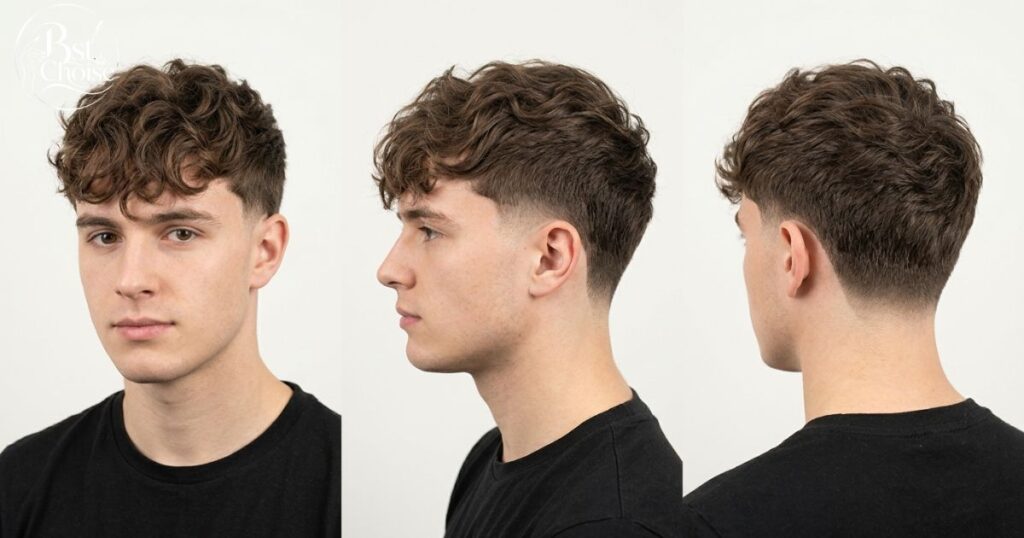
Natural waves give the fringe movement without much effort. The taper controls the volume at the sides, so waves do not puff out. Let the hair air-dry, then add a little cream or salt spray.
Best for: any face shape, wavy hair.
Common Mid Taper Fade Fringe Mistakes to Avoid
Most bad results come from small errors. Each one below is easy to prevent.
1. Cutting the Fringe Too Short
This is the number one regret. Hair only grows about half an inch a month, so a fringe cut too short takes months to recover. Show your barber the length with your fingers or point to your eyebrow.
2. Letting the Barber Guard-Cut the Fringe
Clippers with a guard leave a flat, blunt edge. Ask for scissor cutting or point cutting on top so the ends look soft and natural.
3. Skipping Heat Protection When Blow-Drying
High heat dries out hair and flattens the fringe. Use a heat protectant spray, then dry on medium or cool settings.
4. Choosing a Full Mid Fade Instead of a Mid Taper
A skin fade can look too stark with a soft fringe. If you want the softer look, say “taper” and not “fade” so your barber does not drop to skin.
5. Waiting Too Long Between Fringe Trims
The fringe changes shape faster than the sides. When it starts poking into your eyes, it has already lost its shape. Book a quick front trim every two to three weeks.
6. Using Heavy Wax on Textured Fringes
Thick wax clumps hair and leaves it greasy. Choose a matte clay, paste or cream so the pieces stay separate.
How to Style a Mid Taper Fade Fringe
Daily Styling Routine
- Start with damp hair. Towel-dry until it stops dripping.
- Add prep product. Use sea salt spray for texture, or a little leave-in cream for dry hair.
- Blow-dry forward. Use your fingers and medium heat. Point the airflow down the hair shaft to cut frizz.
- Apply a pea-sized amount of product. Rub it between your palms and work it through from back to front.
- Shape the fringe. Push it forward, sweep it sideways or pull out a few pieces with your fingertips.
- Finish with a light mist of spray if you need extra hold.
This takes about five minutes once you have practiced it.
Products That Work Best
| Product | Best For | Finish |
| Matte clay | Medium to thick hair, textured looks | Dry, strong hold |
| Matte paste | Choppy and wavy fringes | Flexible, natural |
| Light pomade or cream | Sleek, side-swept styles | Soft shine, controlled |
| Sea salt spray | Fine hair, added grit | Beachy texture |
| Texture powder | Extra lift at the roots | Matte volume |
| Heat protectant | Anyone using a dryer | Protects the hair |
Skip heavy gels and thick waxes for textured styles. They weigh the fringe down.
How Often Should You Trim the Fringe?
Trim the fringe every two to three weeks, and refresh the taper every three to four weeks. The fade starts to look fuzzy around the ears and neck after about two weeks, but a quick clean-up keeps it neat. Many barbers charge less for a short fringe-and-neckline visit than for a full cut.
Which Face Shape Suits a Tapered Fringe?
The goal is to balance your proportions. Angles soften round faces, softness balances strong jaws and extra width helps long faces.
| Face Shape | Best Fringe | Avoid |
| Oval | Almost anything | Nothing in particular |
| Round | Side-swept, choppy | Blunt, straight-across |
| Square | Soft, textured | Sharp, blunt lines |
| Long | Straight, forward, curtain | Swept-back height |
| Heart | Side-swept, slightly longer | Very short, blunt |
Oval Face
Oval faces are balanced, so nearly every fringe works. A curtain fringe or side-swept fringe shows off the shape well.
Round Face
Choose angles. A side-swept or choppy fringe breaks up the roundness. A heavy, straight-across fringe can make the face look wider.
Square Face
Soft, textured ends balance a strong jaw. Keep the fringe slightly broken up instead of razor straight.
Long Face
A forward-falling fringe covers part of the forehead and adds visual width. Avoid brushing everything up and back, since that adds height.
Heart-Shaped Face
A side-swept fringe that is a little longer works best. It softens a wider forehead and balances a narrower chin.
Best Mid Taper Fade Fringe Styles by Age Group
Teenagers
Teens usually want low-effort styles. A short fringe or a wavy fringe works well because it needs little product. Keep the taper soft if school rules apply.
Young Men
This is the time to experiment. Try a choppy fringe, a curtain fringe or a blowout. You can go longer on top and play with texture.
Professional Men
Office settings favor tidy lines. A side-swept fringe with a clean mid taper looks polished and still modern. Keep the length above the eyebrows and use a light product.
Does a Tapered Fringe Make You Look Younger or Older?
A neat fringe usually reads younger, because it softens the forehead and can distract from a receding hairline. The effect depends on length and upkeep. A fringe that is too long or messy can look unkempt, which ages you. A short, tidy one that is trimmed regularly looks fresh. If your hair is thinning at the front, keep the fringe textured and slightly shorter, since heavy, flat hair can highlight the gaps.
How to Ask Your Barber for a Mid Taper Fade Fringe
A clear request saves you from disappointment. Barbers cut what you describe, so use specific words and, ideally, a photo.
Key Phrases to Use With Your Barber
- “I’d like a mid taper, not a skin fade.”
- “Keep 2–3 inches on top for a fringe, and point-cut the ends.”
- “Start the taper at the temple and keep the neckline natural.”
- “I’ll style it forward (or side-swept) with matte clay.”
- “Please don’t go shorter than my eyebrows at the front.”
Choosing the Right Length and Guard Number
| Guard | Length | Typical Use |
| 0 / skin | 0 mm | Mid fade bottom only |
| 1 | 3 mm | Bottom of the taper |
| 2 | 6 mm | Lower mid section |
| 3 | 10 mm | Upper part of the taper |
| 4 | 13 mm | Longer, softer sides |
A common recipe is a guard 1 at the bottom, blending up through a 2 and 3 toward the temple, with the fringe left uncut by clippers. Guard sizes vary slightly by brand, so ask your barber to check against your preferred look.
Common Barber Mistakes to Mention
- Too short at the front. Say your preferred length before the first cut.
- A hard line at the taper. Ask for a gradual blend and a check in the mirror.
- A blunt fringe. Request point cutting or texturizing.
- An over-cleaned neckline. If you grow out your cut between visits, ask for a natural neckline.
Frequently Asked Questions
What is a mid taper fade fringe haircut?
It is a haircut with tapered sides that begin near the temple and a longer top styled forward as a fringe.
What’s the difference between a mid fade and a mid taper?
A mid fade blends to bare skin for sharper contrast. A mid taper blends to short hair for a softer look.
What length should the fringe be with a mid taper?
Most men do well with 2–4 inches. Keep it around the eyebrow line and ask for point cutting.
Is a mid fade or a mid taper better for a fringe?
A mid taper usually looks better, since its softer blend matches the soft fringe on top.
How often should I trim a mid taper fade fringe?
Trim the fringe every two to three weeks, and refresh the taper every three to four weeks.
What guard number should I ask for?
Usually a 1 at the bottom, blending through a 2 or 3 near the temple. Your barber can fine-tune it.
Does a tapered fringe make you look younger?
A neat, regularly trimmed fringe often looks younger. An overgrown one can look untidy.
What is a blowout mid taper fade?
It is a mid taper with a voluminous, blow-dried top. The tight sides make the volume stand out.
Which face shape suits a tapered fringe best?
Oval faces suit nearly every style. Round and square faces do well with side-swept or textured fringes, and long faces suit forward-falling fringes.
What products should I use for a textured fringe?
Use matte clay or paste for grip, and sea salt spray for texture. Avoid heavy wax.
Can curly hair wear a mid taper fade fringe?
Yes. Curls give natural texture, and the taper controls volume at the sides. Ask your barber to cut curls dry.
Conclusion
The mid taper fade fringe works because it gives you structure on the sides and personality on top. The taper keeps things neat, and the fringe lets you choose how casual or sharp you want to look.
Pick the style that fits your face and routine, then ask for it clearly: mid taper, 2–4 inches on top, point-cut ends. Trim the fringe every few weeks, use a light matte product and avoid the common mistakes above. Bring a photo to your next appointment, and you are much more likely to leave happy.

