
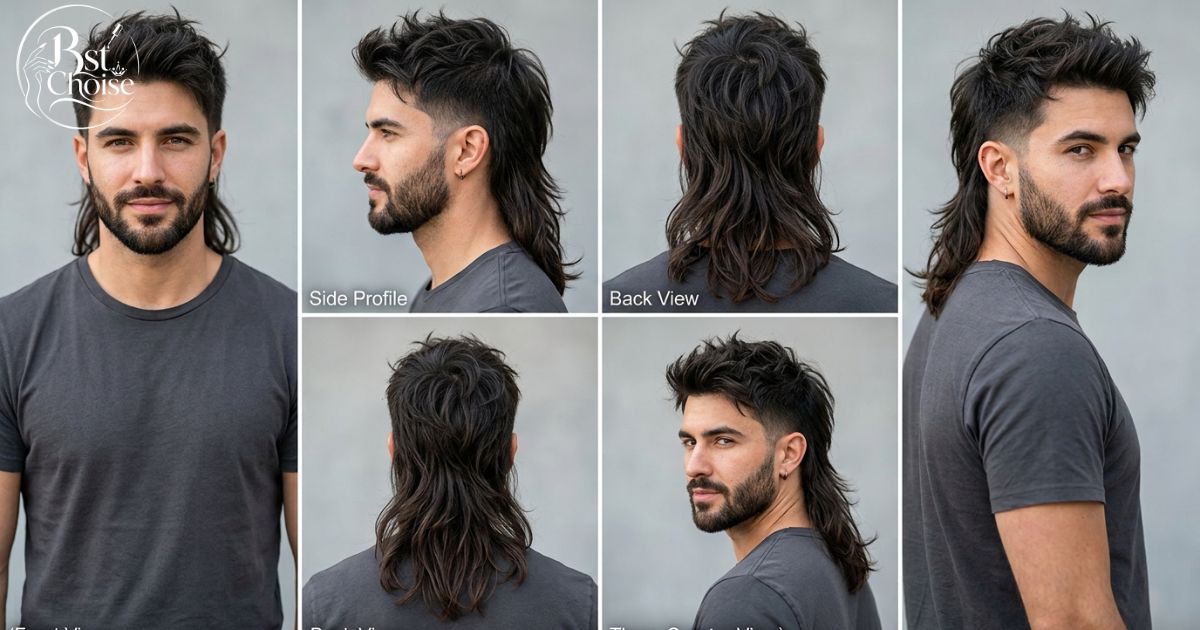

The mullet is no longer the one-note style people remember from decades past. In 2026, barbers are reshaping it with tapers, burst fades, curls, layers, and textured finishes that make it far easier to wear day to day. Some versions stay subtle enough for the office, while others are built to turn heads.
This guide walks through 55+ modern mullet variations for men, plus practical advice on choosing a version that fits your face shape, hair type, and lifestyle, so you can walk into the barbershop knowing exactly what to ask for.
Who Should Choose a Mullet Hairstyle?
A mullet suits men who want more character in their haircut than a plain fade or crop offers. It rewards anyone who likes keeping some length at the back while staying tidy up front.
You don’t need a specific hair type or age to pull one off. What matters more is choosing proportions that flatter your features and working with, not against, how your hair naturally grows.
Consider a mullet if you:
- Want a haircut with personality and a bit of edge
- Like the idea of textured or layered styling
- Are comfortable keeping the back noticeably longer than the sides
- Enjoy switching your look from laid-back to bold
- Have waves or curls you’d like to show off
- Don’t mind regular barber visits to keep a fade or taper sharp
If you’re on the fence, ease in with a shorter or tapered version first. Trimming more off later is simple; growing it back is not.
Why the Mullet Is Trending in 2026
Today’s mullet barely resembles the exaggerated cut from the past. Barbers now pair it with skin fades, curly textures, cropped fringes, and soft layering, which means the silhouette can be adjusted to suit almost anyone.
Customization is a big part of the appeal. Straight-haired guys can go sharp and textured, while curly-haired guys can lean into natural volume for a completely different shape from the same basic concept.
Perhaps the biggest shift is that a mullet no longer has to be loud. A well-proportioned, understated version can look current without dominating your entire appearance.
What Makes a Mullet Work for You
Beyond personal taste, a mullet needs the right foundation to look intentional rather than accidental.
- Hair density thick enough to support visible back length
- A barber willing to shape rather than simply “leave it long”
- A realistic maintenance schedule you’ll actually stick to
- A length at the back that matches your comfort level, not just a photo
1. Classic Mullet With Natural Length
This is the foundation every other version builds on, controlled sides and top with a back section that’s allowed to run longer, no dramatic fade required. It reads as a mullet at a glance without needing extra styling tricks.
Best For: Anyone wanting a recognizable mullet without going extreme. Face Shapes: Oval, square, diamond. Hair Types: Straight, wavy, thick. Maintenance: Every 5–7 weeks. Styling: A light cream or texturizing paste. Barber Tip: Ask for enough separation between sides and back so the shape reads clearly. Common Mistake: Trimming the back too short, which erases the whole point of the cut.
Pros
- Simple to maintain day to day
- Flatters natural hair texture
- Doesn’t rely on a sharp fade
Cons
- Needs periodic reshaping
- Can look shapeless once it grows out

2. Burst Fade Mullet With a Clean Arc
The fade curves tightly around the ear before opening into the longer back, giving this version a rounded, deliberate transition instead of a flat line.
Best For: Men who want sharp contrast near the ears paired with real length behind. Face Shapes: Oval, round, square. Hair Types: Straight, wavy, curly. Maintenance: Every 2–4 weeks. Styling: Matte clay or a curl-defining cream. Barber Tip: Specify how much length to preserve before the fade starts curving. Common Mistake: Letting the burst climb too high, which cuts the back off visually from the rest of the style.
Pros
- Bold, barbershop-fresh look
- Adapts well to different textures
- Strong contrast without full disconnection
Cons
- Needs frequent upkeep
- Regrowth shows fast around the arc

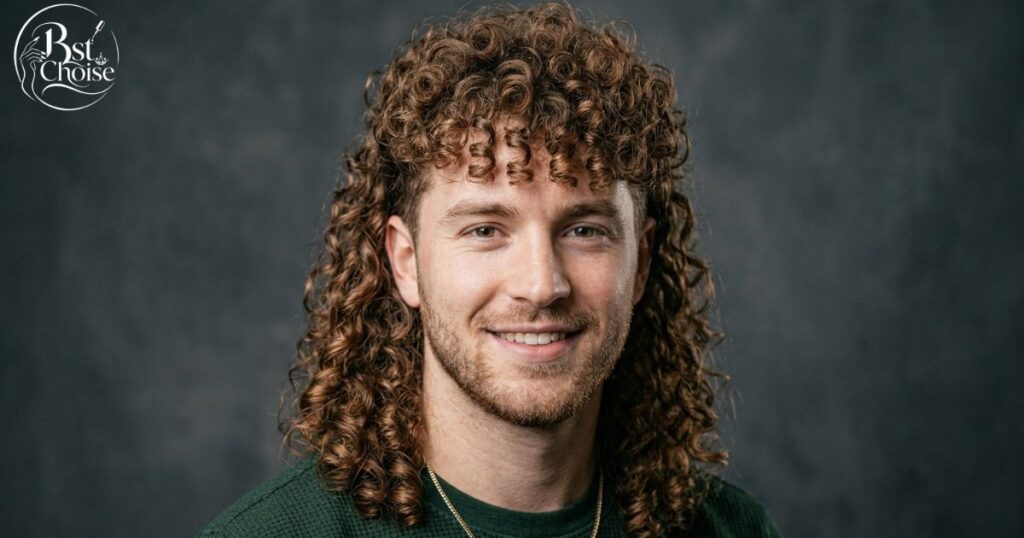
3. Curly Mullet With Defined Back Length
Curls give this version a completely different personality, natural volume and bounce replace the flat, blunt lines of a straight-haired mullet.
Best For: Guys who want their curl pattern to be the main feature. Face Shapes: Oval, diamond, square. Hair Types: Curly, coily. Maintenance: Every 4–6 weeks. Styling: Curl-defining cream or gel. Barber Tip: Cut with shrinkage in mind, curls sit shorter once dry. Common Mistake: Trimming the back based on wet length, leaving it too short after it dries.
Pros
- Showcases natural texture beautifully
- Adds real volume without extra product
- Stands out from straight-hair versions
Cons
- Curl pattern needs consistent care
- Humidity can shift the shape
Read More: 20 Distinct Textured Crop Haircuts For Men That Look Modern
4. Buzzed Sides With a Mullet Back
Here the sides go almost to skin while the back holds on to real length, a hybrid between a buzz cut and a full mullet.
Best For: Men who want near-zero side maintenance with a statement back. Face Shapes: Oval, square, diamond. Hair Types: Straight, thick, wavy. Maintenance: Every 2–3 weeks. Styling: Minimal; a touch of matte paste at most. Barber Tip: Keep enough crown length for a smooth transition into the back. Common Mistake: Buzzing too far up the head, which breaks the balance with the crown.
Pros
- Sides need almost no daily effort
- Dramatic, unmistakable contrast
- Distinct from softer mullet styles
Cons
- Buzzed section needs regular touch-ups
- Reads as bold, not workplace-conservative

5. Modern Mullet With Layered Movement
Instead of a hard split between short and long, layering blends the two zones so the cut feels softer and more wearable.
Best For: Men who want mullet energy without an extreme break. Face Shapes: Oval, diamond, heart. Hair Types: Straight, wavy, medium. Maintenance: Every 5–7 weeks. Styling: Texture cream, salt spray, or matte paste. Barber Tip: Ask for connected layers rather than choppy, isolated chunks. Common Mistake: Over-thinning the back until it loses its fullness.
Pros
- Moves naturally throughout the day
- Easier to style each morning
- Suits medium hair lengths well
Cons
- Relies on skilled layering to look right
- Definition fades as hair grows

6. Tapered Mullet With a Clean Neckline
A gentle taper along the neckline and sideburns replaces a hard fade, keeping more hair on the sides while the back still carries the mullet shape.
Best For: Men who prefer subtle barbering over sharp contrast. Face Shapes: Works for most shapes. Hair Types: Straight, wavy, thick. Maintenance: Every 4–5 weeks. Styling: Light clay or styling cream. Barber Tip: Keep the taper low so attention stays on the back length. Common Mistake: Letting the taper creep into a high fade and changing the intended look.
Pros
- Understated compared to a full fade
- Grows out gracefully
- Comfortable for everyday wear
Cons
- Less dramatic than fade-based versions
- Neckline needs regular cleanup

7. Textured Mullet With Choppy Ends
Texture, not a fade, does the heavy lifting here. Choppy ends through the top and back create deliberate separation for a lived-in, undone look.
Best For: Men drawn to messy, textured styling. Face Shapes: Oval, square, diamond. Hair Types: Wavy, thick, straight. Maintenance: Every 5–7 weeks. Styling: Matte paste or texturizing powder. Barber Tip: Ask for controlled texturing, not heavy thinning. Common Mistake: Over-thinning thick hair until the back loses its body.
Pros
- Strong, tactile texture
- Effortless, casual vibe
- Easy to restyle on the fly
Cons
- Can bulk up if not layered properly
- Requires precise texturizing technique

8. Short Mullet With a Compact Back
This version trims down the overall contrast, enough back length to read as a mullet, without committing to a long tail.
Best For: First-timers easing into the style. Face Shapes: Oval, round, square. Hair Types: Straight, wavy, medium. Maintenance: Every 3–5 weeks. Styling: Matte cream or light paste. Barber Tip: Keep the back visibly longer than the crown, even at a shorter overall length. Common Mistake: Cutting everything close to the same length, which erases the mullet silhouette.
Pros
- Gentle entry point into the style
- Minimal daily styling effort
- Less visually extreme
Cons
- Needs consistent shaping
- Less striking than longer variations

9. Low Fade Mullet With a Soft Transition
A low fade sits close to the lower hairline while leaving more density above, softening the relationship between the fade and the longer back.
Best For: Men who want a clean, balanced faded mullet. Face Shapes: Oval, round, square, diamond. Hair Types: Straight, wavy, curly. Maintenance: Every 2–4 weeks. Styling: Matte clay, curl cream, or styling paste. Barber Tip: Keep the fade low so it still visually connects to the top. Common Mistake: Fading too high, creating a disconnected, patchy look.
Pros
- Neat, polished finish
- Softer than a high fade
- Works across several hair textures
Cons
- Needs frequent maintenance visits
- Regrowth becomes obvious quickly

10. Mullet With a Textured Fringe
A forward fringe shifts the focal point to the front while the back keeps its length, giving the cut a younger, more casual edge.
Best For: Fans of fringe-forward hairstyles. Face Shapes: Oval, square, diamond, round. Hair Types: Straight, wavy, thick. Maintenance: Every 3–5 weeks. Styling: Matte paste or texturizing powder. Barber Tip: Leave enough length for separation instead of a razor-straight edge. Common Mistake: Cutting the fringe too heavy, so it covers the eyes.
Pros
- Gives the front a strong shape
- Feels current and youthful
- Textures easily
Cons
- Fringe needs frequent trims
- Thicker hair can be harder to control

11. Mullet With a Temple Taper
A narrow taper cleans up the temples while the rest of the cut stays full, a small barbered detail rather than a full commitment to fading.
Best For: Men wanting light cleanup without a total fade. Face Shapes: Oval, square, diamond. Hair Types: Straight, wavy, thick. Maintenance: Every 3–5 weeks. Styling: Light clay or styling cream. Barber Tip: Keep the taper narrow so it doesn’t overpower the rest of the cut. Common Mistake: Extending the taper too far back, thinning out side fullness.
Pros
- Tidies the temple area
- Preserves overall fullness
- Easy to adjust to taste
Cons
- Needs regular touch-ups
- Subtler than a complete fade

12. Shaggy Mullet With Layered Back
Two textured styles merge here, shag-style movement meets mullet-style length. The back isn’t just grown out; it’s layered so the ends move.
Best For: Men after a relaxed, heavily textured shape. Face Shapes: Oval, diamond, heart. Hair Types: Wavy, thick, straight. Maintenance: Every 6–8 weeks. Styling: Salt spray, texture cream, or light mousse. Barber Tip: Keep the layers connected from crown to back. Common Mistake: Creating too many disconnected layers, which looks uneven.
Pros
- Great natural-looking movement
- Well suited to medium-long hair
- Effortless finished look
Cons
- Can feel heavy if not layered right
- Requires a skilled hand to cut

13. Mullet With a Side-Swept Crown
A diagonal sweep through the crown adds direction instead of leaving the top flat, while the back holds its length.
Best For: Men wanting a styled, slightly polished mullet. Face Shapes: Round, oval, diamond. Hair Types: Straight, wavy, medium. Maintenance: Every 4–6 weeks. Styling: Matte pomade, styling cream, or light clay. Barber Tip: Leave enough top length to sweep without forcing it. Common Mistake: Overloading with product, which flattens the crown.
Pros
- Adds shape and direction
- Can create the illusion of height
- More refined finish
Cons
- Requires daily styling
- Needs sufficient top length to work

14. Mullet With Natural Curls at the Back
The front stays relatively controlled while curls take over toward the back, creating contrast without an aggressive cut.
Best For: Naturally curly or coily hair types. Face Shapes: Oval, square, diamond. Hair Types: Curly, coily. Maintenance: Every 4–6 weeks. Styling: Curl cream, leave-in conditioner, or defining gel. Barber Tip: Account for curl shrinkage before deciding the final back length. Common Mistake: Cutting curls too short at the back, losing the intended contrast.
Pros
- Puts natural texture front and center
- Distinctive, individual shape
- Strong visual contrast
Cons
- Curl upkeep is non-negotiable
- Shrinkage can surprise first-timers

15. Mullet With a Clean Crop Top
A short, compact crop up top contrasts sharply with the longer back, keeping the forehead area minimal and fuss-free.
Best For: Men who want short hair up top, length behind. Face Shapes: Oval, square, round. Hair Types: Straight, thick, wavy. Maintenance: Every 3–5 weeks. Styling: Matte clay or texture powder. Barber Tip: Ask for a textured crop, not a flat block. Common Mistake: Cutting the crown too short, making the back-to-front transition look abrupt.
Pros
- Front needs almost no styling
- Strong front-to-back contrast
- Practical for daily wear
Cons
- Limited styling options on top
- Regular trims required up front
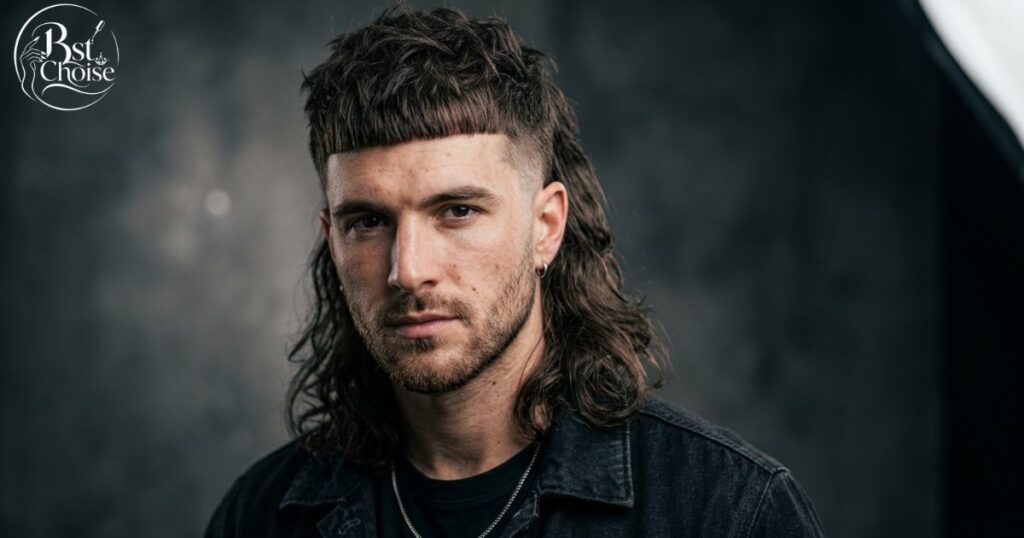
16. Mullet With a Disconnected Crown
A visible break separates the shorter upper sections from the longer back, producing a bolder shape than a blended mullet.
Best For: Men after a statement-making cut. Face Shapes: Oval, diamond, square. Hair Types: Thick, straight, wavy. Maintenance: Every 3–5 weeks. Styling: Matte clay or texture paste. Barber Tip: Show your barber exactly where the disconnect should begin. Common Mistake: Ending up with an accidental-looking gap instead of a deliberate one.
Pros
- Very distinct visual identity
- Reads as intentional and bold
- Works especially well with thick hair
Cons
- Awkward to grow out
- Needs confident, precise styling
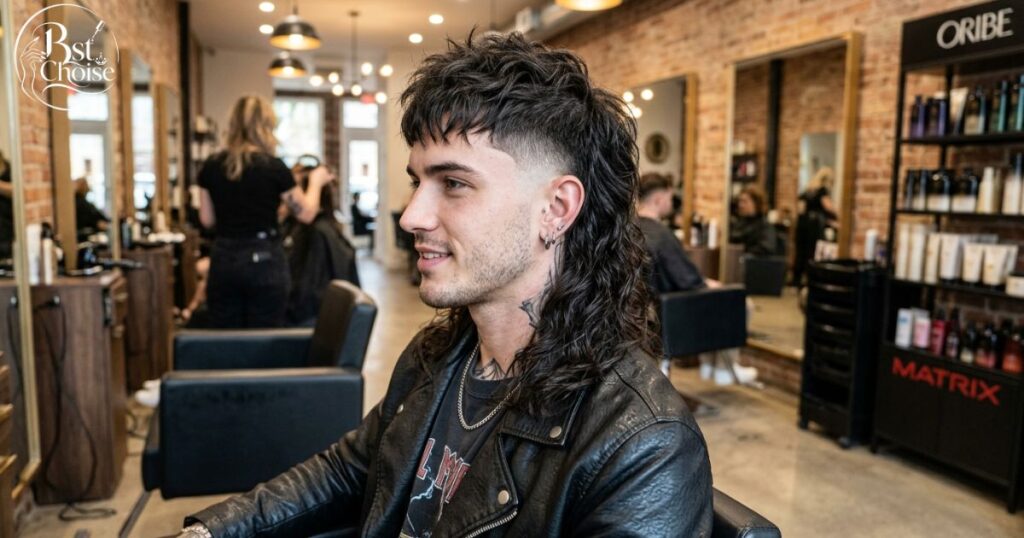
17. The Everyday Mullet
Dialed back from the extremes, this version keeps just enough front-to-back difference to still read clearly as a mullet.
Best For: Men wanting a mullet that fits an ordinary routine. Face Shapes: Suits most shapes. Hair Types: Straight, wavy, medium, thick. Maintenance: Every 4–6 weeks. Styling: Styling cream or matte paste. Barber Tip: Bring a reference photo showing exactly how much back length you want. Common Mistake: Assuming subtle means barely any length difference at all.
Pros
- Genuinely easy to wear daily
- Moderate styling demands
- Flexible across hair types
Cons
- Less eye-catching than bolder versions
- Proportions need care to get right

18. The Statement Mullet With Extra Length
The back becomes the obvious focal point here, stretching noticeably longer while the front and sides stay controlled.
Best For: Men chasing a bold personal statement. Face Shapes: Oval, diamond, square. Hair Types: Thick, wavy, straight. Maintenance: Every 6–8 weeks. Styling: Texture cream, light pomade, or leave-in conditioner. Barber Tip: Ask for shaping through the length, not just an unmanaged grow-out. Common Mistake: Treating length as the only goal and neglecting the shape underneath.
Pros
- Highly distinctive silhouette
- Strong movement and presence
- Ideal for thick hair
Cons
- A real commitment to grow into
- Uneven grow-out can be tricky to fix

19. Low Taper Mullet With Natural Flow
A low taper keeps the ears and neckline neat while most of the hair stays untouched, so the longer back does the talking.
Best For: Men who want clean edges with a recognizable mullet shape. Face Shapes: Oval, round, square, diamond. Hair Types: Straight, wavy, thick. Maintenance: Every 3–5 weeks. Styling: Light clay, styling cream, or texture paste. Barber Tip: Keep the taper low so the sides blend naturally into the back. Common Mistake: Pushing the fade too high and losing the relaxed feel.
Pros
- Tidy edges without heavy fading
- Comfortable, wearable shape
- Blends naturally into longer hair
Cons
- Needs regular taper upkeep
- Less dramatic than a burst fade

20. The Curved Burst Fade Mullet
The fade traces a curve around the ear before flowing into a fuller back, giving the outline real shape without stripping the sides bare.
Best For: Men who want a fade with real back density. Face Shapes: Oval, square, round. Hair Types: Curly, wavy, thick, straight. Maintenance: Every 2–4 weeks. Styling: Curl cream, matte clay, or texture paste. Barber Tip: Decide whether the curve should stay tight to the ear or spread wider. Common Mistake: Uneven curves on each side, throwing off the whole shape.
Pros
- Distinct, sculpted outline
- Pairs beautifully with texture
- Fresh barbershop finish
Cons
- Frequent touch-ups required
- Regrowth is noticeable fast
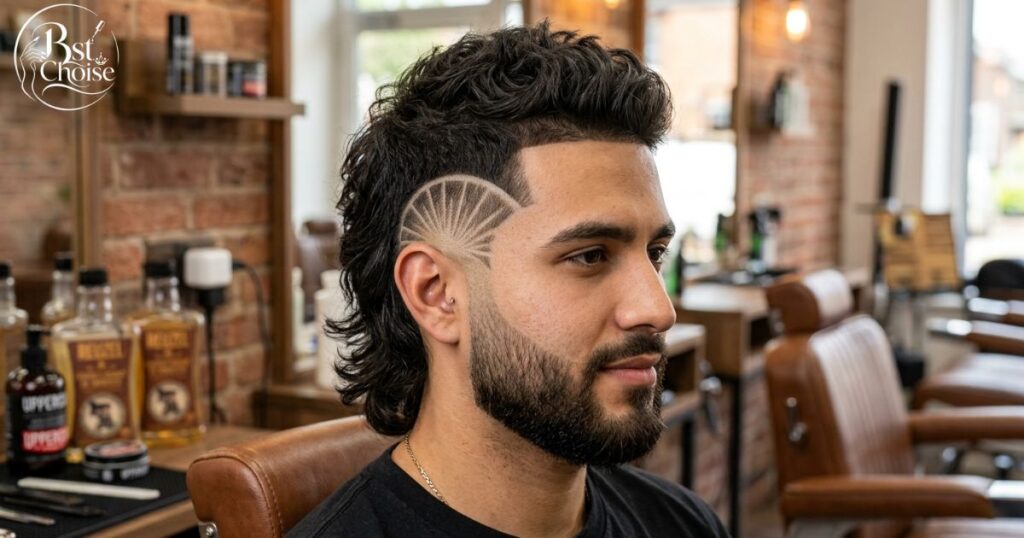
21. The Mullet With a Razor-Defined Hairline
A crisply razored hairline gives an otherwise natural mullet a sharper, more deliberate finish around the forehead and temples.
Best For: Men who like precise grooming details. Face Shapes: Oval, square, diamond. Hair Types: Straight, wavy, thick. Maintenance: Every 2–4 weeks. Styling: Matte paste or light pomade. Barber Tip: Keep the line natural rather than forcing a perfectly straight edge. Common Mistake: Pushing the hairline back too far in search of sharpness.
Pros
- Crisp, freshly cut appearance
- Elevates the whole haircut
- Pairs well with fades or tapers
Cons
- Edges need frequent touch-ups
- Hard to fix if cut too aggressively
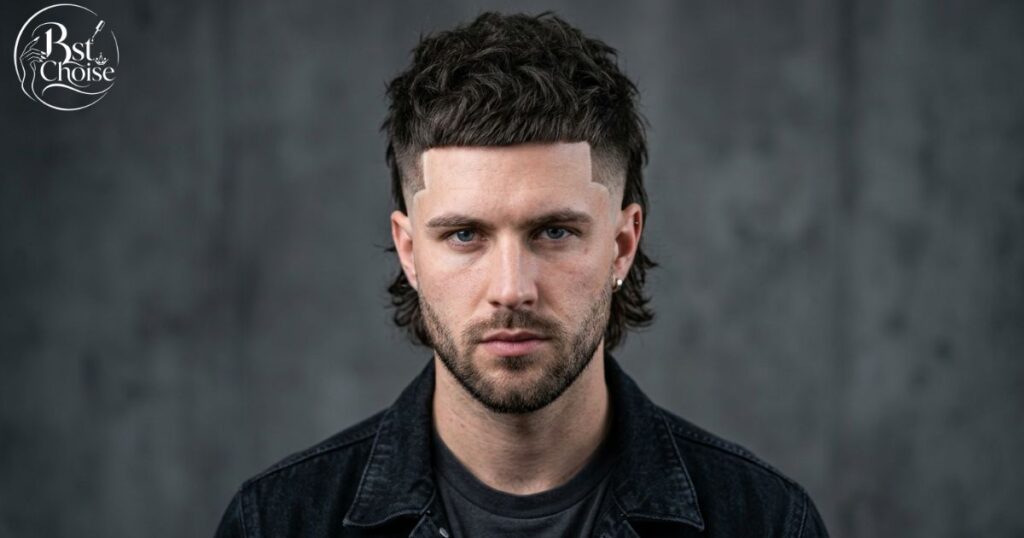
22. The Feathered Mullet
Soft, feathered layers replace sharp transitions, letting the hair flow away from the face and through the back instead of forming a heavy chunk.
Best For: Men who prefer movement over hard contrast. Face Shapes: Oval, oblong, diamond, heart. Hair Types: Straight, wavy, medium. Maintenance: Every 6–8 weeks. Styling: Lightweight mousse, salt spray, or styling cream. Barber Tip: Request layers that blend rather than separate into hard sections. Common Mistake: Over-layering the top until it loses density.
Pros
- Naturally soft movement
- Relaxed, easygoing appearance
- Flatters medium-length hair
Cons
- Needs skillful layering
- Fine hair can thin out fast

23. The Mullet With a Brushed-Back Top
The top brushes away from the forehead for a cleaner front, while the back keeps its longer shape without going full slick-back.
Best For: Men who like a tidy top with a relaxed back. Face Shapes: Oval, square, diamond. Hair Types: Straight, wavy, thick. Maintenance: Every 4–6 weeks. Styling: Matte paste, styling cream, or a touch of light pomade. Barber Tip: Leave extra front length so the hair moves backward naturally. Common Mistake: Overloading with product, which stiffens the top.
Pros
- Neat, controlled front
- Straightforward daily styling
- Suits both casual and smart looks
Cons
- Needs enough top length to work
- Heavy product weighs it down
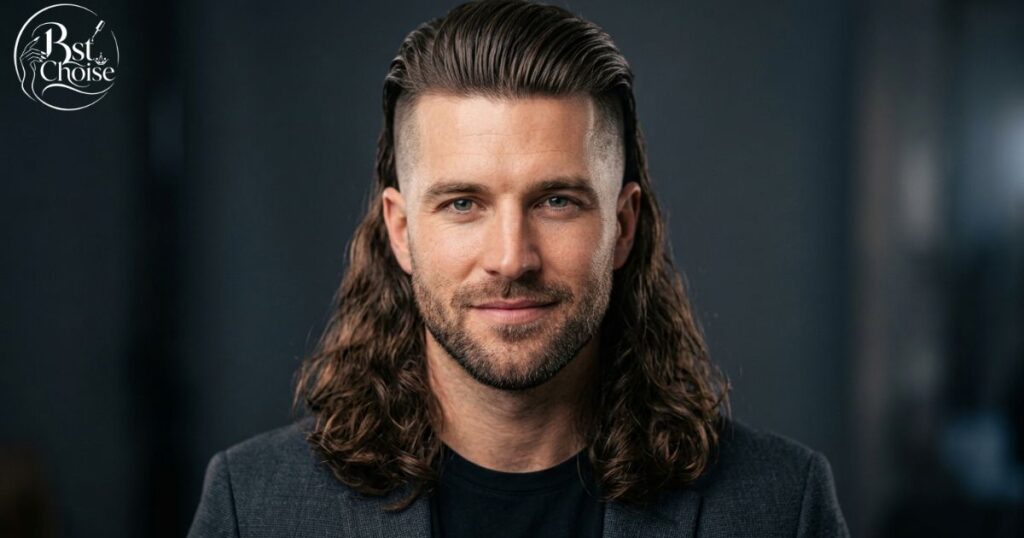
24. The Mullet With a Forward Crop
A short, compact crop at the front contrasts with real length in back, practical for guys who don’t want any fringe to manage.
Best For: Men who prefer short, textured hair up front. Face Shapes: Oval, square, round, diamond. Hair Types: Straight, thick, wavy. Maintenance: Every 3–5 weeks. Styling: Matte clay or texture powder. Barber Tip: Keep the crop lightly textured rather than one solid block. Common Mistake: Cropping the crown too short, leaving the back looking disconnected.
Pros
- Simple front-of-head styling
- Bold contrast with the back
- Practical everyday shape
Cons
- Not much room for front styling variety
- Needs regular front trims
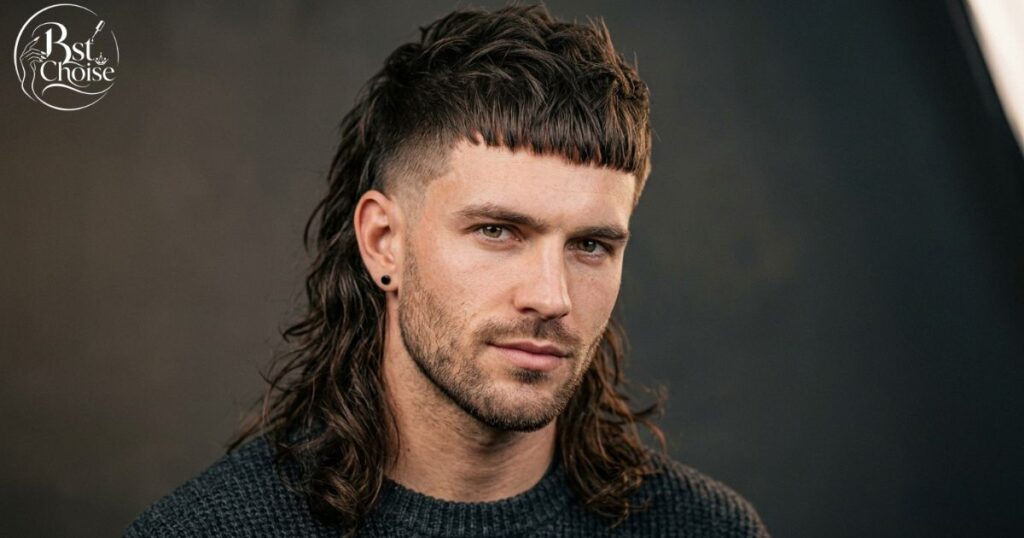
25. The Side-Part Mullet
A traditional side part brings a bit of formality to the mullet, with the top swept across while the sides feed into the longer back.
Best For: Men wanting a more polished mullet. Face Shapes: Oval, square, diamond, round. Hair Types: Straight, wavy, medium. Maintenance: Every 4–5 weeks. Styling: Pomade, styling cream, or light clay. Barber Tip: Work with your natural part rather than forcing a new one. Common Mistake: A part that’s too severe, which kills the casual mullet feel.
Pros
- Polished, put-together look
- Adds clear direction on top
- More versatile for dressier settings
Cons
- Needs daily styling attention
- Requires enough top length

26. The Mullet With a Curly Crown
Curls start right at the crown and continue into the back, while tapered or faded sides frame the fuller texture on top.
Best For: Men with strong, defined natural curls. Face Shapes: Oval, square, diamond. Hair Types: Curly, coily. Maintenance: Every 4–6 weeks. Styling: Curl cream, defining gel, or leave-in conditioner. Barber Tip: Factor in shrinkage before deciding crown and back length. Common Mistake: Removing too much weight from the curls, leaving an uneven top.
Pros
- Big, natural-looking volume
- Distinctive, dimensional shape
- Texture-forward and low-fuss
Cons
- Curl care is a daily habit
- Humidity affects the finished shape

27. The Mullet With a Skin-Fade Contrast
Pushing contrast to its limit, this version takes the lower sides down to skin, letting the fuller top and back become the entire focus.
Best For: Men chasing maximum contrast. Face Shapes: Oval, square, diamond. Hair Types: Straight, thick, wavy. Maintenance: Every 1–3 weeks. Styling: Matte clay, pomade, or texture paste. Barber Tip: Keep the skin fade low so the back stays the focal point. Common Mistake: Fading too high, making the back look disconnected from the sides.
Pros
- Extremely sharp contrast
- Bold, unmistakably modern look
- Sides stay easy to keep neat
Cons
- High-frequency maintenance
- Regrowth shows almost immediately
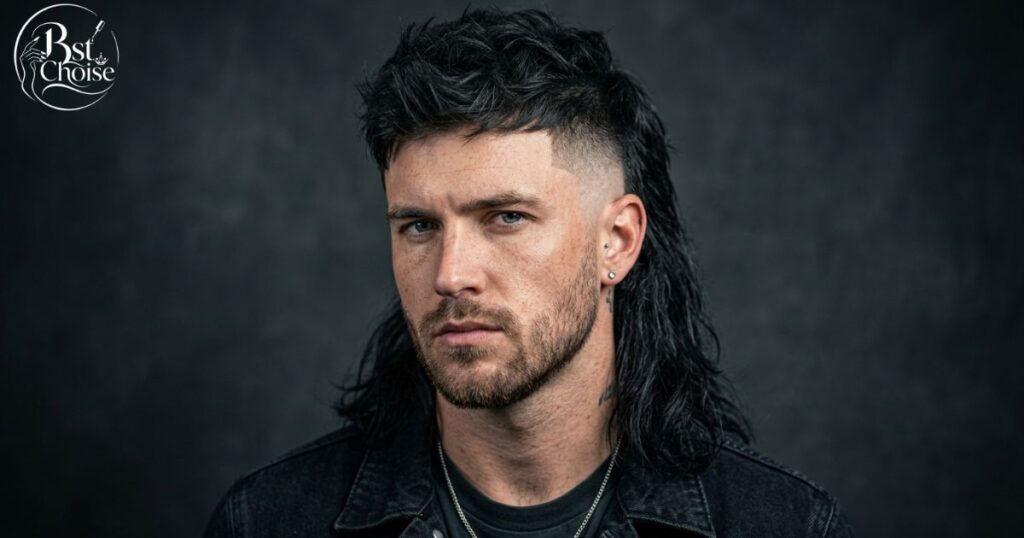
28. The Mullet With Long Crown Layers
Rather than keeping the crown short, layers here run long and flow gradually into the back for a softer, more connected shape.
Best For: Men who already have medium-to-long hair. Face Shapes: Oval, diamond, heart, oblong. Hair Types: Wavy, straight, thick. Maintenance: Every 6–8 weeks. Styling: Salt spray, light mousse, or styling cream. Barber Tip: Keep crown layers connected so the back doesn’t look like a separate section. Common Mistake: Removing too much crown length, creating an abrupt step.
Pros
- Excellent natural movement
- Great option for longer hair
- Softer, more blended silhouette
Cons
- Takes longer to style properly
- Can look heavy without good layering
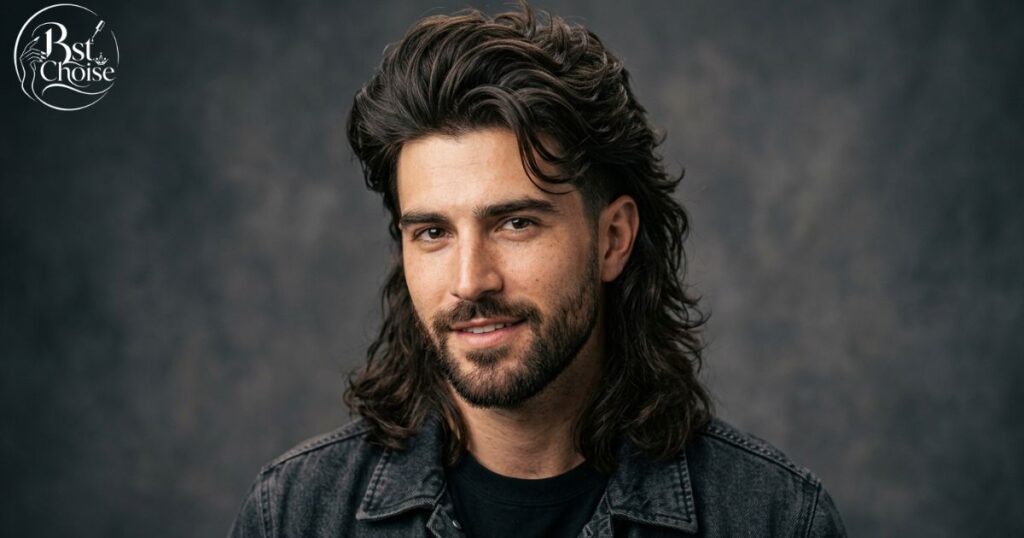
29. The Mullet With a Shaved Design
A small shaved line or geometric detail near the temple, fade, or back adds a personal touch to an otherwise familiar shape.
Best For: Men after a fully customized haircut. Face Shapes: Works with most shapes. Hair Types: Straight, wavy, thick, curly. Maintenance: Every 2–3 weeks to keep the design crisp. Styling: Depends on the top, clay or curl cream both work. Barber Tip: Finalize the fade or taper location before adding the design. Common Mistake: Adding too many lines, which distracts from the cut itself.
Pros
- Fully personal and eye-catching
- Easy to pair with fades
- Stands out from standard mullets
Cons
- Design lines grow out quickly
- Requires more frequent barber visits
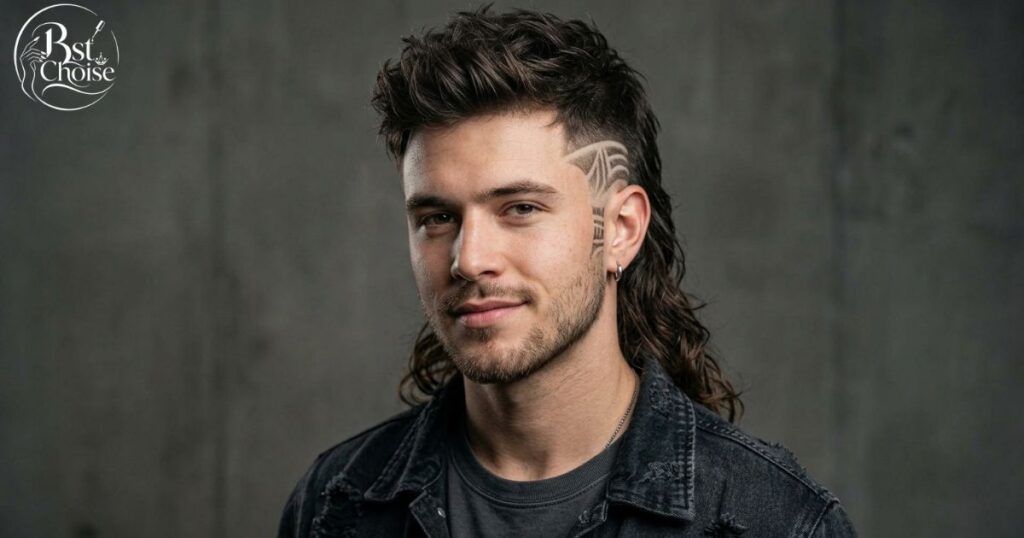
30. The Soft Mullet With No Harsh Fade
Shape and layering do the work here instead of a strong fade, keeping the sides relatively full for a subtler front-to-back difference.
Best For: First-timers and anyone wanting a gentler introduction. Face Shapes: Works with most shapes. Hair Types: Straight, wavy, thick, medium. Maintenance: Every 5–7 weeks. Styling: Styling cream, light paste, or salt spray. Barber Tip: Focus on top-to-back proportions rather than requesting a sharp fade. Common Mistake: Leaving the sides completely untouched, letting them overwhelm the back.
Pros
- Easy, low-pressure entry point
- Grows out gracefully
- Less visually extreme
Cons
- Lower contrast overall
- Needs careful shaping to avoid looking like a plain layered cut

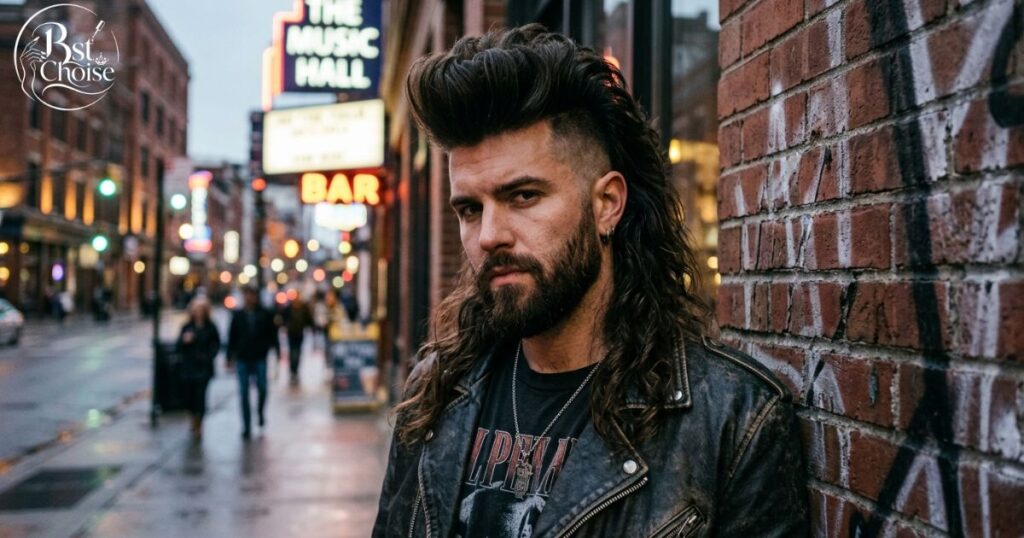
31. The Mullet With a High-Volume Crown
Extra fullness through the crown builds a stronger vertical shape, adding drama without needing extreme back length.
Best For: Men chasing height and a bolder silhouette. Face Shapes: Round, oval, diamond. Hair Types: Thick, straight, wavy. Maintenance: Every 4–5 weeks. Styling: Volumizing mousse, matte clay, or styling powder. Barber Tip: Preserve enough density through the crown to support real volume. Common Mistake: Applying heavy pomade before building the lift.
Pros
- Builds noticeable height
- Strong, confident silhouette
- Great match for thick hair
Cons
- Takes extra time to style
- Humidity can knock the volume down
32. The Mullet With a Messy Top
An intentionally uneven, textured top keeps this version casual rather than heavily barbered, while the back keeps the shape recognizable.
Best For: Men who want a low-effort, textured mullet. Face Shapes: Oval, square, diamond. Hair Types: Wavy, thick, straight. Maintenance: Every 5–7 weeks. Styling: Matte paste or texture powder. Barber Tip: Ask for texture that adds movement without stripping density. Common Mistake: Going so messy the shape gets lost entirely.
Pros
- Relaxed, laid-back energy
- Quick and easy to style
- Works well with natural texture
Cons
- Can look heavy without upkeep
- Needs occasional reshaping

33. The Mullet With a Brushed-Forward Crown
Instead of pushing hair back, this version brings the crown slightly forward, adding texture and a younger feel as it meets the longer back.
Best For: Men who like forward-styled tops. Face Shapes: Oval, square, diamond, round. Hair Types: Straight, wavy, thick. Maintenance: Every 3–5 weeks. Styling: Matte clay or texture paste. Barber Tip: Keep the crown long enough to support forward movement. Common Mistake: Cutting the crown too short to sustain the direction.
Pros
- Simple, quick daily styling
- Adds visible texture
- Pairs well with shorter tops
Cons
- Fewer styling variations available
- Fringe area needs regular trims

34. The Mullet With a Low Burst Taper
A softer take on the burst fade, this keeps the ear area clean while leaving more fullness just above and behind it.
Best For: Men wanting a milder version of the burst shape. Face Shapes: Oval, square, round. Hair Types: Straight, wavy, curly. Maintenance: Every 3–4 weeks. Styling: Curl cream, matte paste, or styling cream. Barber Tip: Keep the taper concentrated near the ear rather than spreading it wide. Common Mistake: Letting it expand into a full burst fade.
Pros
- Clean, tidy ear area
- Softer than a full fade
- Suits textured hair nicely
Cons
- Regular cleanup required
- Less dramatic than sharper fades

35. The Mullet With a Defined Curly Fringe
Curls give the front its own identity here, left compact or falling gently over the forehead, while the back keeps its length.
Best For: Curly-haired men wanting distinct front and back sections. Face Shapes: Oval, square, diamond. Hair Types: Curly, coily. Maintenance: Every 4–6 weeks. Styling: Curl cream and defining gel. Barber Tip: Cut based on dry length, since curls shrink once they dry. Common Mistake: Cutting the fringe too short before accounting for shrinkage.
Pros
- Genuine, natural texture
- Strong face-framing effect
- One-of-a-kind silhouette
Cons
- Shrinkage needs to be planned for
- Curl maintenance is ongoing

36. The Mullet With a Clean Side Sweep
A directional sweep up top adds a groomed feel without pushing into formal territory, while the back stays relatively natural.
Best For: Men wanting a polished, everyday mullet. Face Shapes: Round, oval, diamond, square. Hair Types: Straight, wavy, medium. Maintenance: Every 4–6 weeks. Styling: Light pomade or styling cream. Barber Tip: Follow the hair’s natural growth direction when sweeping. Common Mistake: Flattening the crown with too much product.
Pros
- Tidy yet relaxed
- Fast to style each morning
- Adds visible direction on top
Cons
- Needs adequate top length
- Can lose shape in humid weather

37. The Mullet With a Textured Caesar Front
A short, Caesar-inspired front stays compact while the back provides all the movement and length of a mullet.
Best For: Men who want a short, practical fringe. Face Shapes: Oval, square, round. Hair Types: Straight, thick, wavy. Maintenance: Every 3–5 weeks. Styling: Matte clay or texture powder. Barber Tip: Keep the fringe slightly uneven rather than razor-straight. Common Mistake: Letting the front get too heavy, covering the forehead.
Pros
- Practical, low-fuss front
- Strong front-to-back contrast
- Minimal daily styling
Cons
- Fringe needs consistent trims
- Not much room for front variation

38. The Mullet With a Mid Fade
Sitting between a subtle taper and an aggressive fade, this version leaves enough hair to connect the sides to the top while still adding real contrast.
Best For: Men wanting a noticeable but balanced fade. Face Shapes: Oval, square, diamond, round. Hair Types: Straight, wavy, thick, curly. Maintenance: Every 2–4 weeks. Styling: Matte clay, curl cream, or texture paste. Barber Tip: Match the fade placement to the length you want in back. Common Mistake: Removing too much weight just above the fade line.
Pros
- Solid contrast without extremes
- Adapts to different hair textures
- Genuinely versatile
Cons
- Needs frequent fade upkeep
- Regrowth is fairly obvious

39. The Mullet With a Long Textured Tail
The tail is shaped with texture rather than left as one dense chunk, creating separation and natural movement through the ends.
Best For: Men wanting noticeable length with real movement. Face Shapes: Oval, diamond, square. Hair Types: Thick, wavy, straight. Maintenance: Every 6–8 weeks. Styling: Salt spray, texture cream, or light mousse. Barber Tip: Ask for weight removal at the ends while keeping overall length. Common Mistake: Over-thinning until the tail looks wispy.
Pros
- Real movement and flow
- Ideal for longer hair
- Distinctive, memorable shape
Cons
- Requires a real commitment
- Needs careful, deliberate shaping

40. The Mullet With a Natural Neckline
Rather than a crisp edge, the neckline here follows its natural growth pattern, blending softly into the longer back.
Best For: Men who prefer a more relaxed grooming style. Face Shapes: Works for most shapes. Hair Types: Straight, wavy, thick. Maintenance: Every 6–8 weeks. Styling: Styling cream or light texture paste. Barber Tip: Ask for light cleanup without squaring off the neckline. Common Mistake: Leaving it completely untouched until it looks unkempt.
Pros
- Feels natural, not manufactured
- Grows out with ease
- Less frequent maintenance needed
Cons
- Edges look less crisp
- Neckline can get messy between cuts

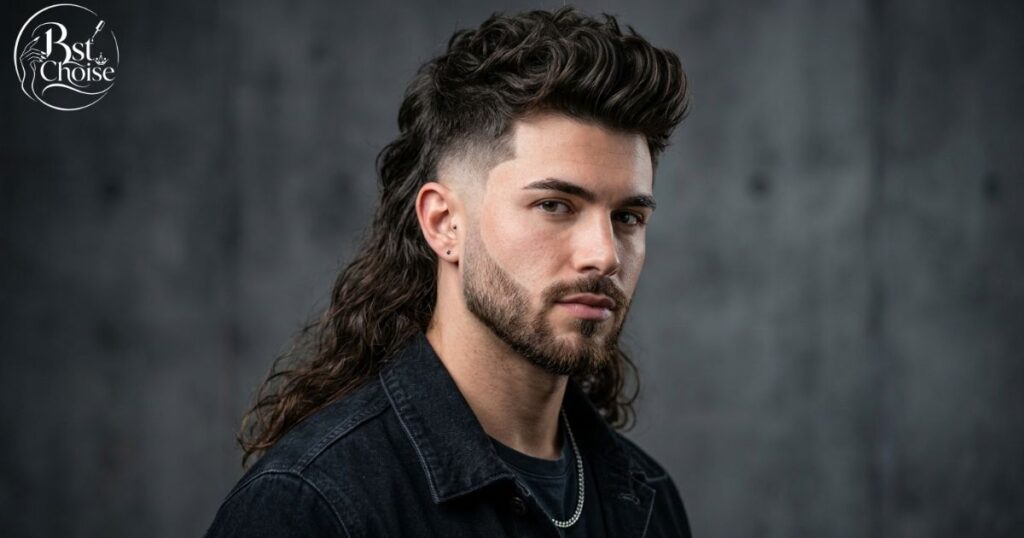
41. The Mullet With a Sharp Temple Fade
Contrast concentrates around the temples here, leaving the rest of the sides fuller for a defined frame around the face.
Best For: Men wanting sharp detail specifically around the face. Face Shapes: Oval, square, diamond. Hair Types: Curly, wavy, thick, straight. Maintenance: Every 2–4 weeks. Styling: Curl cream, matte clay, or styling paste. Barber Tip: Keep the fade contained to the temples for a fuller overall mullet. Common Mistake: Letting the fade creep too far toward the crown.
Pros
- Sharp, defined facial framing
- Solid contrast without full commitment
- Works across many hair textures
Cons
- Regular maintenance is a must
- Uneven placement is easy to notice
42. The Mullet With a Slicked-Back Crown
Directing the top backward gives this version a cleaner, more mature look, while the back retains enough texture to feel like a true mullet.
Best For: Men wanting a groomed take on the style. Face Shapes: Oval, square, diamond. Hair Types: Straight, wavy, thick. Maintenance: Every 4–6 weeks. Styling: Pomade, styling cream, or matte paste. Barber Tip: Leave enough top length to brush back comfortably. Common Mistake: Slicking the entire top flat, killing its natural movement.
Pros
- Mature, polished appearance
- Easy to dress up for occasions
- Strong shape on top
Cons
- Requires daily styling
- Can look overly formal if overdone

43. The Mullet With a Messy Fringe
A deliberately imperfect fringe gives the front a relaxed, undone character while the back stays longer and more structured.
Best For: Men wanting a youthful, casual finish. Face Shapes: Oval, square, round, diamond. Hair Types: Straight, wavy, thick. Maintenance: Every 3–5 weeks. Styling: Matte paste or texture powder. Barber Tip: Ask for point cutting to build natural movement. Common Mistake: Letting the fringe get too thick and heavy.
Pros
- Relaxed, casual look
- Simple to texture
- Great for everyday wear
Cons
- Fringe grows out fast
- Needs shaping to avoid looking unkempt
44. The Mullet With a Subtle Skin Taper
A narrow, clean-cut section near the lower sides adds sharpness without going as far as a full skin fade.
Best For: Men wanting crisp edges with moderate contrast. Face Shapes: Oval, square, diamond. Hair Types: Straight, wavy, thick. Maintenance: Every 2–3 weeks. Styling: Matte clay or styling cream. Barber Tip: Keep the skin section low and narrow. Common Mistake: Letting the taper climb too high.
Pros
- Clean, sharp finish
- Contrast stays controlled
- Pairs nicely with textured tops
Cons
- Needs frequent touch-ups
- Regrowth shows quickly

45. The Mullet With a Wavy Curtain Top
A center part creates two soft-falling sections that frame the face, flowing naturally into the longer back.
Best For: Men who like the curtain fringe look. Face Shapes: Oval, heart, diamond, oblong. Hair Types: Wavy, straight, medium. Maintenance: Every 5–7 weeks. Styling: Salt spray, styling cream, or light mousse. Barber Tip: Keep enough front length so the curtains open naturally. Common Mistake: Forcing a perfectly centered part when the hair falls elsewhere.
Pros
- Great natural movement
- Face-framing effect
- Relaxed, easy-going finish
Cons
- Needs decent front length
- Can go flat without added texture

46. The Mullet With a Modern Fringe Taper
A tapered fringe softens the transition around the forehead instead of ending in a heavy straight edge, giving the whole cut a contemporary feel.
Best For: Men wanting a refined, modern mullet. Face Shapes: Oval, round, square, diamond. Hair Types: Straight, wavy, thick. Maintenance: Every 4–5 weeks. Styling: Matte paste, styling cream, or texture powder. Barber Tip: Keep the fringe light so it moves naturally. Common Mistake: Over-thinning the fringe until it looks uneven.
Pros
- Contemporary, refined shape
- Lightweight, easy fringe
- Simple styling routine
Cons
- Needs precise, careful cutting
- Fringe requires regular upkeep

47. The Mullet With a Disconnected Fade Line
A clear, visible break separates the faded sides from the longer top, giving this cut a bold, graphic quality.
Best For: Men who like sharp, high-contrast styling. Face Shapes: Oval, square, diamond. Hair Types: Thick, straight, wavy. Maintenance: Every 2–4 weeks. Styling: Matte clay or texture paste. Barber Tip: Make sure the disconnect line stays even on both sides. Common Mistake: Letting the line drift uneven between visits.
Pros
- Eye-catching, graphic contrast
- Bold and distinctive
- Suits thick hair especially well
Cons
- Grow-out is difficult to manage
- Requires frequent maintenance

48. The Mullet With a Soft Curly Tail
Soft, loosely defined curls take over the back instead of a sharply sculpted shape, contrasting gently with a more controlled front.
Best For: Men wanting a gentler curly mullet. Face Shapes: Oval, square, diamond, heart. Hair Types: Curly, wavy. Maintenance: Every 5–7 weeks. Styling: Curl cream, leave-in treatment, or lightweight gel. Barber Tip: Leave enough length for the curls to develop naturally. Common Mistake: Over-applying product, which stiffens the curls.
Pros
- Soft, natural-looking movement
- Great texture without extra effort
- Gentle contrast with the front
Cons
- Humidity can change the finish
- Curl care is ongoing

49. The Mullet With a Brushed-Back Fade
A brushed-back top gives this cut a sharper shape while a fade keeps the sides tight, contrasting against a longer, relaxed back.
Best For: Men wanting a polished but unconventional look. Face Shapes: Oval, square, diamond. Hair Types: Straight, wavy, thick. Maintenance: Every 3–4 weeks. Styling: Matte pomade, styling cream, or light clay. Barber Tip: Keep enough top length for the hair to brush back naturally. Common Mistake: Flattening the crown completely, losing all volume.
Pros
- Dresses up easily
- Strong front-to-back contrast
- Flexible styling options
Cons
- Daily styling required
- Fade needs regular upkeep

50. The Mullet With a Textured Tail
Separated, textured ends replace one dense back section, giving the longer portion a lighter, more movable feel.
Best For: Men wanting real movement through the back. Face Shapes: Oval, diamond, square. Hair Types: Thick, wavy, straight. Maintenance: Every 5–7 weeks. Styling: Texture paste, salt spray, or lightweight cream. Barber Tip: Remove weight carefully while preserving overall length. Common Mistake: Over-texturizing until the tail looks thin.
Pros
- Lightweight, airy finish
- Genuine movement in the back
- Suits thick hair particularly well
Cons
- Needs a skilled texturizing hand
- Ends can look dry without care

51. The Mullet With a Clean Crew-Cut Top
A practical, crew-style top makes mornings easy, while the longer back supplies all the contrast.
Best For: Men who want minimal top styling. Face Shapes: Oval, square, diamond. Hair Types: Straight, thick, wavy. Maintenance: Every 3–4 weeks. Styling: Matte clay or styling powder. Barber Tip: Keep the crown a touch longer than the front for a smoother transition. Common Mistake: Cutting the crown too short, isolating the back visually.
Pros
- Extremely low-maintenance top
- Practical for busy mornings
- Solid contrast overall
Cons
- Little room for top styling
- Needs frequent trims

52. The Mullet With a Relaxed Beach Texture
Loose, wind-blown texture gives this version a casual, effortless feel, with both top and back left to move naturally.
Best For: Men drawn to relaxed, low-effort hairstyles. Face Shapes: Oval, diamond, heart, oblong. Hair Types: Wavy, straight, medium. Maintenance: Every 6–8 weeks. Styling: Salt spray, lightweight mousse, or texture cream. Barber Tip: Preserve enough natural length for the texture to show. Common Mistake: Overusing salt spray, which can leave hair dry and stiff.
Pros
- Effortless, relaxed appearance
- Natural, unforced movement
- Simple daily styling
Cons
- Salt-based products can dry hair out
- Humidity affects how it holds

53. The Mullet With a Refined Taper
A conservative taper keeps the sides and neckline tidy without a harsh fade, letting the longer back carry most of the personality.
Best For: Men wanting a mullet that fits professional settings. Face Shapes: Oval, square, diamond, round. Hair Types: Straight, wavy, thick. Maintenance: Every 4–5 weeks. Styling: Styling cream, light pomade, or matte paste. Barber Tip: Keep the taper conservative and let the back do the styling work. Common Mistake: Fading too aggressively and losing the softer proportions.
Pros
- Genuinely versatile
- Works well in professional settings
- Grows out cleanly
Cons
- Less dramatic than other versions
- Neckline needs regular upkeep

54. The Bold Razor-Shaped Mullet
Sharp, deliberate razor work creates a more graphic silhouette, with tight sides and angled, textured shaping through the back.
Best For: Men who enjoy experimental grooming. Face Shapes: Oval, square, diamond. Hair Types: Thick, straight, wavy. Maintenance: Every 2–4 weeks. Styling: Strong matte clay or texture paste. Barber Tip: Bring a reference photo, small shape changes in the back make a big difference. Common Mistake: Adding too many sharp details, making the cut feel cluttered.
Pros
- Highly distinctive shape
- Bold, memorable silhouette
- Great for experimental personal style
Cons
- High-maintenance upkeep
- Not suited to conservative workplaces
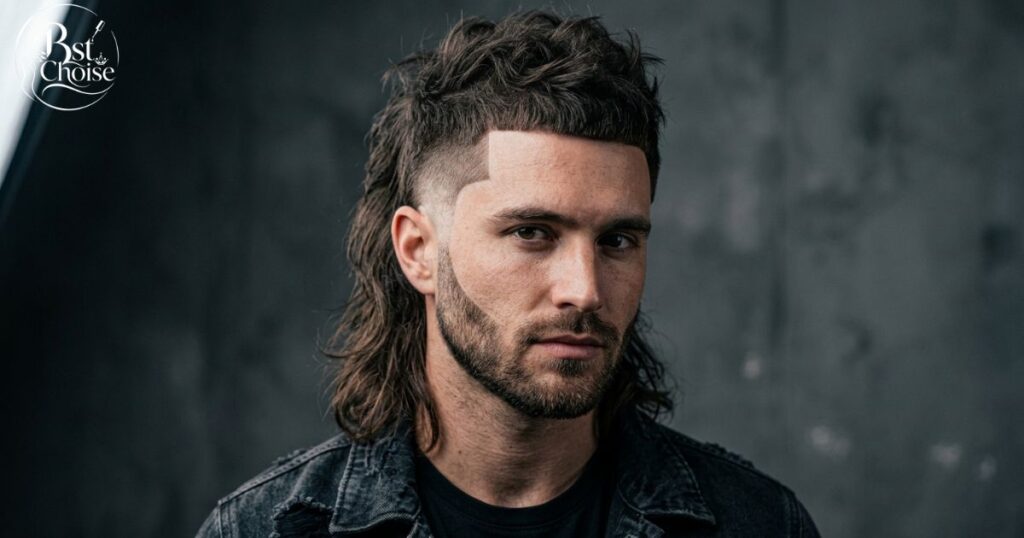
55. The Contemporary Men’s Mullet
This version pulls together the most wearable elements of the modern mullet: controlled sides, deliberate layering, natural texture, and a back with enough length to move.
Best For: Men wanting a current, fully customizable mullet. Face Shapes: Most shapes, when proportioned correctly. Hair Types: Straight, wavy, curly, thick, medium. Maintenance: Every 4–6 weeks, generally. Styling: Matte clay for straight hair, styling cream for waves, curl cream for curls. Barber Tip: Show your barber both a front and side reference, and specify your desired back length. Common Mistake: Choosing a version purely from a photo without considering your own hair growth and routine.
Pros
- Extremely customizable
- Works across nearly every hair type
- Can lean subtle or bold
- Many styling directions to choose from
Cons
- Getting proportions right takes care
- Some variations demand frequent upkeep

How to Choose the Right Mullet for Your Face Shape
Not every mullet needs to be the boldest version available. The right pick depends on how much height, width, or length your face benefits from.
| Face Shape | What Generally Works |
| Oval | Nearly any mullet variation |
| Round | Height on top paired with tighter sides |
| Square | Textured or evenly balanced sides |
| Diamond | Softer sides with controlled volume |
| Oblong | Extra side fullness, moderate height |
| Heart | Layered top with a balanced back length |
Balance is the goal. A longer face doesn’t need extra height added on top, while a rounder face often benefits from some lift plus tighter sides to create length.
Which Mullet Works Best for Your Hair Type?
The same haircut can behave very differently depending on your natural texture.
- Straight hair: Textured, tapered, side-swept, or layered versions all work well.
- Wavy hair: A shaggy, feathered, or relaxed mullet lets natural movement shine.
- Curly hair: Leave extra length to account for shrinkage and stick to curl-friendly products.
- Thick hair: Layering and controlled thinning keep the back from feeling too heavy.
- Fine hair: Skip heavy thinning, a shorter, textured version reads fuller.
How to Explain Your Mullet to a Barber
The word “mullet” alone means different things to different barbers, so be specific.
Tell them:
- How much length you want left at the back
- Whether you want a taper, fade, or fuller sides
- How short the area around your ears should be
- Whether the top should be textured, cropped, or longer
- How much time you’re realistically willing to spend styling each morning
Bring a reference photo from the side and back, the rear profile is the hardest part to describe out loud, and it’s the part that defines the whole cut.
Mullet Maintenance Guide
Your maintenance schedule depends heavily on which version you pick.
- Faded mullet: Roughly every 2–4 weeks.
- Tapered mullet: Around every 3–5 weeks.
- Long, layered mullet: Often every 6–8 weeks.
- Curly mullet: Timing varies with curl growth and how much shape you want to keep.
Keeping the neckline and ear area clean between full appointments helps the whole style look intentional rather than overdue for a trim.
Common Mullet Styling Mistakes
Even a well-cut mullet can look off if it’s styled the wrong way.
Using Too Much Product
Heavy product flattens the crown and can make the longer back look greasy instead of textured.
Ignoring Natural Texture
Straight, wavy, and curly hair all need different styling approaches, one method doesn’t fit all three.
Over-Fading the Sides
Pushing the fade too high removes the balance that makes the mullet shape recognizable in the first place.
Cutting the Back Too Frequently
The back needs room to grow if it’s going to create the defining silhouette, trimming it too often undercuts the whole style.
Copying a Photo Exactly
A reference photo is a helpful starting point, but your barber should adjust the proportions to your own hair and face.
Frequently Asked Questions About Men’s Mullets
Is a mullet still popular for men?
Yes, it remains popular. Modern takes range from subtle tapers to bold faded versions, making it far more adaptable than its old-school reputation suggests.
What is the easiest mullet to maintain?
A short or tapered mullet tends to be easiest, since there’s less hair to shape and fewer styling steps overall.
Does a mullet work with curly hair?
Definitely, curls add natural volume and movement at the back, just plan for some shrinkage before deciding on final length.
Can men with straight hair get a mullet?
Yes, straight hair holds sharp fades, textured tops, side-swept styles, and clean layers especially well.
How often should a mullet be cut?
Faded versions typically need attention every 2–4 weeks, while longer, softer versions can often stretch to 5–8 weeks.
Should the sides of a mullet be faded?
Not necessarily, a mullet can pair with a burst fade, low fade, taper, temple taper, or simply fuller sides.
Is a mullet good for thick hair?
Yes, as long as a barber manages the extra weight through layering so the back doesn’t end up looking thin or overly heavy.
Can a mullet look professional?
It can, especially with a moderate back length, a controlled top, and a soft taper instead of a dramatic fade.
Conclusion
A great mullet comes down to proportion, texture, and personality, not just short hair up front and long hair in back. The best version works with how your hair naturally grows and matches the amount of upkeep you’re honestly willing to commit to.
First time trying the style? A short mullet, low taper mullet, or softer layered version is the safest starting point. Already sold on the idea? A burst fade, curly mullet, textured tail, or bold disconnected design delivers a lot more visual impact.
Pick the shape first, adapt it to your own hair second, and treat styling products as the finishing touch, not a fix for the wrong cut. That’s the difference between a mullet that’s trendy for a season and one that actually suits you for years.

