
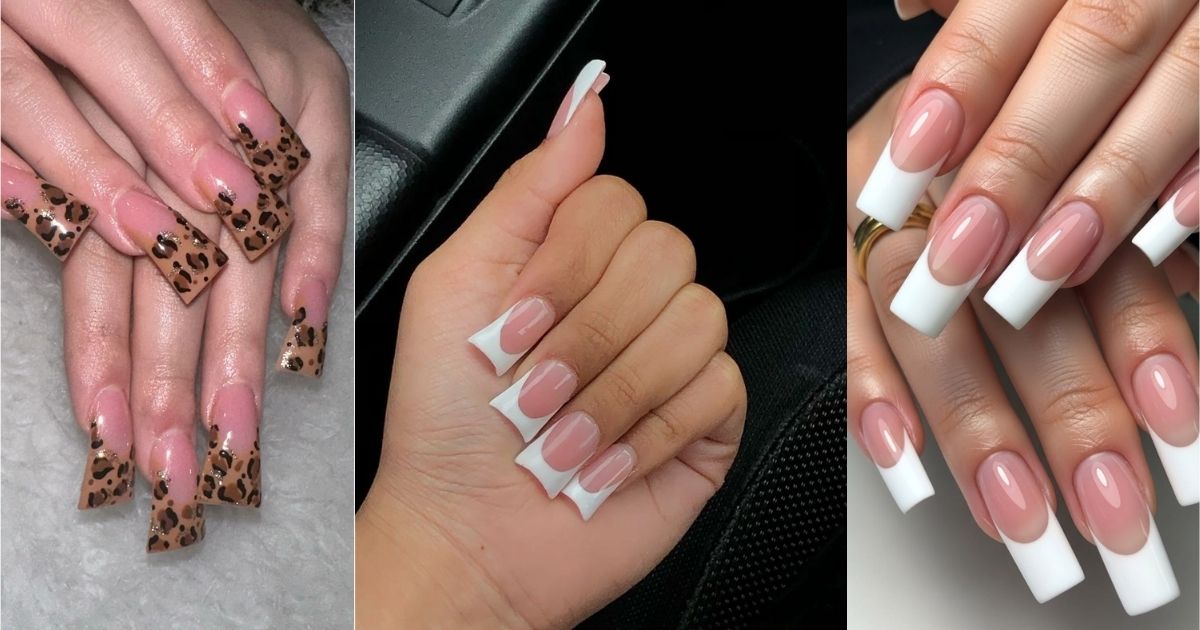

Some nail shapes fade into the background. Duck shape nails do the opposite, they demand a second look.
Scroll through any nail inspiration feed right now and you’ll spot them: tips that flare outward instead of narrowing to a point, edges that fan out like the front of a paddle, manicures built for maximum visual impact rather than quiet elegance. Duck shape nails (sometimes called duck feet nails or flare nails) have crashed back into the beauty conversation, and they’re not asking permission.
This guide covers everything worth knowing before you try the trend: what the shape actually is, where it came from, how it stacks up against coffin, square, and almond nails, what it costs, how long it lasts, and whether it fits your day-to-day life. No filler, just the practical details you need to decide if duck nails belong on your hands.
What Are Duck Shape Nails?
Duck shape nails get their name from their silhouette: narrow near the cuticle, then widening dramatically toward the free edge, ending in a flat or gently rounded tip. The overall effect looks like a duck’s foot or webbed flipper, hence the nickname.
Key structural traits of the shape include:
- A slim, close-fitting base at the nail bed
- A pronounced outward flare starting around the midpoint
- A wide, flat (or subtly curved) tip
- A visible increase in surface area compared to straight-sided shapes
That extra width isn’t a shaping mistake, it’s the entire point. The flare turns each nail into a wider “canvas,” giving nail artists more room to work with gradients, line art, gems, and multi-layered designs that would look cramped on a narrower shape. It’s a bold silhouette built specifically to be noticed, not blended in.
Read More: Short Dip Nails Ideas That Look Chic & Modern
The History and Comeback of Duck Nails
Duck shape nails aren’t a brand-new invention, they’re a revival.
The look first showed up in nail salons in the early 2000s, riding alongside other maximalist beauty statements of that era: chunky rhinestones, frosted eyeshadow, and glossy lip gloss piled on thick. Nail art at the time celebrated “more”, more length, more color, more shine, and the flared shape fit right into that mood.
Then trends moved on. Coffin nails and almond shapes took over through the 2010s, favoring tapered, elongating lines over exaggerated width. Duck nails quietly disappeared from most menus, occasionally mocked as an outdated or “messy” shape from a bygone decade.
The 2020s Y2K revival changed that. As low-rise jeans, butterfly clips, and glossy makeup made their way back into fashion, duck nails followed. This time, though, the execution is sharper. Structural techniques have improved, acrylic and gel formulas are stronger, and nail technicians now approach the flare with far more precision than the original trend ever had. What was once considered a novelty shape is now treated as a legitimate, skill-intensive style choice.
Duck Shape Nails vs Other Popular Nail Shapes
Every nail shape sends a different message. Here’s how duck nails compare to the shapes people most often confuse them with.
Duck vs Coffin Nails
| Feature | Duck Nails | Coffin Nails |
| Tip direction | Flares outward | Tapers inward, then squares off |
| Overall vibe | Bold, exaggerated | Sleek, structured |
| Best for | Statement looks | Everyday elegance |
| Nail art space | Very wide | Moderate |
Coffin nails narrow toward a flat tip, creating a coffin-like (or ballerina-slipper) outline. Duck nails do the reverse, they widen. If coffin nails whisper “polished,” duck nails shout “look at this.”
Square vs Duck Nails
Square nails keep the same width from base to tip, with sharp, straight sidewalls and a flat top edge. Duck nails start narrow and expand outward, so the width you see at the tip is intentionally larger than the width at the cuticle. Square nails prioritize a clean, uniform line; duck nails prioritize drama and visual flare (literally).
Duck vs Almond or Stiletto
Almond and stiletto shapes taper to a point, drawing the eye upward and making fingers look longer and slimmer. Duck nails do the opposite job, they widen the tip and emphasize horizontal space rather than length. Almond and stiletto shapes read as elegant and refined; duck nails read as playful, unconventional, and unmistakably attention-grabbing.
Pros and Cons of Duck Shape Nails
Like any bold beauty choice, duck shape nails come with real trade-offs worth weighing before you book an appointment.
Pros
- Instantly recognizable, trend-forward look
- Generous surface area for intricate nail art, gems, and multi-color designs
- A strong, well-built apex when done by an experienced technician
- Photographs beautifully for events, shoots, and social content
- Genuinely different from the almond/coffin/square shapes most people already wear
Cons
- Not a subtle or low-key option
- Can catch on fabric, pockets, or tight spaces more easily
- Requires a skilled technician, uneven flaring looks sloppy fast
- Not the most comfortable choice for hands-on, physical work
- May need more frequent maintenance to keep the shape sharp
If your manicure is part of your personal branding or style statement, duck nails deliver. If you need something quiet and low-maintenance, this probably isn’t your shape.
Popular Duck Shape Nail Lengths
The flare effect changes significantly depending on length.
Short Duck Shape Nails
A shorter length keeps the flare subtle and much more wearable day-to-day. You still get the signature widened tip, just in a smaller, more manageable dose, a good entry point if you’re testing the trend for the first time.
Medium-Length Duck Nails
This is generally considered the most balanced option. Medium length gives the flare enough room to show off, while still leaving nails functional enough for typing, texting, and everyday tasks without constant frustration.
Extra-Long Duck Nails
This is the full statement version of the shape. Extra-long duck nails are built to be photographed and admired, not necessarily to be practical. Expect a noticeable adjustment period for basic tasks, and plan on wearing them for special occasions rather than daily rotation.
Best Nail Designs for Duck Shape Nails
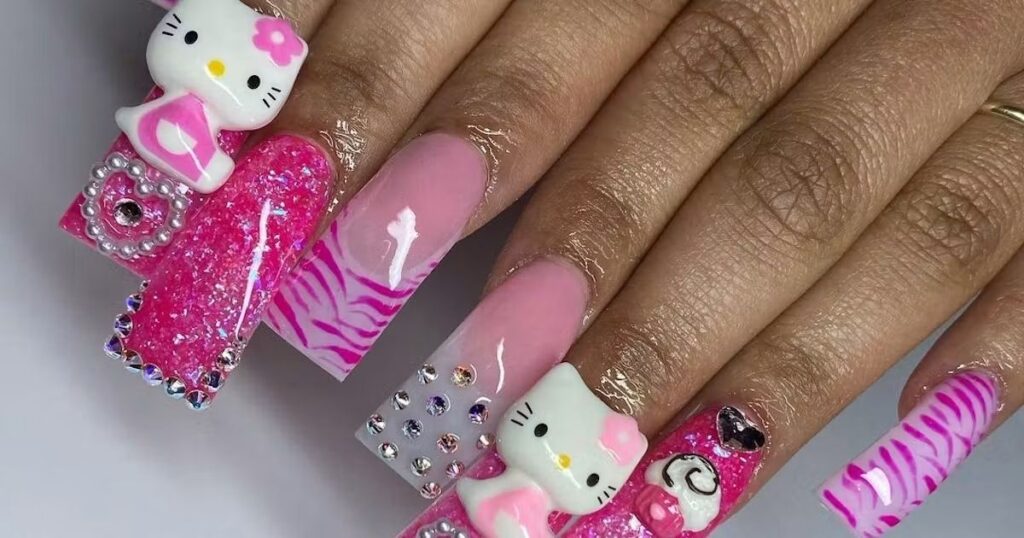
Because the tip is so wide, duck shape nails handle bold, high-contrast art especially well. Popular design directions include:
- Curved French tips that trace the natural flare instead of a straight line
- Chrome or metallic finishes that catch light across the wider surface
- Ombre and gradient blends that stretch smoothly toward the tip
- 3D embellishments like gems, pearls, or charms placed along the flared edge
- Abstract line work and geometric patterns that use the extra canvas space
Delicate, tiny details tend to get lost on this shape. Bold color blocking, strong outlines, and high contrast almost always look better than intricate micro-designs.
Color Ideas That Work Best on Duck Shape Nails
The right color can either highlight the shape or fight against it.
- Neutral tones with a bold outline, lets the silhouette do the talking
- Bright neon shades paired with simple, clean designs
- Black and white combinations for graphic, high-contrast impact
- Soft pastels finished with chrome accents for a lighter, dreamier take
If you’re unsure where to start, a neutral base with a defined edge is the safest way to try the shape without overwhelming it.
Duck Shape Nails: Acrylic, Gel, or Press-Ons?
Material choice affects how well the flare holds up over time.
| Material | Best For | Durability | Notes |
| Acrylic | Structural strength | Long-lasting | Most common choice for duck nails; holds the flare without bending |
| Gel | A lighter feel | Moderate | Needs reinforcement to prevent the tip from softening |
| Press-ons | Short-term wear | Temporary | Great for events, not built for daily long-term use |
Acrylic remains the go-to option for this shape specifically because the flared tip needs rigidity to keep its form. Gel can work but usually needs an acrylic overlay or extra reinforcement at the stress point where the nail begins to widen.
How Nail Technicians Shape Duck Nails
Duck shape nails are not a beginner-level service. A skilled technician typically:
- Builds a solid structural base before introducing any flare
- Files both sides symmetrically to avoid a lopsided look
- Adjusts the width-to-length ratio based on natural finger size
- Reinforces the point where the nail begins to widen, since it’s the most stress-prone area
- Smooths and buffs the apex so the flare looks intentional, not accidental
Uneven flaring is the single most common mistake with this shape, it’s what separates a polished duck manicure from one that looks like a shaping error.
Are Duck Shape Nails Practical?
It depends on the length and your daily routine.
Short and medium duck shape nails are reasonably workable for most everyday tasks with a short adjustment period. Extra-long versions are a different story, typing, texting, getting dressed, and reaching into pockets or bags all require more care.
Many people treat duck nails as occasion nails: a vacation look, a special event, a fashion-forward moment, then switch back to a more familiar shape afterward. Treating them as situational rather than a permanent daily choice tends to lead to a better experience overall.
How to Maintain Duck Shape Nails
Keeping the flare sharp takes a bit more upkeep than a standard shape.
- Book fills every 2–3 weeks to prevent lifting at the flare point
- Avoid using the nails as tools (opening cans, scratching labels, etc.)
- Keep cuticles moisturized to support healthy nail growth underneath
- Address any lifting, cracking, or unevenness as soon as you notice it
- Use a strengthening top coat to protect the widened tip from chipping
Neglected duck nails lose their crisp silhouette quickly, so consistent upkeep matters more here than with a lot of other shapes.
Duck Shape Nails at Home vs Salon
DIY shaping is risky with this particular style. The flare depends entirely on symmetry, if one side widens more than the other, the whole manicure looks off rather than intentional.
A salon visit typically gets you:
- Cleaner, more even lines on both sides
- Better long-term durability thanks to proper structural building
- Safer, more balanced apex placement to reduce lifting and breakage
If you’re experimenting with press-on duck nails for a one-off event, home application is fine. For anything acrylic or gel-based that you plan to wear for weeks, professional shaping is worth the investment.
Who Should Try Duck Shape Nails?
This shape tends to suit:
- Creatives and fashion-forward dressers who treat nails as an accessory
- Anyone prepping for a special event, shoot, or vacation
- People who already enjoy bold, statement-making beauty choices
- Those comfortable with extra attention on their hands
It’s a tougher fit for:
- People doing frequent manual or hands-on work
- Conservative workplace dress codes
- Anyone who strongly prefers low-maintenance, minimalist nails
Being honest about your lifestyle before committing will save you a lot of frustration later.
Duck Shape Nails in Fashion and Social Media
Social platforms reward visuals that stop the scroll, and duck shape nails are built for exactly that. The exaggerated width catches light differently than a standard shape, reads clearly even on a small phone screen, and gives nail artists a wider frame to showcase detailed work. That combination, high visual impact plus room for creativity, is a big part of why the trend keeps resurfacing on TikTok and Instagram.
Common Myths About Duck Shape Nails
“They always look cheap.” Only when the flare is uneven or poorly built, clean, symmetrical shaping looks intentional and polished.
“They’re always uncomfortable.” Discomfort is usually tied to excessive length, not the shape itself. Shorter and medium duck nails are far more wearable.
“They never last.” Longevity comes down to structure and maintenance. A well-built duck nail with proper fills holds up just as well as other acrylic shapes.
Most of the negative reputation traces back to poorly executed examples, not a flaw in the shape itself.
Cost of Duck Shape Nails
Pricing generally runs higher than standard shapes because of the extra shaping skill and time involved. Expect:
- A higher base service fee due to the precision needed for symmetrical flaring
- Additional charges for extra length or detailed nail art
- More frequent fill appointments if you’re wearing them long-term, which adds to overall cost
Choosing a technician experienced specifically with flared shapes is worth the higher price tag, it’s the difference between a clean silhouette and a lopsided one.
How to Choose the Right Duck Nail Design for You
Before your appointment, think through:
- Do you want a subtle flare or a full dramatic statement?
- How long do you realistically plan to wear this shape?
- Will the design work with your day-to-day wardrobe and routine?
- Do you want a bold color story, or a neutral base that lets the shape speak for itself?
The best duck nail design is the one that fits your lifestyle first and your aesthetic second.
The Future of Duck Shape Nails
Duck shape nails probably won’t dethrone coffin, almond, or square as the everyday default, those shapes are simply more practical for most people, most of the time. But duck nails have carved out a lasting niche as a statement option that resurfaces every time maximalist, Y2K-inspired beauty comes back into style.
Expect the techniques to keep improving, the designs to get more refined, and the shape to keep showing up whenever bold nail art trends toward “more.” It’s not going anywhere, it’s just going to keep coming back in waves.
Conclusion
Duck shape nails aren’t designed to blend in, and that’s exactly their appeal. They trade subtlety for personality, offering a wider canvas for nail art and a silhouette that photographs and stands out unlike almost any other shape.
They’re not for everyone, and they’re not meant to be worn forever. But if you’re looking for a manicure that feels bold, expressive, and genuinely different from your usual go-to, duck shape nails are worth trying at least once, done well, by someone who knows how to shape the flare properly.
Frequently Asked Questions
What are duck shape nails?
Duck shape nails are a flared nail style that widens toward the tip instead of tapering, creating a bold, duck-foot-like silhouette.
Why are duck nails trending again?
The Y2K beauty revival, combined with their strong visual presence on social media, has brought duck shape nails back into the spotlight.
Are duck shape nails hard to maintain?
They need slightly more upkeep than standard shapes, including regular fills every 2–3 weeks to keep the flare from lifting or looking uneven.
Can I get duck shape nails if I work with my hands a lot?
Shorter or medium lengths are more manageable, but extra-long duck nails can genuinely get in the way of hands-on tasks.
Do duck shape nails damage your natural nails?
The shape itself isn’t damaging, but poor application or improper removal of acrylic or gel can weaken the natural nail underneath.
What’s the best material for duck shape nails?
Acrylic is the most popular choice because it holds the flared structure firmly without bending or softening over time.
Can duck shape nails be done with press-ons?
Yes, press-on duck nails exist and work well for short-term wear, though they’re less durable than acrylic for long-term use.
Are duck nails more expensive than other shapes?
Generally yes, since the precise, symmetrical shaping takes more time and skill than standard nail shapes.
Should I get duck shape nails at a salon or try them at home?
A salon is strongly recommended, since even, symmetrical flaring is difficult to achieve without professional tools and experience.
Do duck shape nails suit every hand shape?
They tend to look best on medium-to-long fingers, but an experienced nail technician can adjust the width and length for better balance on any hand.

