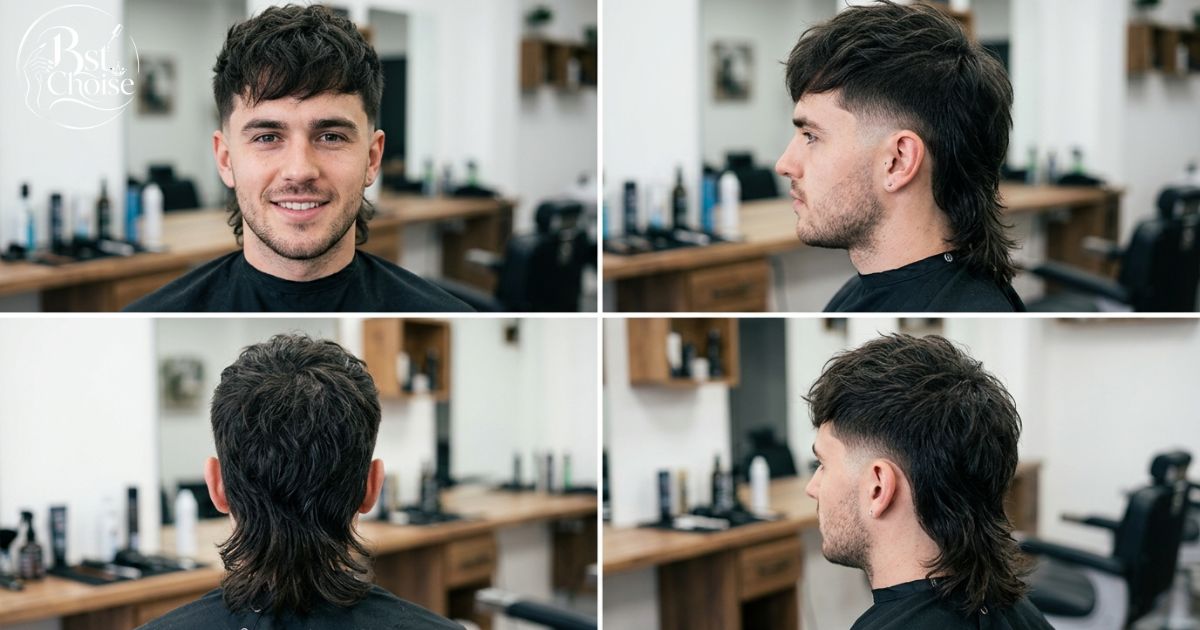

The low burst fade mullet has quietly become one of the most requested haircuts in barbershops this year, and it’s easy to see why. It blends the clean, rounded fade line that curves behind the ear with the rebellious length of a mullet, giving men a style that feels both disciplined and a little untamed. It’s not the loud, exaggerated mullet from decades past, it’s a refined, barber-crafted version built for modern faces, modern hair types, and modern lifestyles.
What makes this cut stand out is how adaptable it is. A guy with thick, coarse hair can wear it just as confidently as someone with fine or curly strands, because the burst fade does the heavy lifting around the ears while the top and back can be shaped to suit almost any texture. It also doesn’t demand a strict styling routine, a small amount of clay or paste, a quick finger-comb, and you’re done.
Below, you’ll find 20 low burst fade mullet variations, styling advice, face-shape and hair-type breakdowns, product recommendations, a maintenance routine, and answers to the questions men ask most before booking their next barber appointment.
What Is a Low Burst Fade Mullet?
A low burst fade mullet is really three haircut concepts working together.
- The burst fade – rather than cutting straight across the side of the head, the fade curves around the ear in a semi-circle, which softens the line and avoids the harsh, blocky look of a standard fade.
- The low placement – the fade begins low, close to the hairline, so more length is preserved around the temples and mid-sides. This keeps the haircut looking subtle rather than aggressive.
- The mullet element – length is deliberately left longer at the back and crown, creating a visual contrast against the faded sides and giving the cut its signature movement.
Put together, you get a hairstyle that reads as tidy from the front and sides, but has personality and flow at the back, the kind of cut that photographs well and still holds up in a formal setting.
Why the Low Burst Fade Mullet Is Trending in 2026
A few things are driving this haircut’s popularity right now:
- Low-maintenance styling. Men want haircuts that look intentional on day one and day twenty, not just fresh out of the chair.
- Barber customization. No two burst fade mullets need to look alike, the fade height, crown texture, and back length can all be tailored.
- Social media influence. Athletes, musicians, and streetwear-focused creators have normalized the mullet again, but in a cleaner, barbered form rather than the exaggerated 80s version.
- Cross-texture flexibility. Whether hair is straight, wavy, curly, or coily, this cut can be adjusted to flatter it instead of fighting it.
- A softer alternative to skin fades. Guys who find high skin fades too harsh are gravitating toward the low burst fade’s gentler transition.
Who Should Choose a Low Burst Fade Mullet?
This haircut tends to suit you if you:
- Want a cut with more character than a standard taper or fade
- Like the idea of natural movement and texture rather than a stiff, sprayed finish
- Have straight, wavy, or curly hair (thick or fine both work with adjustments)
- Don’t mind a barber visit roughly every four to five weeks
- Want something distinctive without going full vintage-mullet
If you prefer an extremely short, uniform haircut with zero length variation, a classic crop or buzz cut will likely suit you better than a mullet-based style.
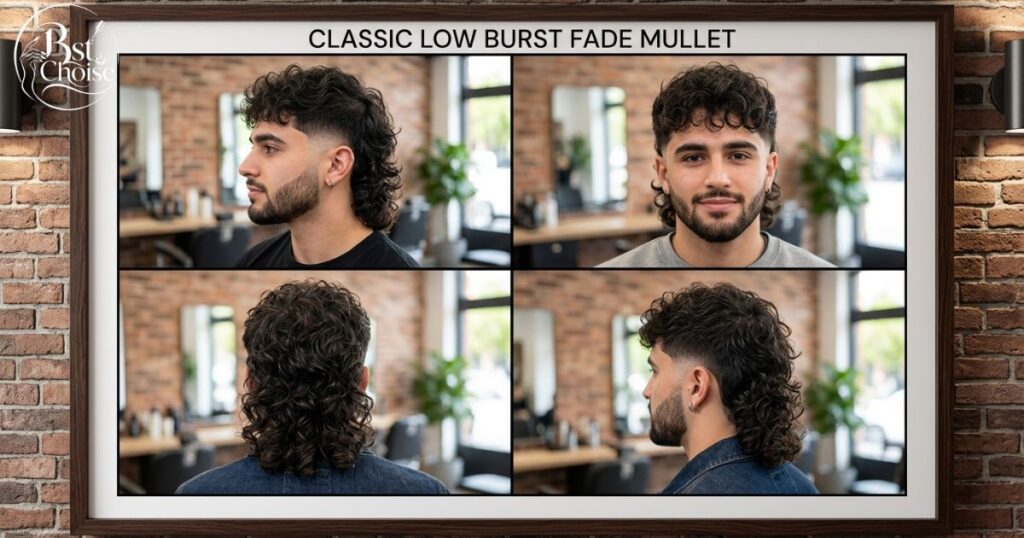
1. Classic Low Burst Fade Mullet
This is the baseline version, a gently curved burst fade around the ear, natural texture on top, and just enough length at the back to create the mullet silhouette without overdoing it. It’s built on proportion rather than drama, which is why it works on so many different men.
Best for: First-timers trying a mullet-style cut
Face shapes: Oval, square, diamond
Hair types: Straight, wavy, thick
Maintenance: Every 4–5 weeks
Pros
- Balanced, easy-to-wear silhouette
- Minimal daily styling required
- Grows out cleanly between trims
- Flatters most face shapes
Cons
- Doesn’t stand out as much as bolder variations
2. Modern Low Burst Fade Mullet
This version leans into current barbering trends with extra texture layered through the crown, keeping the cut lighter and more wearable than a traditional mullet. It pairs well with streetwear and casual outfits alike.
Best for: Men who want a fashion-forward everyday cut
Face shapes: Oval, round, square
Hair types: Straight, wavy
Maintenance: Every 4 weeks
Pros
- Contemporary, lightweight appearance
- Works with a wide range of outfits
- Texture adds visual interest without looking messy
Cons
- Needs a light styling product for the crispest finish
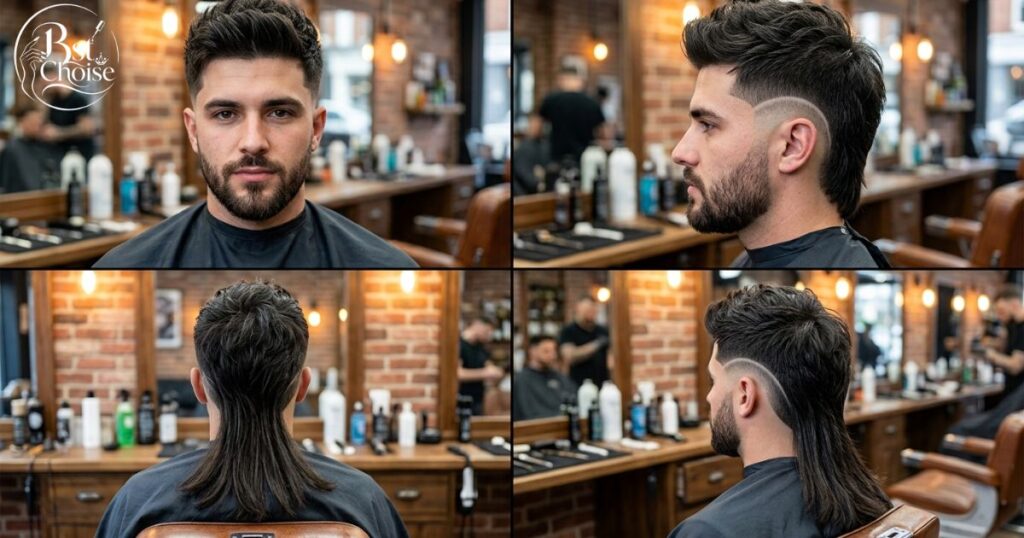
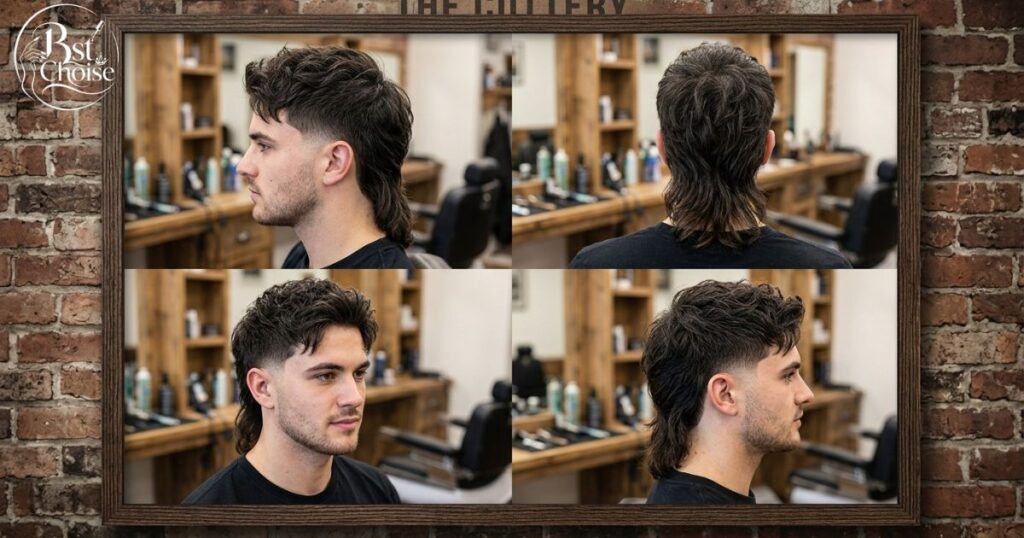
3. Textured Low Burst Fade Mullet
Layering does the work here, creating separation across the top so hair lifts naturally instead of sitting flat. The low burst fade keeps the sides tidy while the textured crown and back become the focal point.
Best for: Guys who prefer a relaxed, natural finish over a polished one
Face shapes: Oval, square, diamond
Hair types: Thick, straight, wavy
Maintenance: Every 4–5 weeks
Pros
- Adds movement without extra product
- Great for controlling thick hair
- Looks intentional even when slightly overgrown
Cons
- Needs regular trims to keep the texture sharp
Read More: 20 Men’s Styles With Comma Hair Ideas That Looks Amazing
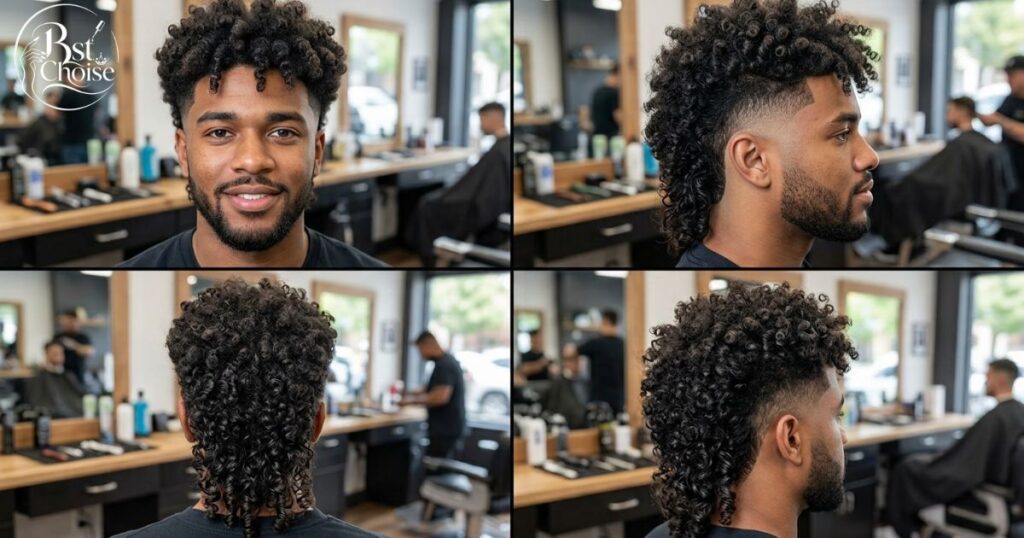
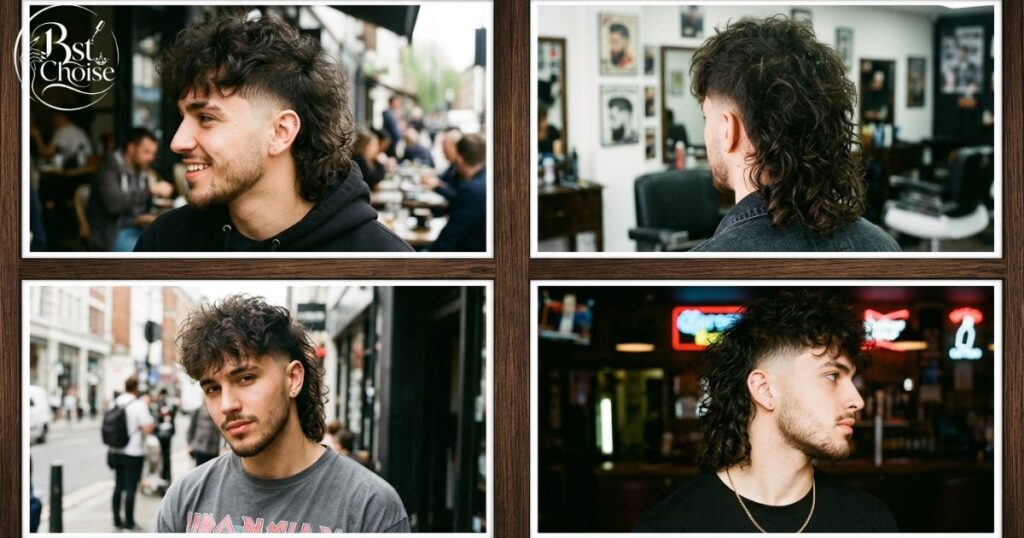
4. Curly Low Burst Fade Mullet
Curls bring built-in texture that no product can fully replicate, and this variation is designed to let them do exactly that. The burst fade trims bulk around the ears so curls on top and at the back stay the centerpiece.
Best for: Naturally curly or coily hair
Face shapes: Oval, square, heart
Hair types: Curly, coily
Maintenance: Every 5–6 weeks
Pros
- Highlights natural curl pattern
- Very little daily styling needed
- Great volume without bulk
Cons
- Requires consistent hydration to avoid frizz
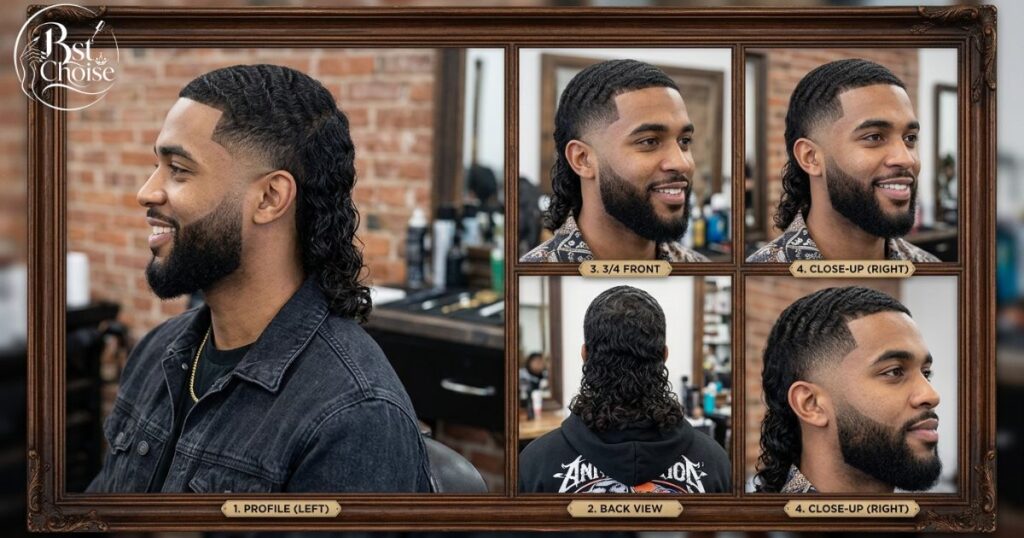
5. Wavy Low Burst Fade Mullet
Waves create depth and movement on their own, and this cut simply gets out of their way. The low burst fade keeps the sides clean while the waves at the back settle into a relaxed flow throughout the day.
Best for: Naturally wavy hair
Face shapes: Oval, diamond, heart
Hair types: Wavy
Maintenance: Every 5 weeks
Pros
- Effortless, air-dried appeal
- Low product requirement
- Looks better as the day goes on
Cons
- Humidity can loosen wave definition
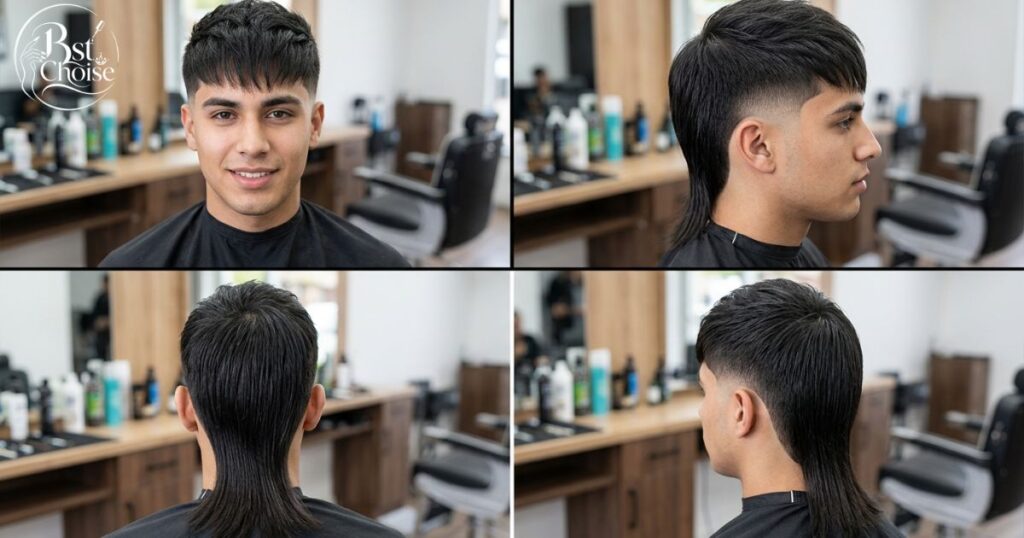
6. Straight Hair Low Burst Fade Mullet
Straight hair gives this haircut razor-sharp lines, making the burst fade especially crisp. Because straight strands lie flatter, a barber will usually add layered texture through the crown so the cut doesn’t look one-dimensional.
Best for: Naturally straight hair
Face shapes: Oval, square, diamond
Hair types: Straight
Maintenance: Every 4–5 weeks
Pros
- Sharp, clean silhouette
- Professional-friendly finish
- Simple to maintain
Cons
- Can look flat without added texture
7. Messy Low Burst Fade Mullet
Built for guys who like a lived-in, unbothered look, this version relies on finger-styling rather than precision combing. A small amount of paste worked through damp hair is usually all it takes.
Best for: Casual, everyday wear
Face shapes: Oval, round, diamond
Hair types: Straight, wavy, thick
Maintenance: Every 5 weeks
Pros
- Fast morning routine
- Relaxed, natural vibe
- Forgiving of slight overgrowth
Cons
- Needs occasional reshaping to avoid looking unkempt
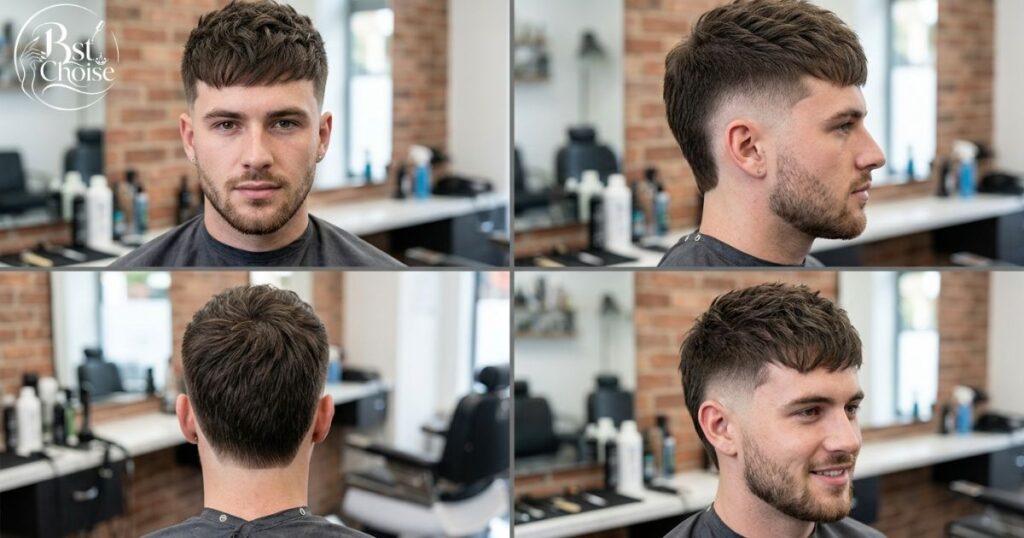
8. Short Low Burst Fade Mullet
A great entry point for anyone nervous about committing to length, this variation keeps the back shorter while still preserving the mullet’s signature contrast. It’s subtle enough for conservative workplaces.
Best for: First-time mullet wearers
Face shapes: Oval, square, round
Hair types: Straight, wavy, thick
Maintenance: Every 4 weeks
Pros
- Easy to maintain
- Works in professional settings
- Low commitment
Cons
- Less dramatic contrast than longer versions
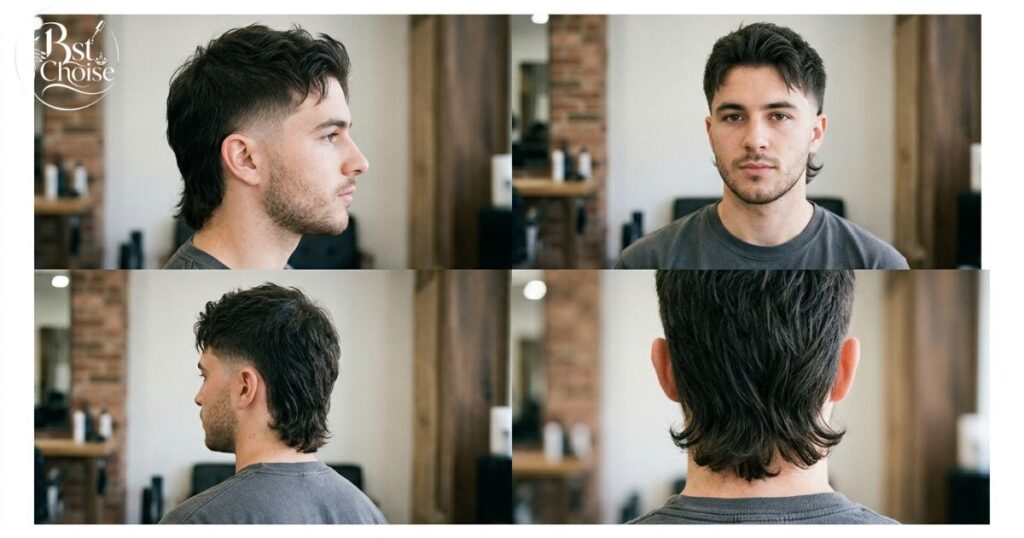
9. Medium-Length Low Burst Fade Mullet
This is the middle ground between subtle and bold, enough back length to create real movement, without the upkeep a long mullet demands. It transitions easily from office to weekend.
Best for: Versatility seekers
Face shapes: Oval, square, diamond
Hair types: Straight, wavy, thick
Maintenance: Every 5 weeks
Pros
- Balanced proportions
- Works across casual and semi-formal settings
- Easy to style day to day
Cons
- Crown needs occasional layering to avoid heaviness
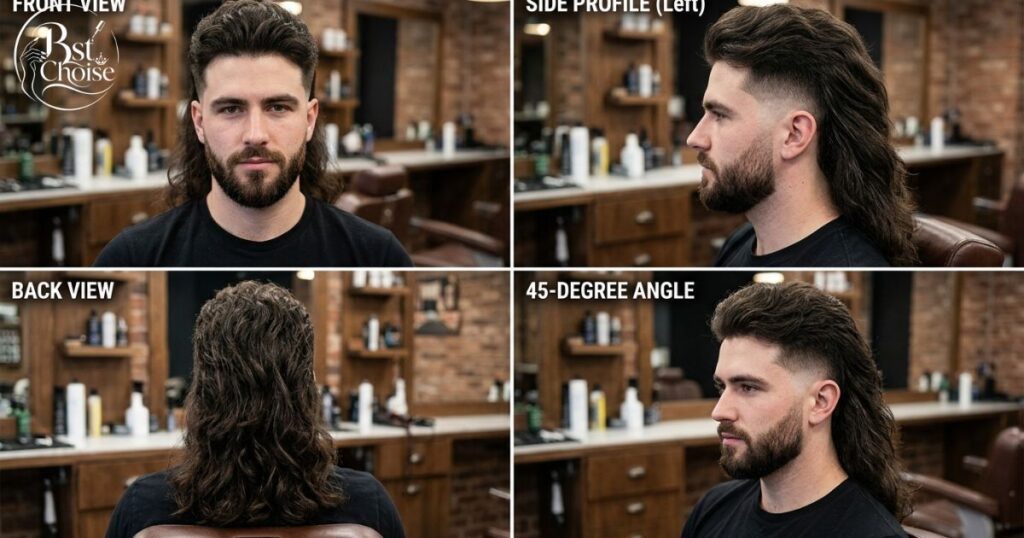
10. Long Low Burst Fade Mullet
For men who want their haircut to make a statement, this version pushes the back length further while the burst fade keeps everything grounded. It offers the most styling flexibility of any variation on this list.
Best for: Bold, expressive style
Face shapes: Oval, diamond, heart
Hair types: Straight, wavy
Maintenance: Every 5–6 weeks
Pros
- Maximum visual impact
- Highly customizable styling
- Distinctive, memorable look
Cons
- Longer growing-out period requires patience
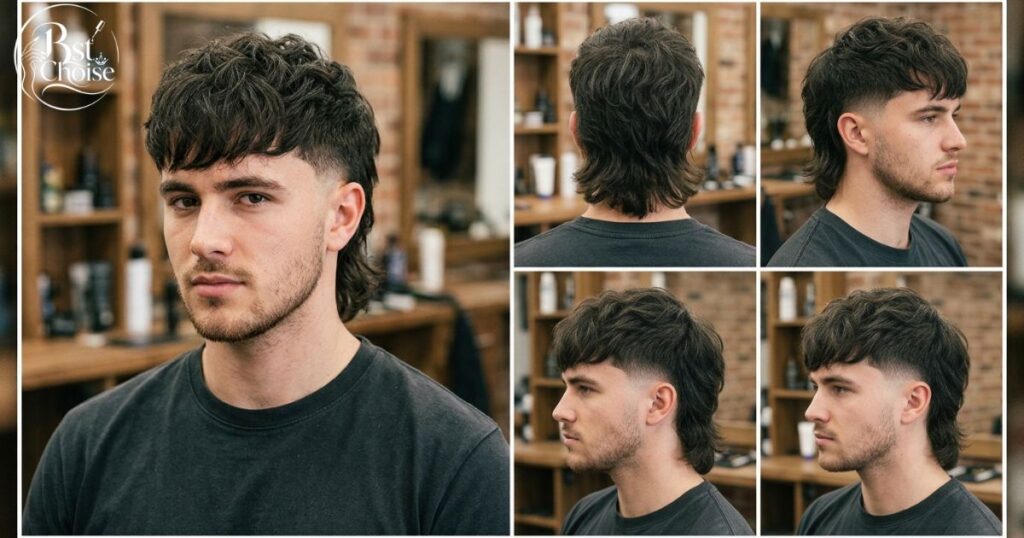
11. Low Burst Fade Mullet with Fringe
Adding a fringe softens the whole haircut and brings a youthful, Korean-inspired edge to the mullet silhouette. The fringe frames the eyes while the back handles the mullet’s usual job of adding movement.
Best for: Trend-conscious styling
Face shapes: Heart, oval, long
Hair types: Straight, wavy
Maintenance: Every 4 weeks
Pros
- Frames the face nicely
- Fresh, youthful finish
- Pairs well with modern streetwear
Cons
- Fringe needs more frequent trims to stay sharp
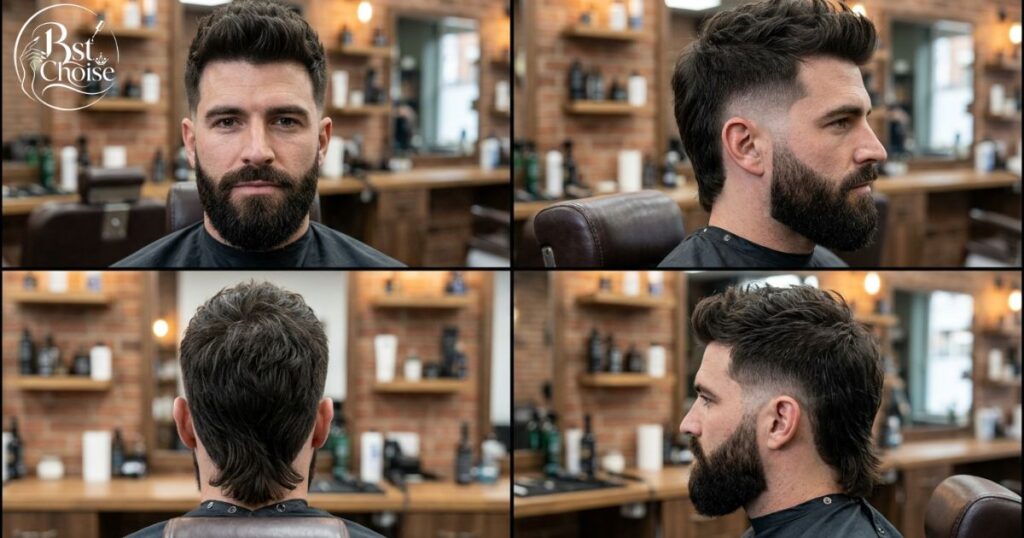
12. Low Burst Fade Mullet with Beard
Pairing this cut with a well-groomed beard creates a stronger, more masculine overall profile, especially when the fade blends directly into the facial hair rather than treating the two separately.
Best for: Men with medium-to-full beards
Face shapes: Oval, rectangle, diamond
Hair types: Straight, wavy, thick
Maintenance: Hair every 4 weeks, beard every 2–3 weeks
Pros
- Strengthens jawline appearance
- Balanced, masculine profile
- Cohesive grooming look
Cons
- Requires two grooming routines instead of one
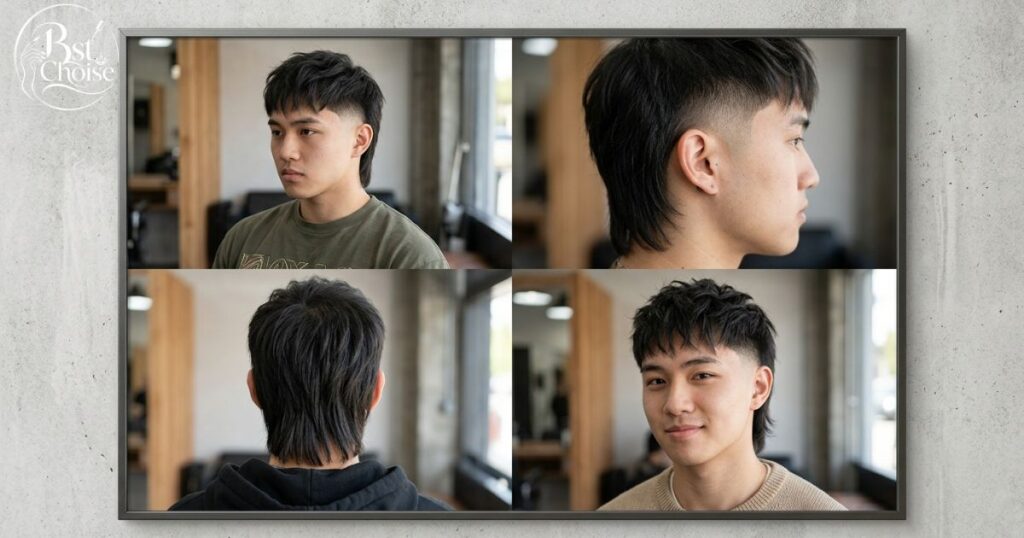
13. Asian Low Burst Fade Mullet
Naturally dense, straight hair common in many Asian hair types lends itself beautifully to this cut. The burst fade removes bulk near the ears, while the crown keeps its natural fullness and movement.
Best for: Thick, straight hair textures
Face shapes: Oval, diamond, heart
Hair types: Straight, thick
Maintenance: Every 4–5 weeks
Pros
- Manages density without flattening it
- Clean, contemporary silhouette
- Versatile for work or casual wear
Cons
- Best results depend on a barber experienced with dense, straight hair
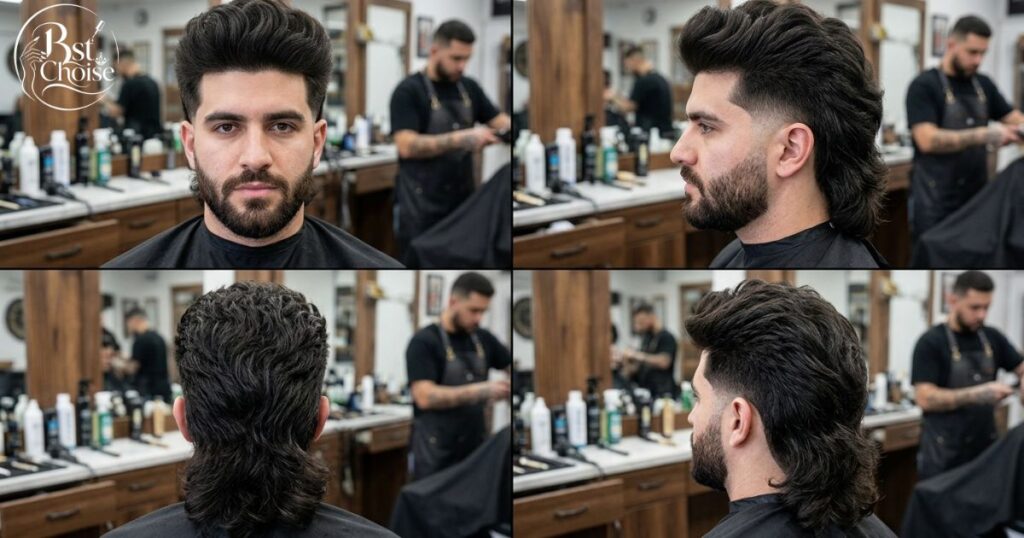
14. Thick Hair Low Burst Fade Mullet
Thick hair often gets weighed down by the wrong cut, but this version removes internal bulk through layering rather than cutting length away, so the natural fullness stays intact while movement improves.
Best for: Coarse or dense hair
Face shapes: Oval, square, diamond
Hair types: Thick, dense, coarse
Maintenance: Every 4–5 weeks
Pros
- Controls volume without flattening it
- Improves texture as hair grows
- Low daily styling effort
Cons
- Needs regular shaping to prevent bulkiness returning
15. Fine Hair Low Burst Fade Mullet
Fine hair benefits from smart layering and lightweight products that create the illusion of thickness. Keeping the length slightly shorter also prevents fine strands from falling flat under their own weight.
Best for: Thin or fine hair
Face shapes: Oval, round, heart
Hair types: Fine, straight
Maintenance: Every 4 weeks
Pros
- Creates the appearance of fuller hair
- Lightweight, easy styling
- Youthful, fresh finish
Cons
- Volumizing products are almost essential for best results
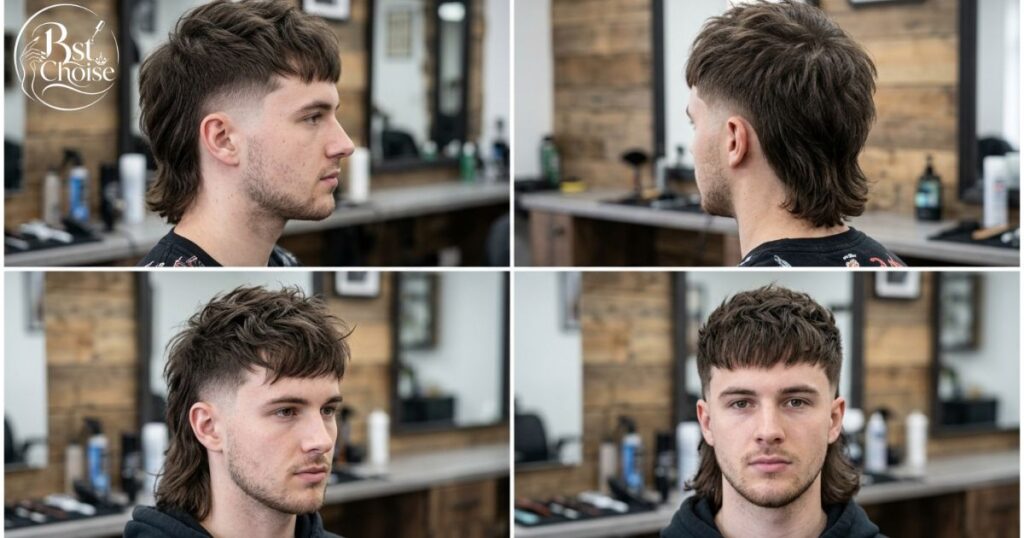
16. Tapered Low Burst Fade Mullet
Rather than fading down to the skin, this variation uses a gradual taper around the ears and neckline, producing a softer, more conservative transition that’s easier to wear in formal environments.
Best for: Subtle, workplace-friendly styling
Face shapes: Oval, square, round
Hair types: Straight, thick, wavy
Maintenance: Every 4–5 weeks
Pros
- Professional-friendly
- Ages gracefully between trims
- Simple upkeep
Cons
- Less contrast than a full skin fade version
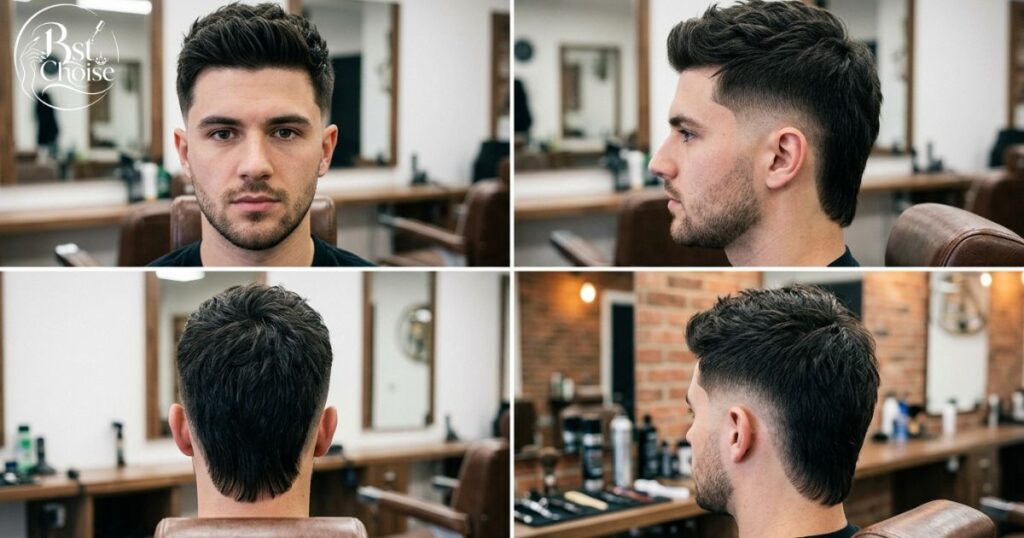
17. Razor Textured Low Burst Fade Mullet
A razor, rather than shears, creates softer, lighter ends that separate on their own, giving this cut a naturally tousled, dynamic finish without needing heavy product.
Best for: Maximum natural texture
Face shapes: Oval, diamond, heart
Hair types: Straight, wavy
Maintenance: Every 4 weeks
Pros
- Lightweight, dynamic movement
- Modern, editorial finish
- Minimal styling effort
Cons
- Can be drying on already fragile hair
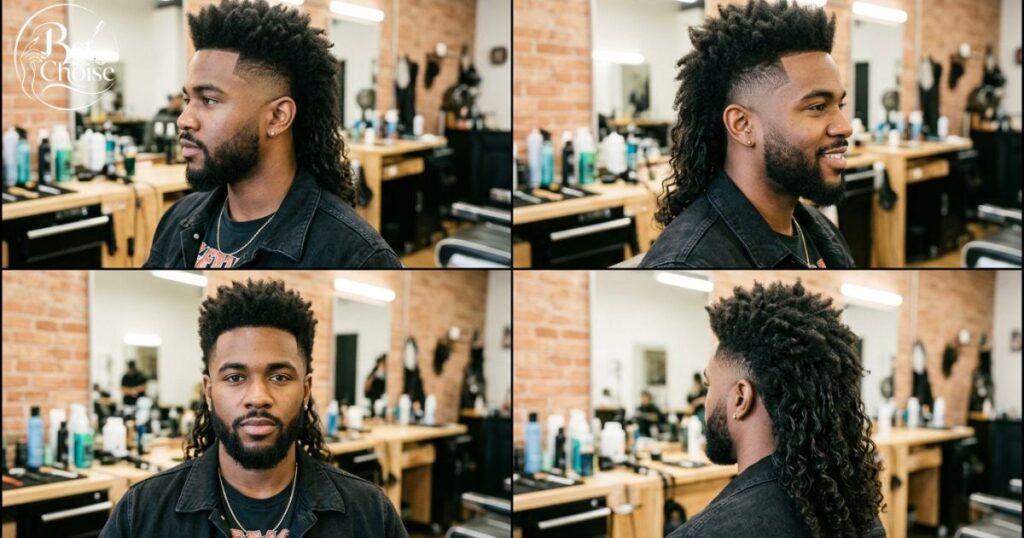
18. Modern Business Low Burst Fade Mullet
Toned down for the office, this variation keeps the back shorter and the top neatly textured, proving a mullet can be professional without losing its personality entirely.
Best for: Professionals who still want some edge
Face shapes: Oval, square, heart
Hair types: Straight, wavy
Maintenance: Every 4–5 weeks
Pros
- Comfortably workplace-appropriate
- Polished yet distinctive
- Simple to maintain
Cons
- More subdued than fashion-focused variations
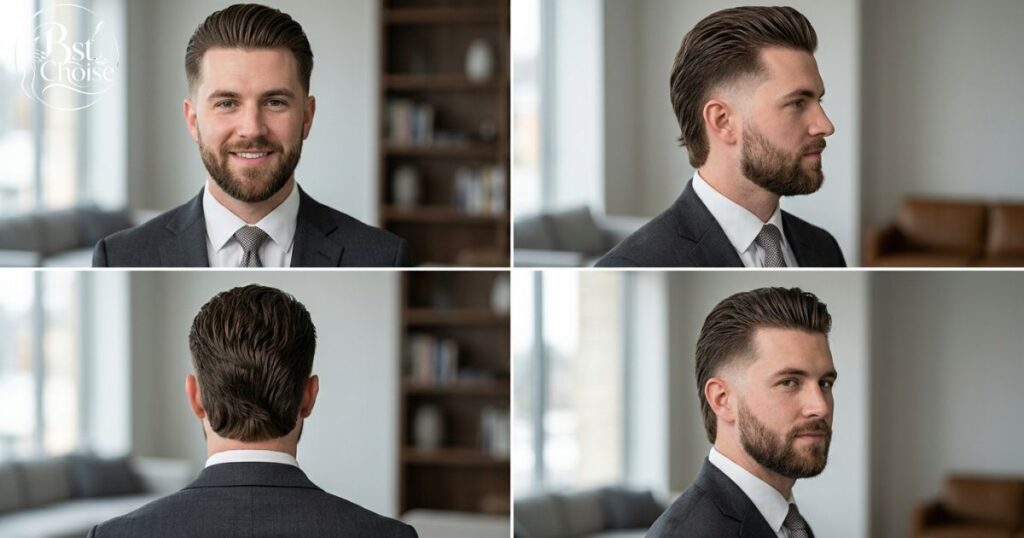
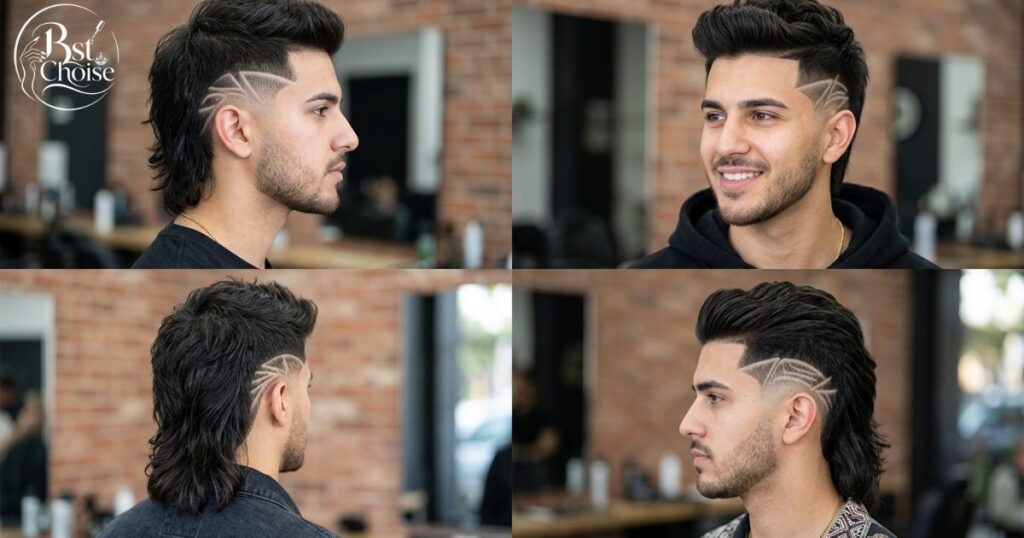
19. Low Burst Fade Mullet with Design
For men who like personalization, a simple shaved line or subtle pattern along the fade adds a signature touch without altering the haircut’s core shape.
Best for: Personalized, statement styling
Face shapes: Works with most face shapes
Hair types: Straight, thick, wavy
Maintenance: Every 2–3 weeks
Pros
- Unique, individual look
- Great conversation starter
- Doesn’t disrupt overall structure
Cons
- Designs grow out quickly and need touch-ups
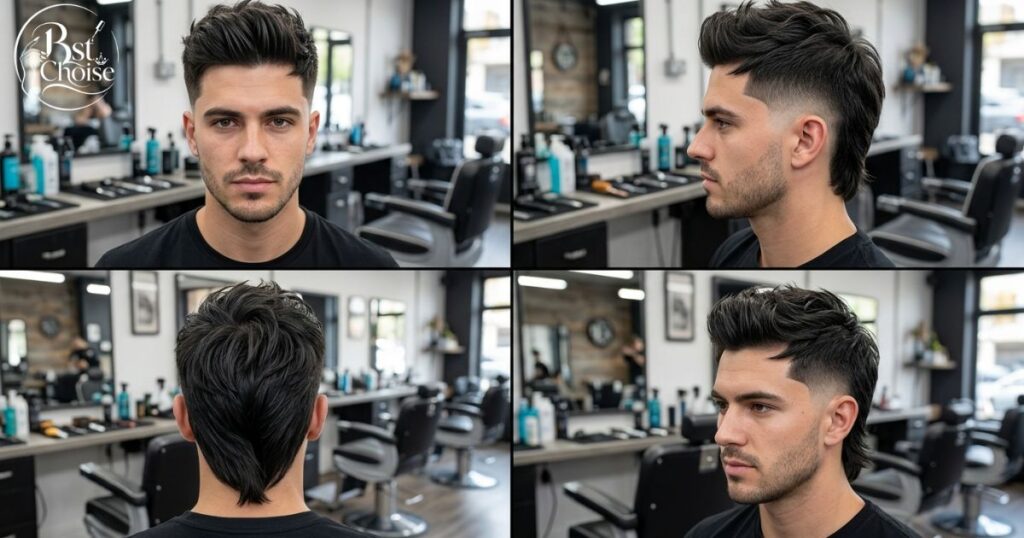
20. Contemporary Low Burst Fade Mullet
This is the fully customized, no-fixed-formula version, fade height, crown texture, neckline, and back length are all adjusted around your specific hair and face shape rather than a template.
Best for: A fully tailored modern haircut
Face shapes: Works with most face shapes
Hair types: Straight, wavy, curly, thick, fine
Maintenance: Every 4–5 weeks
Pros
- Highly adaptable to individual features
- Consistently modern and current
- Easy to adjust over time
Cons
- Requires an experienced barber to get right
How to Choose the Right Low Burst Fade Mullet for Your Face Shape
Oval Face
Considered the most balanced face shape, oval faces can wear nearly every variation on this list, from the classic to the contemporary. If you like experimenting, this shape gives you the most freedom.
Round Face
Look for versions that add height and reduce width, textured tops with cleaner sides work best. Avoid bulky sides, which can visually widen the face.
Square Face
Strong jawlines pair well with structured cuts. A touch of texture on top softens sharp angles while keeping the overall look masculine and defined.
Heart Face
A textured fringe paired with moderate back length helps balance a wider forehead against a narrower chin, creating better overall symmetry.
Diamond Face
Extra texture around the crown softens prominent cheekbones. Longer, more textured variations tend to work particularly well here.
| Face Shape | Best-Suited Styles |
| Oval | Classic, Contemporary, Modern, With Fringe |
| Round | Textured, Modern, Razor Textured |
| Square | Classic, Thick Hair, Business |
| Heart | With Fringe, Medium-Length, Wavy |
| Diamond | Long, Contemporary, Curly |
Which Low Burst Fade Mullet Works Best for Your Hair Type?
Straight Hair
Delivers crisp, clean lines. Ask for layered texture on top to avoid a flat, one-dimensional look.
Thick Hair
Naturally full and voluminous. Internal layering removes bulk while keeping healthy fullness intact.
Fine Hair
Benefits from lightweight, volumizing products. Keep length moderate so hair doesn’t fall flat.
Wavy Hair
Movement comes naturally here. A sea salt spray enhances texture without stiffening the hair.
Curly Hair
Produces excellent natural volume. Regular hydration keeps curls defined and frizz-free.
What Your Barber Needs to Know about Low Burst Fade Mullets
Every barber pictures a “burst fade mullet” a little differently, which is the single biggest reason results vary so much. To avoid disappointment, be specific:
- Keep the burst fade low, curving around the ear rather than high on the head
- Preserve natural texture through the crown
- Leave enough length at the back for real movement
- Blend the crown smoothly into the mullet section
- Avoid pushing the fade too high
- Ask your barber to adjust the shape around your face and hair type, not a reference photo alone
Bringing a reference photo is helpful, but treat it as inspiration rather than an exact blueprint, your hair type and face shape will always change the final result slightly.
Best Styling Products for a Low Burst Fade Mullet
| Product | Best For |
| Matte Clay | Strong hold with a natural, non-shiny finish |
| Texture Powder | Lightweight volume and separation |
| Sea Salt Spray | Enhancing waves and relaxed texture |
| Matte Styling Paste | Flexible hold with a soft look |
| Curl Cream | Hydrating and defining natural curls |
| Leave-In Conditioner | Adding moisture to longer mullet lengths |
Matte Clay
Strong hold with zero shine, ideal for textured or messy variations that need to hold shape all day.
Texture Powder
Lifts hair at the root and adds separation, especially useful for fine or straight hair that tends to fall flat.
Sea Salt Spray
Enhances natural waves and adds a relaxed, beachy texture without weighing hair down.
Matte Styling Paste
Offers flexible, reworkable hold, good for guys who like adjusting their style throughout the day.
Curl Cream
Defines curls, controls frizz, and keeps natural curl patterns hydrated and healthy.
Leave-In Conditioner
Essential for longer mullet variations, keeping ends hydrated and preventing breakage.
Weekly Maintenance Routine
Daily
- Style with a small amount of product
- Avoid over-touching or repeatedly restyling hair through the day
- Wash only when needed to avoid stripping natural oils
Two to Three Times Per Week
- Shampoo according to your hair type
- Condition thoroughly, especially at the ends
- Apply texture products after towel-drying, not on soaking-wet hair
Every Week
- Trim stray neckline hairs if needed
- Add extra moisture for curly or longer sections
- Clean any product buildup from the scalp
Every Four to Five Weeks
- Book a barber visit
- Refresh the burst fade line
- Trim split ends
- Restore texture and shape throughout the top
Common Mistakes to Avoid
- Choosing a variation that doesn’t suit your face shape
- Letting the back grow out while ignoring the crown
- Overloading hair with product
- Skipping regular barber appointments
- Brushing textured hair completely flat
- Using shiny, high-gloss products that erase natural texture
- Neglecting hydration for curly or wavy hair
- Copying a celebrity or influencer cut without accounting for your own hair type
Frequently Asked Questions
Is a Low Burst Fade Mullet suitable for professional workplaces?
Yes, shorter, more conservative versions like the Business or Classic variation work fine in most professional settings.
How often should I get a trim?
Roughly every four to five weeks keeps the fade sharp and the mullet shape well-defined.
Does this haircut work with curly hair?
Yes, curly hair adds natural volume and texture, making it one of the better hair types for this style.
Is the Low Burst Fade Mullet difficult to style?
Not at all. Most versions only need a small amount of matte product and a couple of minutes each morning.
Is this hairstyle still popular in 2026?
Yes, it remains one of the fastest-growing men’s haircuts because it balances individuality with practicality.
Conclusion
The low burst fade mullet has grown well beyond a passing trend, it’s now a genuine barbering category with room for dozens of personal variations. Whether you want the understated Classic cut, the bold Long mullet, or a fully Contemporary version built entirely around your own hair and face shape, there’s a version here that can work for you.
The real secret to nailing this haircut isn’t picking the flashiest option online, it’s choosing the variation that fits your natural texture, face shape, and daily routine, then communicating clearly with a barber who understands the burst fade technique. Get that right, invest in a couple of good styling products, and stick to a regular trim schedule, and you’ll have a haircut that looks sharp from the first day to the last day before your next appointment.

