
The mullet is back, but it no longer looks like the 1980s original. Today’s version pairs a longer back with clean, faded sides. The result looks sharper, softer around the edges, and far easier to wear.
The problem is choice. Burst, taper, skin, drop, shadow: each fade changes the cut in a different way. This guide walks you through 30 modern mullet fade types and styles, who each one suits, and how to ask for it. You’ll also get styling steps, maintenance timelines, and a quick comparison table.
Quick answer: A modern mullet fade combines short, blended sides with length at the crown and nape. The taper fade is the easiest to start with. The skin fade gives the boldest contrast.
What Is a Modern Mullet Fade?
A modern mullet fade keeps the classic “shorter on the sides, longer at the back” shape. The difference is how the sides are finished. Instead of a bulky, uneven cut, the sides are clipper-blended so the hair gradually shortens toward the ears and neckline.
The top is usually textured or layered. The back flows down over the nape. Done well, it looks deliberate, not accidental.
Why men choose it:
- It adds personality without a full-on retro look.
- The faded sides keep the cut clean and tidy.
- It works on straight, wavy, and curly hair.
- You can dial it up or down, from office-friendly to statement-making.
Modern Mullet vs Fade
These two words describe different things. A mullet describes the length pattern: short up front and on the sides, longer behind. A fade describes how the sides are blended with clippers.
So you’re not choosing one or the other. You’re combining them. A mullet fade is simply a mullet whose sides are faded.
Modern Mullet Fade vs Taper
Both shorten the sides gradually, but the finish is different.
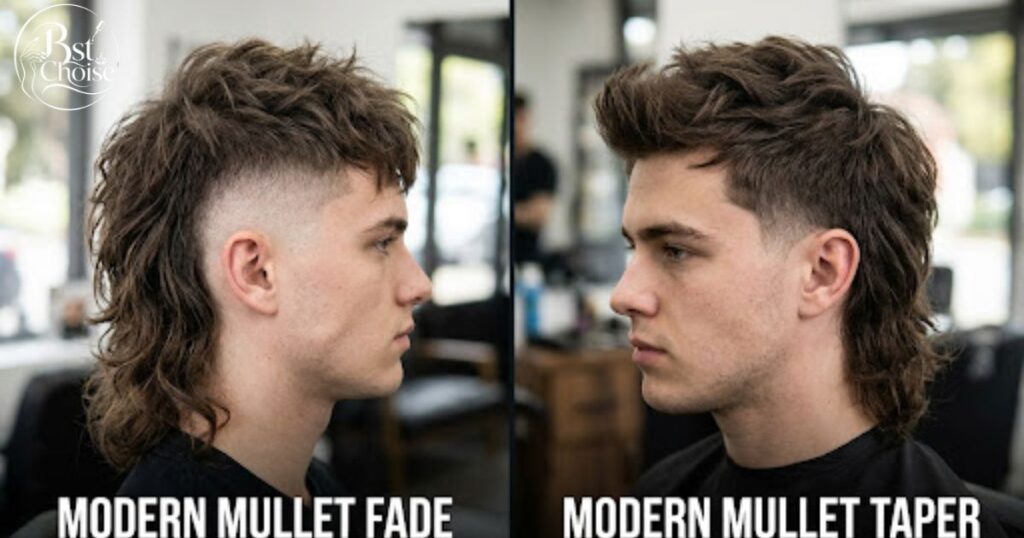
- Fade: Shorter, sharper, and can go down to bare skin. Higher contrast.
- Taper: Shorter only around the ears and neckline. Softer and more natural.
Neither is better. A taper suits a subtle, everyday look. A fade suits a bolder one.
Top 30 Modern Mullet Fade Types & Styles to Try
Most mullet fades differ in two ways: where the fade starts and how the top and back are shaped. The styles below are grouped loosely by fade type first, then by cut details, hair type, and finishing touches.
Modern Mullet Burst Fade

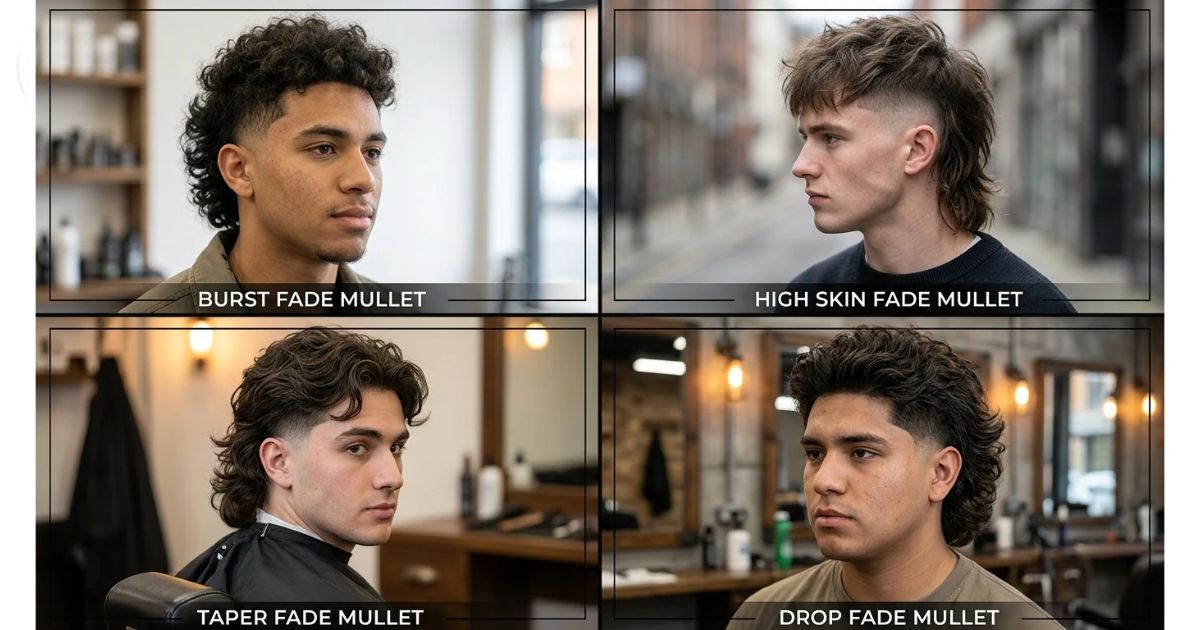
A burst fade curves around the ear in a semicircle and leaves length at the back. It adds shape without harsh lines. It’s one of the most popular pairings for a mullet, especially on curly or textured hair.
Modern Mullet Low Fade
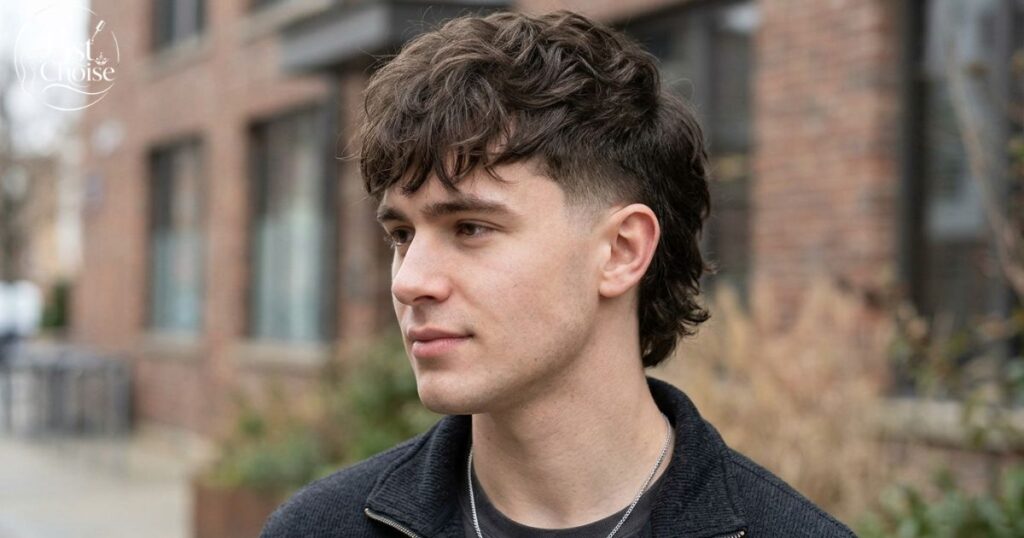
The fade starts low, just above the ear and along the neckline. It’s subtle and tidy. This is a smart first step if you’re new to mullets or work in a conservative environment.
Modern Mullet Taper Fade
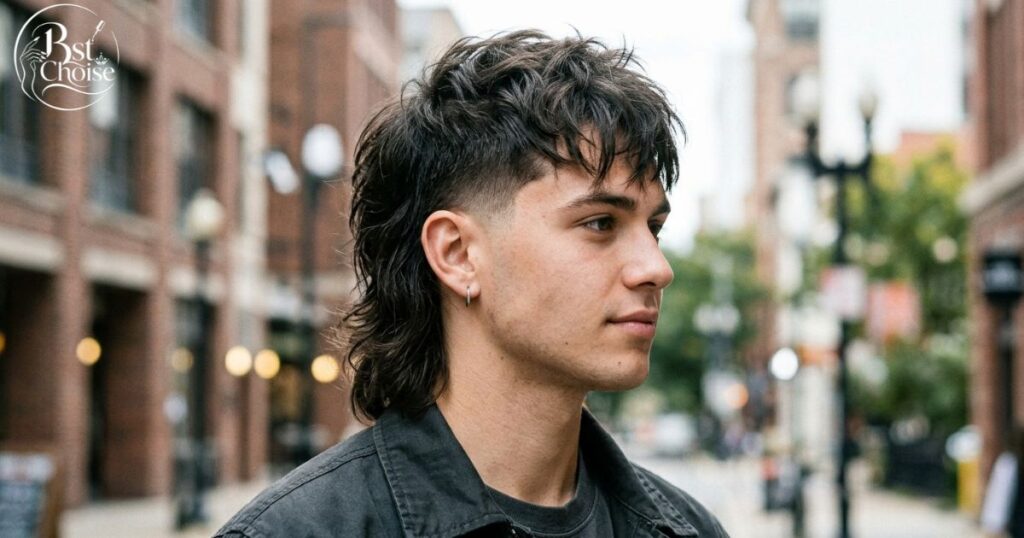
The hair shortens gradually and never reaches bare skin. You get clean edges with a natural look. It’s also the most forgiving when it grows out.
Read More: 18 Best Mid Taper Fade Black Male Styles (2026)
Classic Modern Mullet Fade
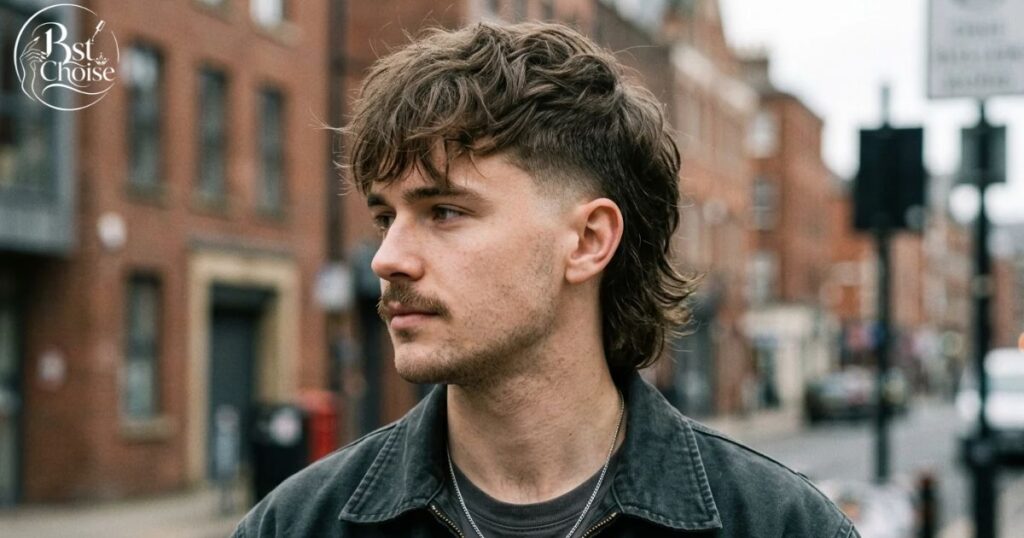
This is the baseline version. It has a standard fade on the sides, medium length on top, and a moderately long back. Most other variations build on this shape.
Mid Fade Modern Mullet
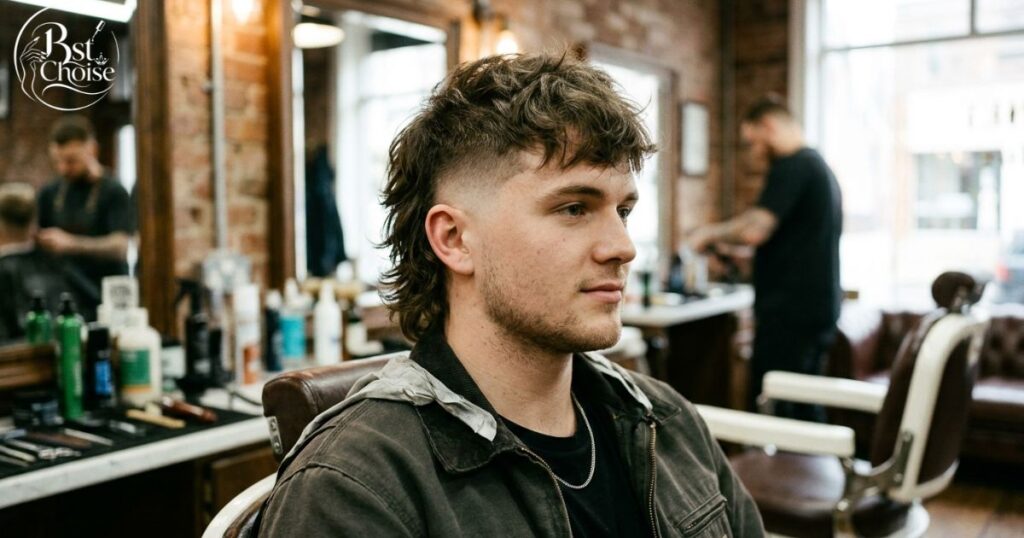
A mid fade begins around the temples. It sits between low and high, so the contrast is noticeable but not extreme. It’s a balanced pick if you can’t decide.
Modern Mullet High Fade
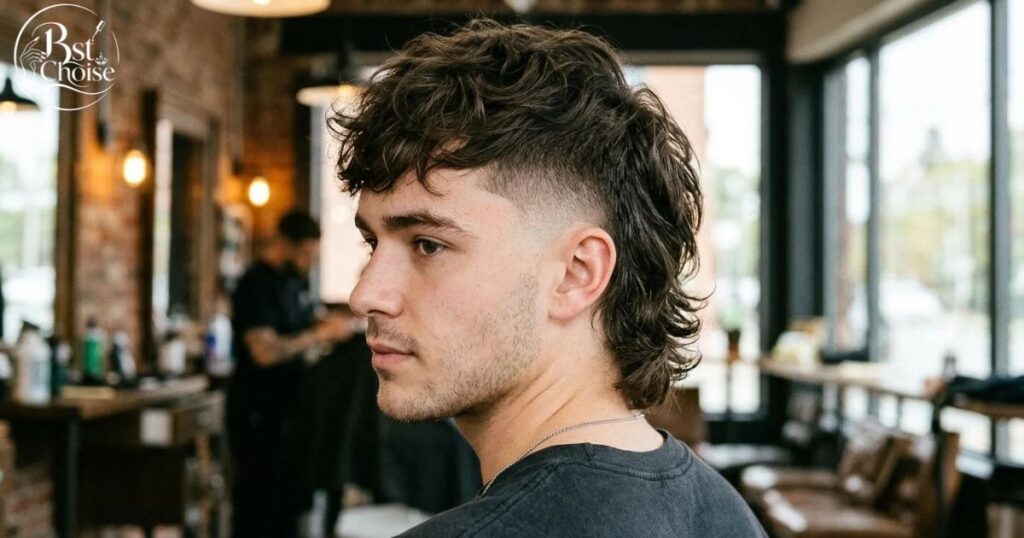
The fade starts high on the head, close to the crown. That creates strong contrast between short sides and a long back. It’s bold, modern, and works well with thick hair.
Modern Mullet Skin Fade
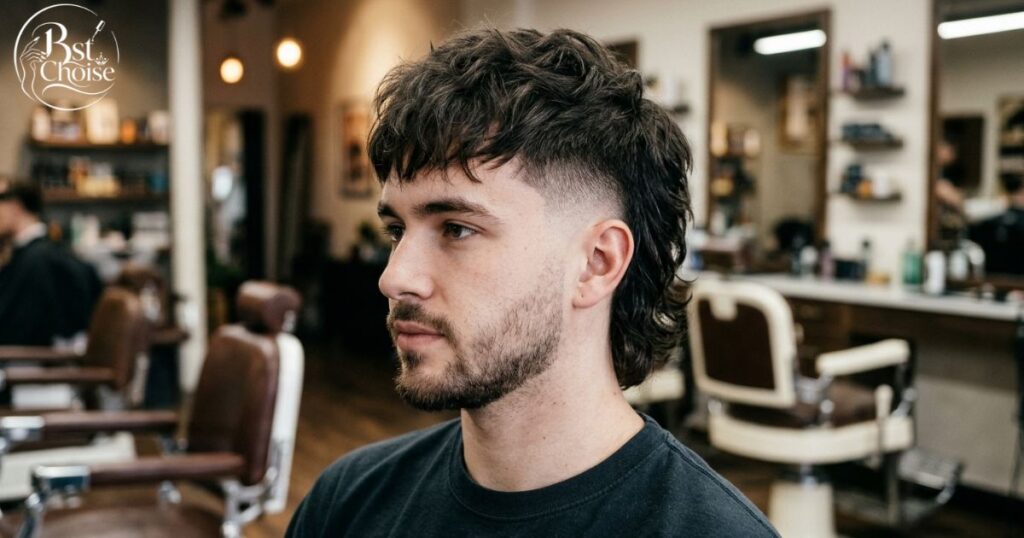
Also called a bald fade, it blends down to bare skin. It’s the sharpest option. It also shows regrowth fastest, so expect more frequent barber visits.
Undercut Mullet Fade
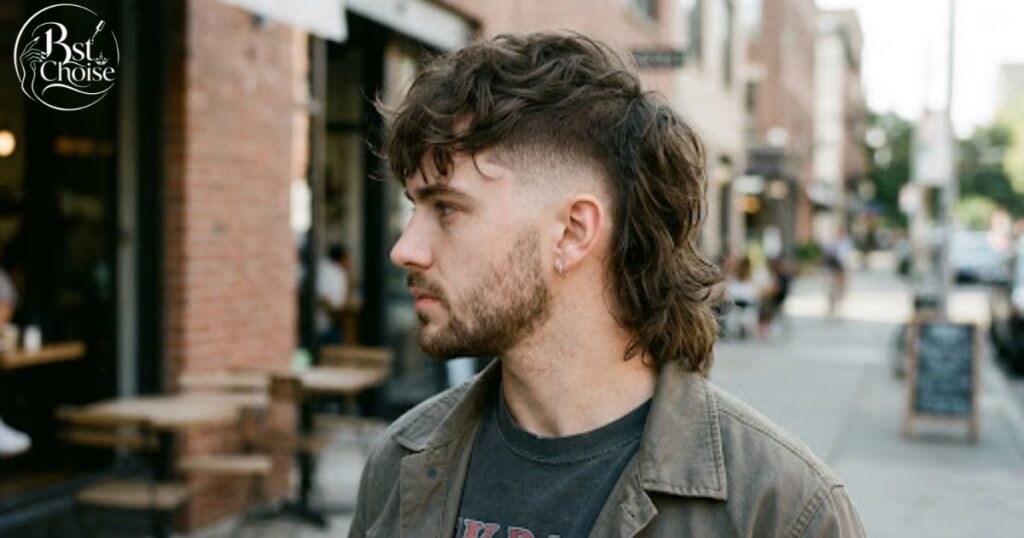
The sides are cut very short and disconnected from the longer top. The jump in length is obvious. It suits men who want a dramatic, high-contrast look.
Textured Modern Mullet Fade
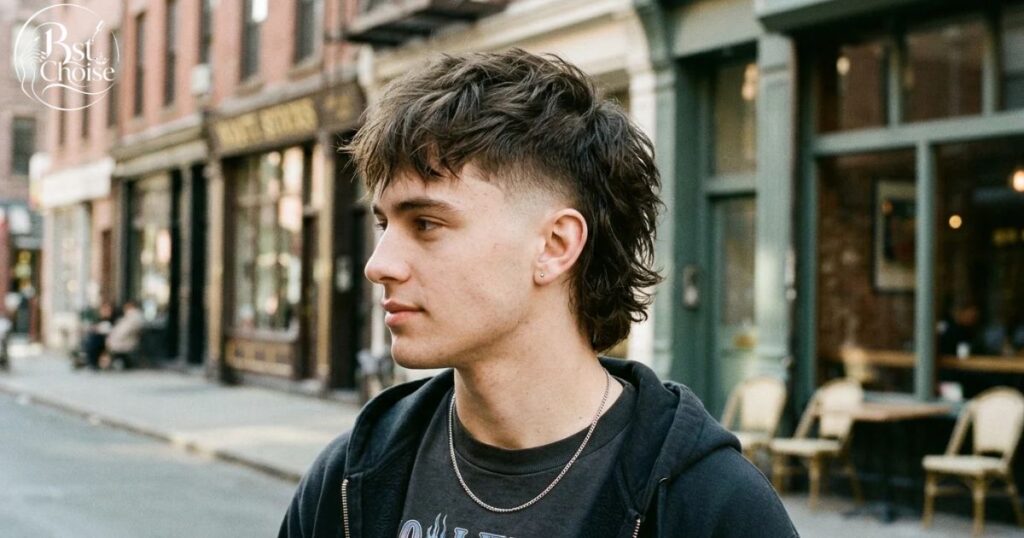
Choppy layers are cut into the top and back to add movement. This removes the heavy, flat look that mullets can have. A little matte product finishes it off.
Fringe Modern Mullet Fade
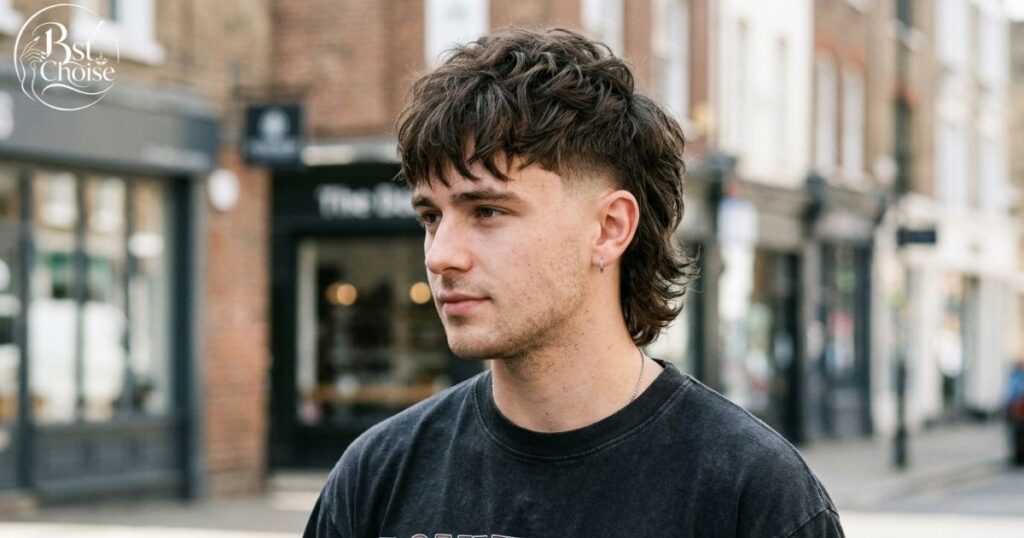
A fringe brings the hair forward over the forehead. It softens the face and balances the longer back. It looks best on straight or wavy hair.
Middle Part Modern Mullet Fade
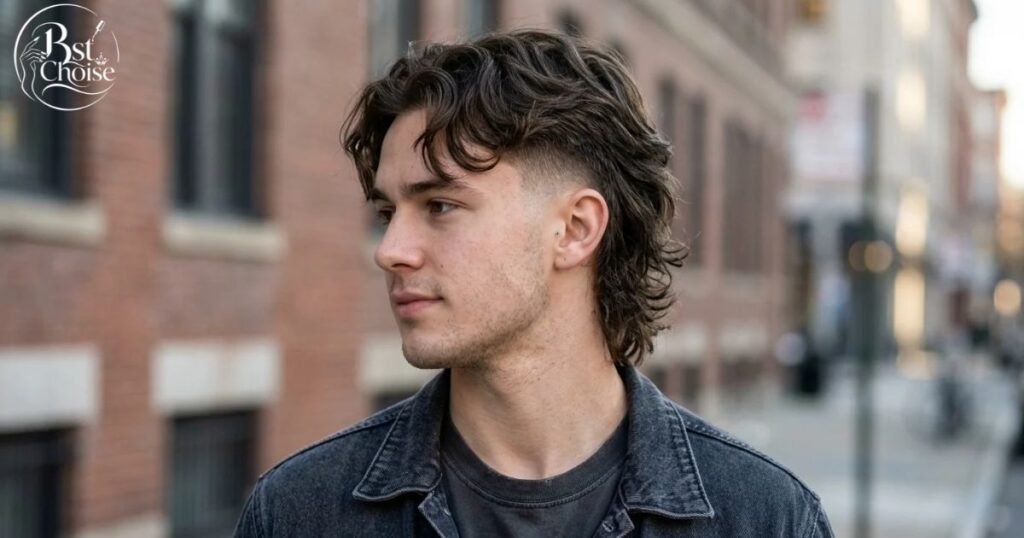
A centre part gives the cut a relaxed, slightly retro feel. You need enough length on top for the hair to fall naturally to both sides. Wavy hair does this especially well.
Layered Modern Mullet Fade
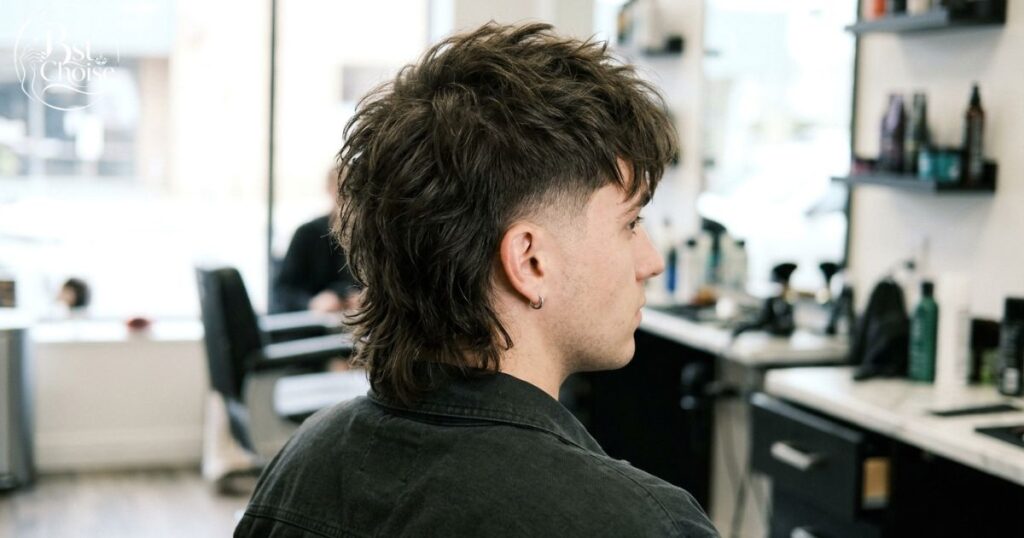
Layers reduce weight at the back and top. That prevents a “helmet” shape and helps thick hair sit better. It’s a good option if your hair feels bulky.
V Back Modern Mullet Fade
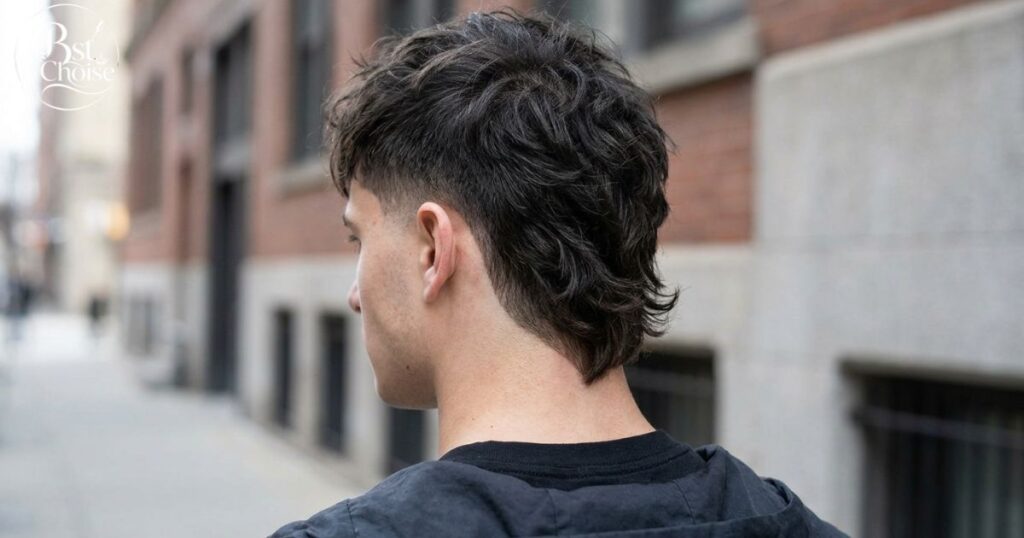
Instead of a straight line at the nape, the back is cut into a V. It’s a small detail that makes the back view look more finished. It also tends to look neat for longer.
Sporty Modern Mullet Fade

This version stays short and tight, with a trimmed back and a clean fade. It’s practical for gyms, sports, and busy mornings. Styling takes almost no time.
Wolf Cut Modern Mullet Fade
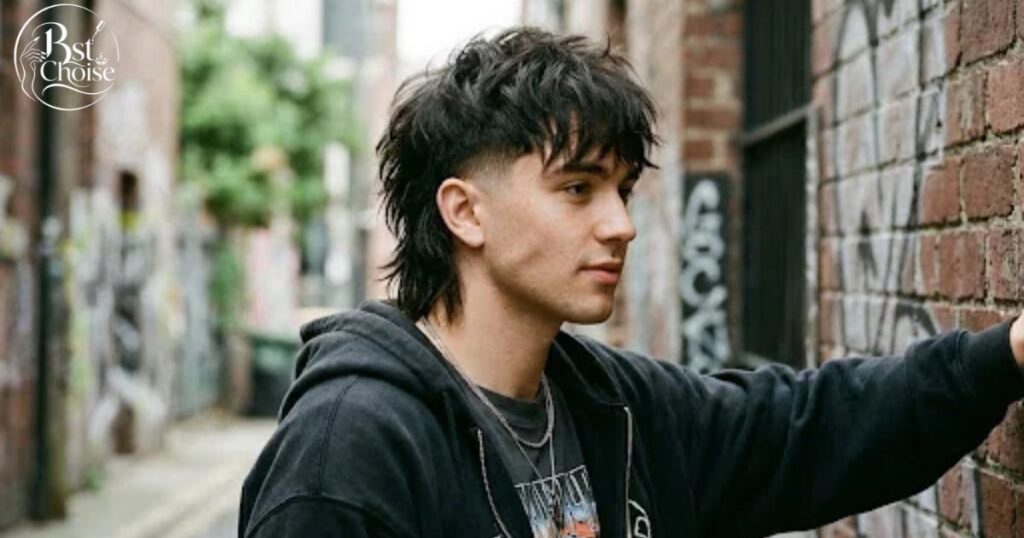
The wolf cut mixes mullet and shag ideas with heavy layering. Add a fade and you get a shaggy, voluminous top over clean sides. It’s casual and a little wild.
Modern Mullet Fade Line Design
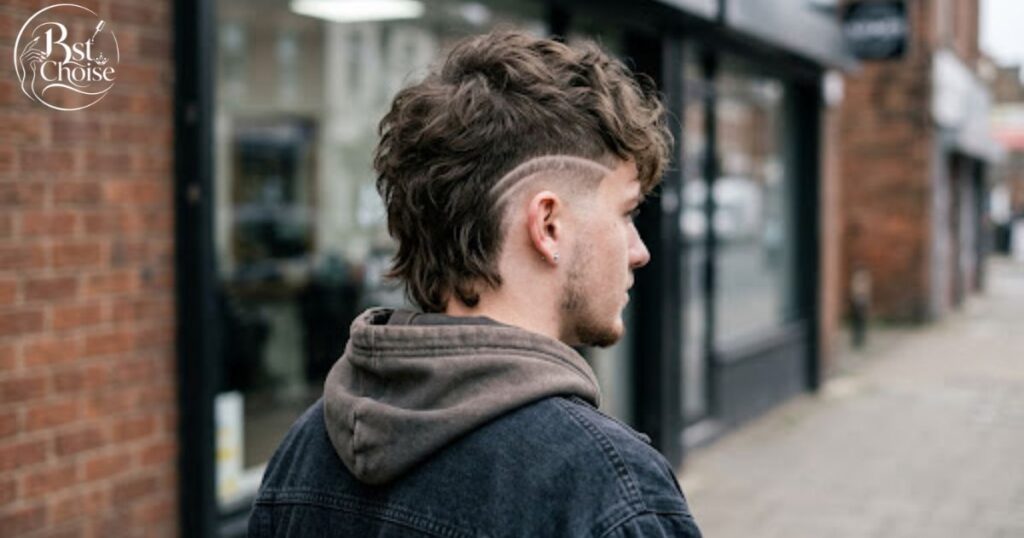
A thin shaved line or small pattern is cut into the fade. It personalises the haircut. Ask a barber who is comfortable with detail work, since clean lines need steady clippers.
Short Modern Mullet Fade
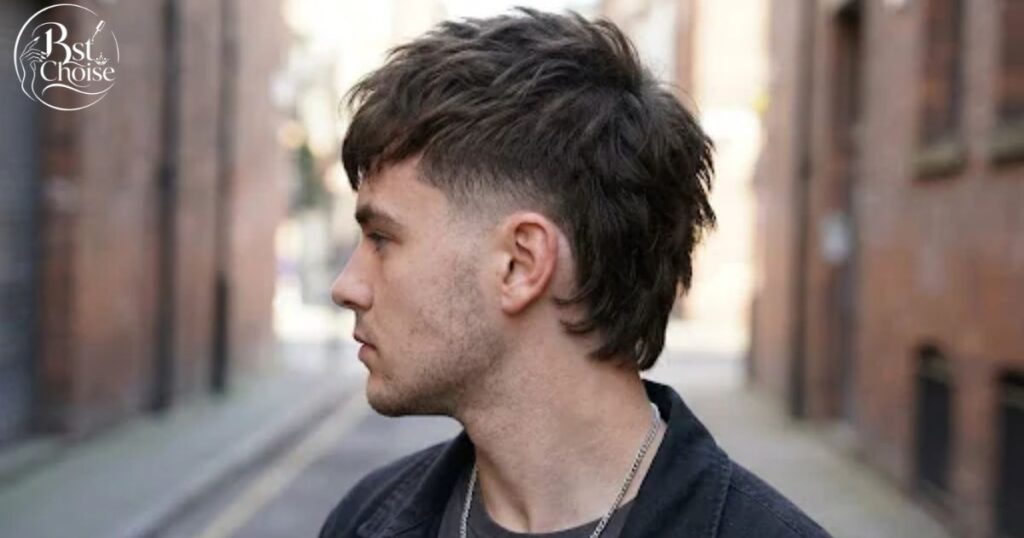
Keep the top and back short and you get the mullet shape without the commitment. It’s the lowest-key version. It’s also the easiest to wear to work or school.
Long Hair Modern Mullet Fade
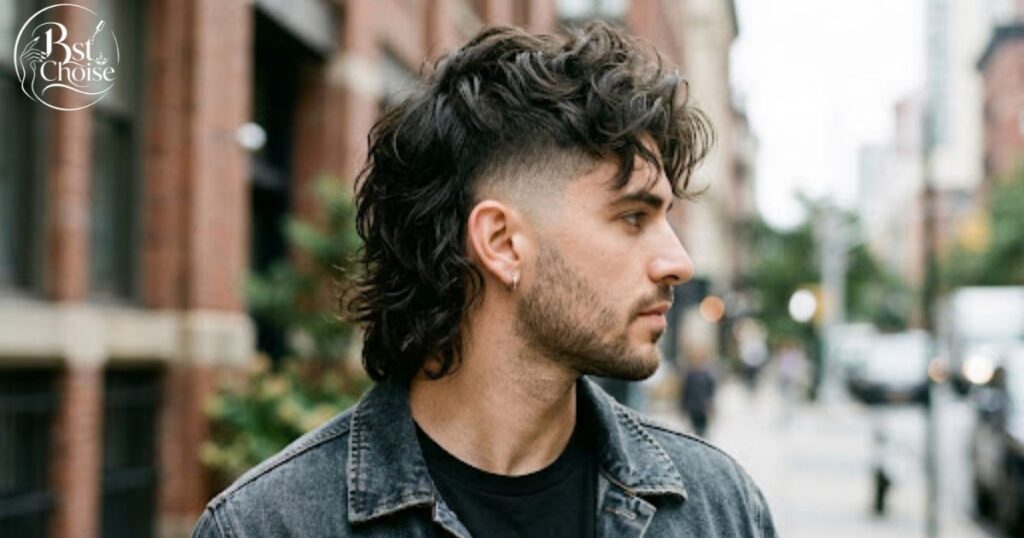
A longer back makes the mullet a statement. It needs regular trims so it looks planned instead of overgrown. Keep the ends healthy, because long ends show damage quickly.
Modern Mullet Fade Straight Hair
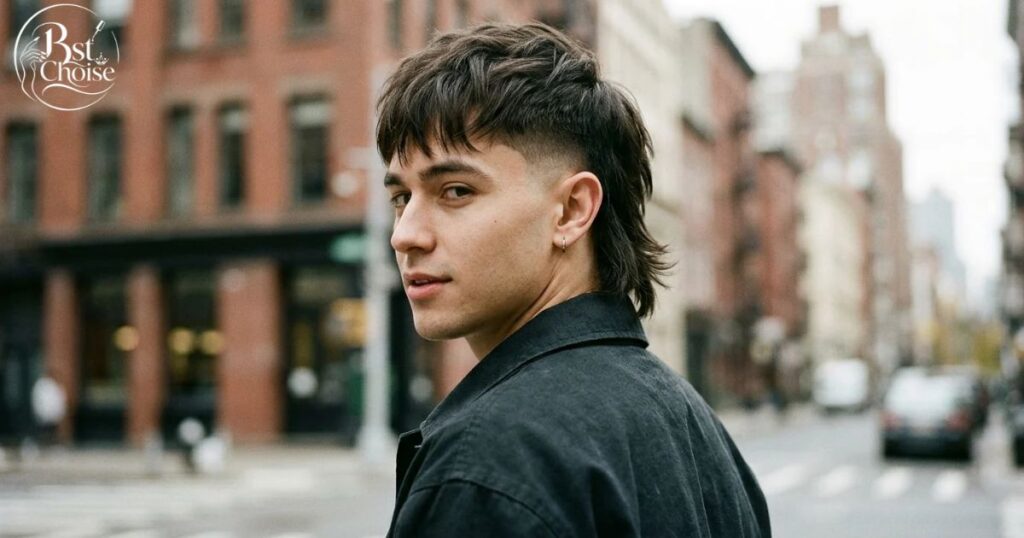
Straight hair shows the shape of a mullet clearly because the back falls flat and sharp. Fringes and middle parts look especially clean here. Add light texture so it doesn’t look limp.
Modern Mullet Fade Curly Hair
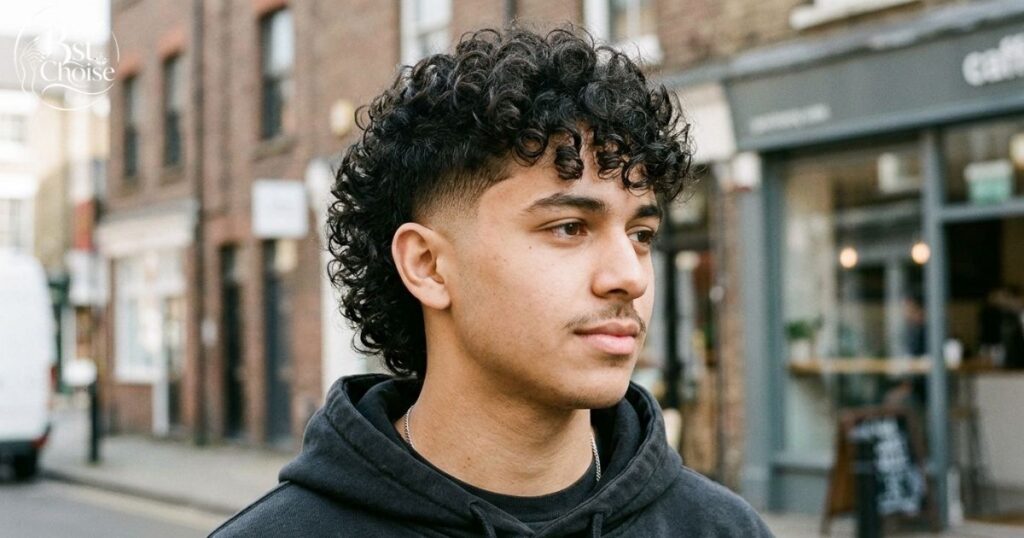
Curls add natural volume and texture, so the back of the mullet gets character with little effort. Burst and taper fades pair well with curls. Use a curl cream to keep frizz down.
Modern Mullet Fade Wavy Hair
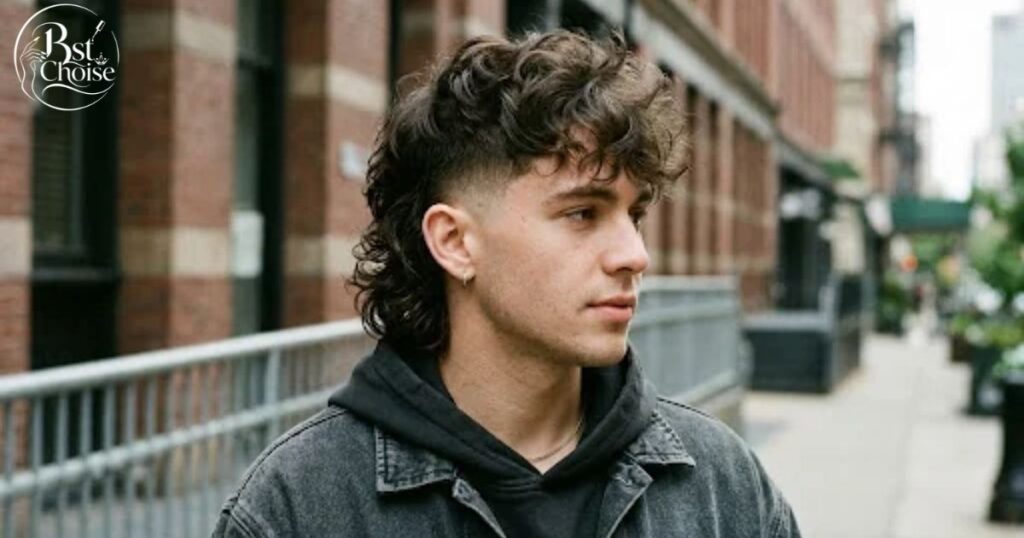
Wavy hair sits in the middle. It has movement without the bulk of tight curls. Layered and textured cuts let the waves show.
Modern Mullet Fade Fine Hair
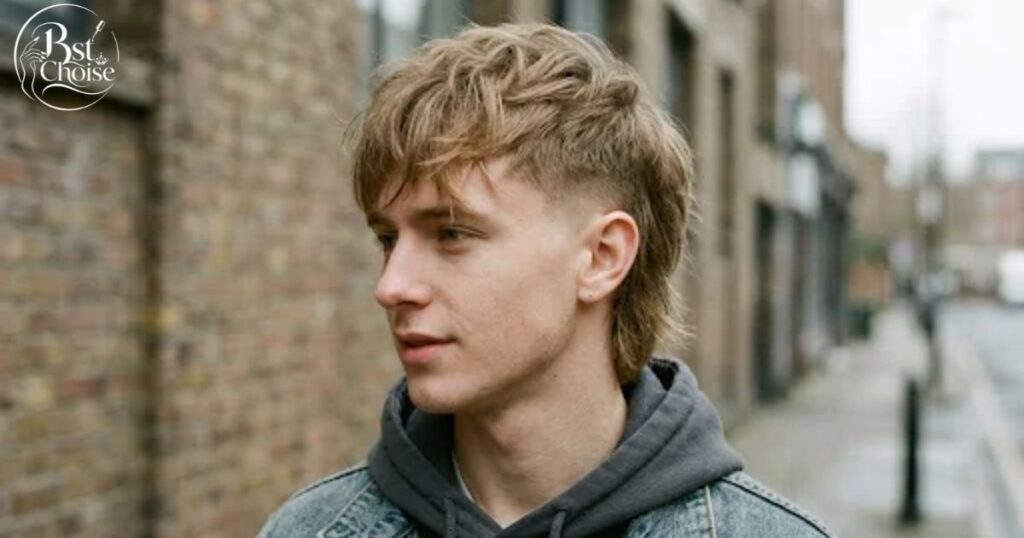
Fine hair needs lighter layers and a shorter back. Too much length can pull it flat. A taper fade usually works better than a high-contrast skin fade here.
Modern Mullet Fade for Asian Hair
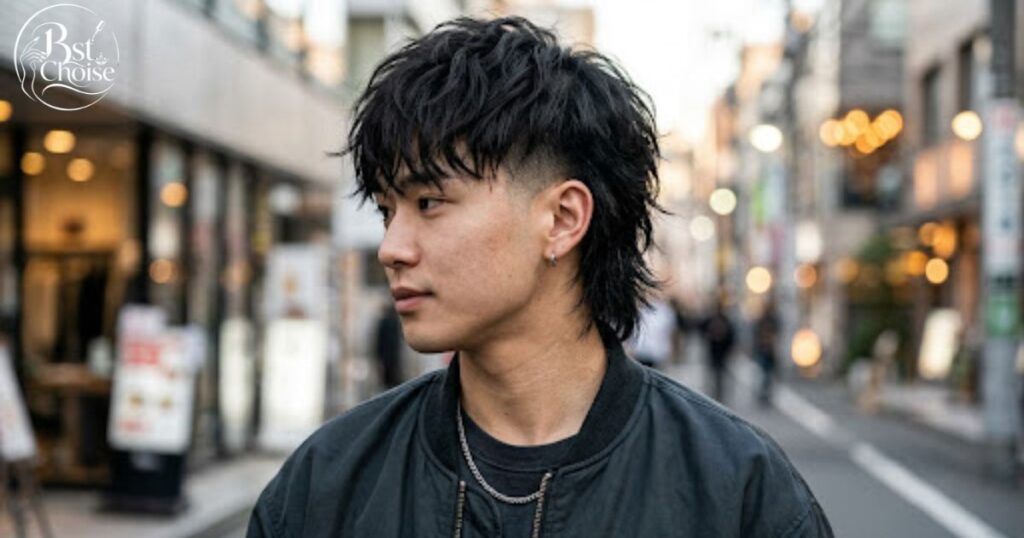
Many Asian hair types are naturally thick and straight. Texturising and layering control volume while keeping the back defined. A taper or mid fade keeps the sides from puffing out.
Blonde Modern Mullet Fade
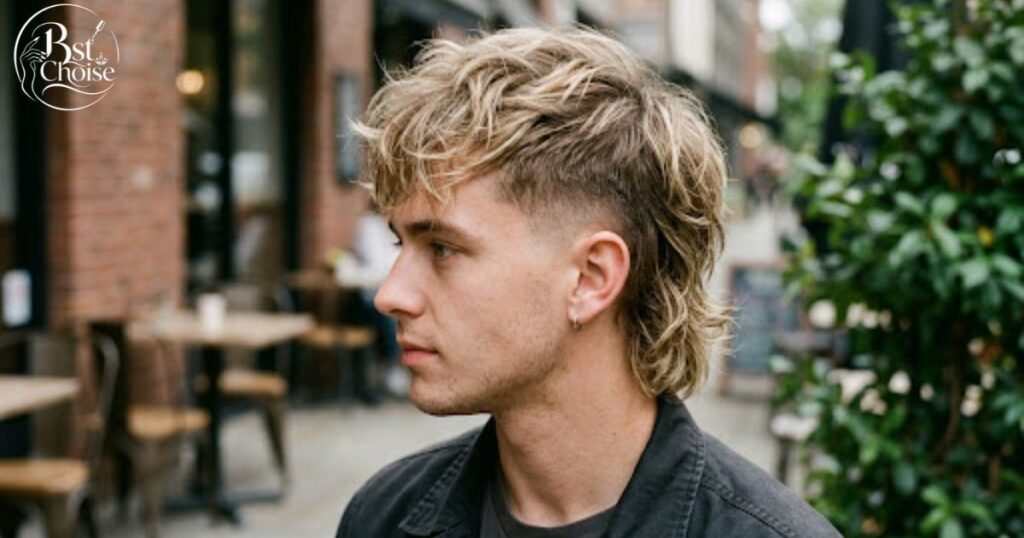
Light hair makes the contrast between the fade and the longer sections stand out. Burst and skin fades look particularly sharp. Use purple shampoo to keep the colour fresh.
Permed Modern Mullet Fade
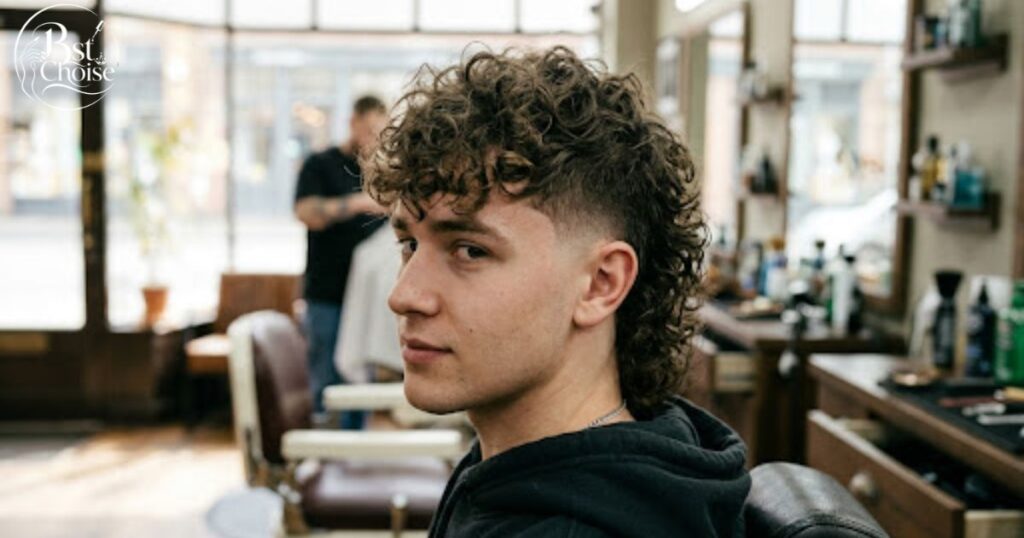
A light perm adds curl and body to straight hair. The mullet section gets extra texture. It’s a popular shortcut to a curly look without natural curls.
Fluffy Modern Mullet Fade
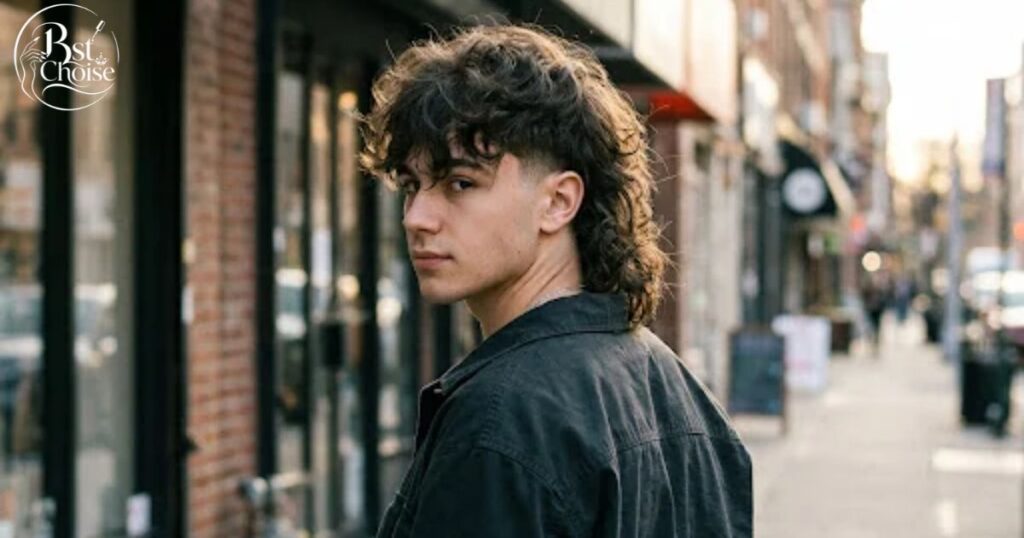
This style relies on blow-drying and a lightweight product to build volume on top. The finish is soft and airy. It works best on medium-thick, healthy hair.
Modern Mullet Drop Fade
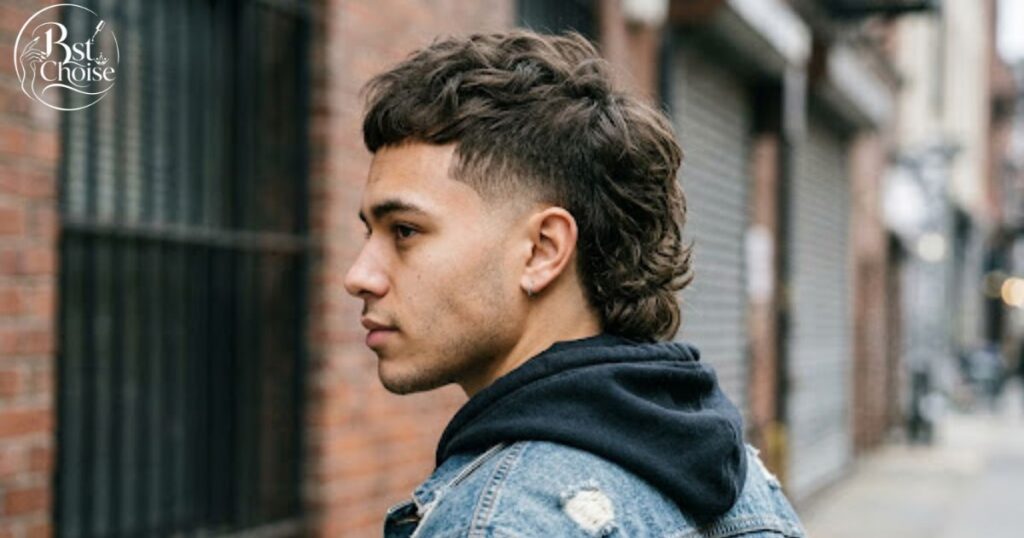
The fade line curves down behind the ear instead of running straight across. That makes a smooth, flowing transition into the longer back. It adds shape to the silhouette from the side view.
Modern Mullet Shadow Fade
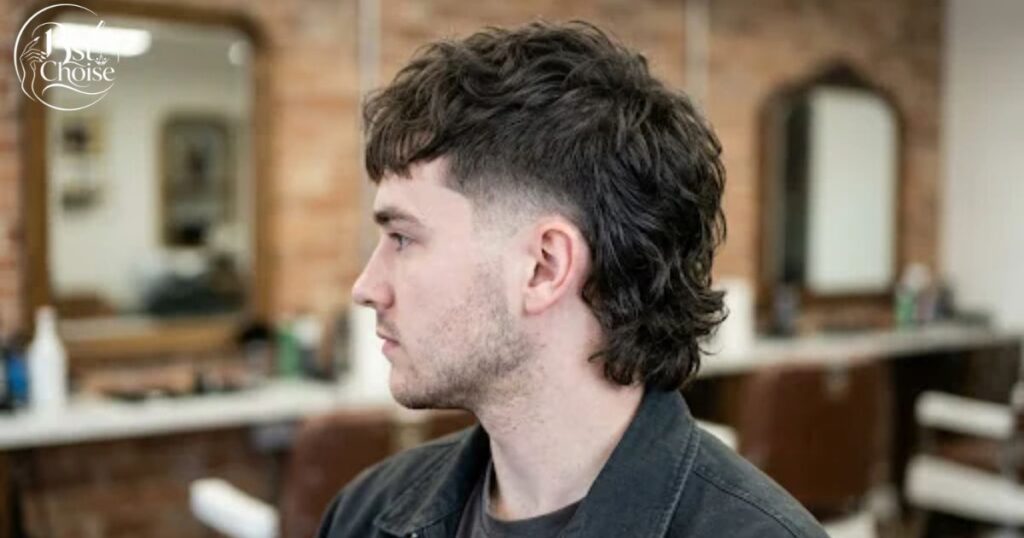
A shadow fade is a soft, subtle blend with no hard contrast. The sides stay clean but still show a hint of texture. It’s good if you want polished without looking severe.
Modern Mullet Temple Fade
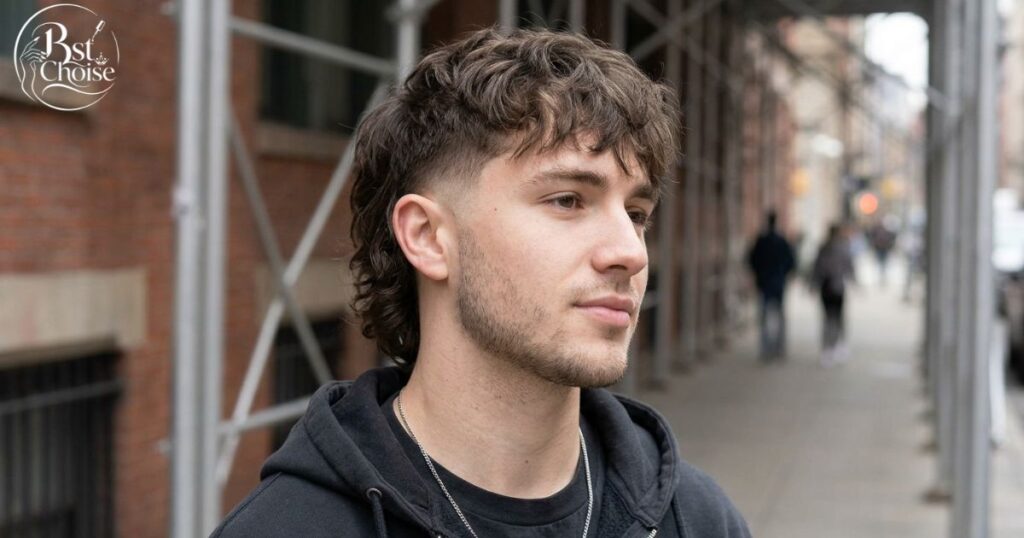
The fade focuses on the temples, adding a crisp edge while keeping the top and back longer. It sharpens the hairline. It’s also a good way to frame the face.
Modern Mullet Fade With Beard

A groomed beard blended into the fade completes the look. The two should transition smoothly at the sideburns. A neat beard balances a longer back and adds structure to the lower face.
Best Face Shapes for a Modern Mullet Fade
Most face shapes can carry a mullet fade. A few small adjustments make the cut look more balanced.
Oval Face
Oval faces suit almost every version. Burst, taper, and fringe styles all work without changes.
Round Face
Go for a higher fade and extra height on top. That lengthens the face and adds definition.
Square Face
Choose layered or textured styles to soften a strong jaw. A fringe mullet fade is a good fit.
Long Face
Keep a little volume at the sides with a low or mid fade. Skip very tall tops, which can stretch the face further.
Heart-Shaped Face
A fuller back section balances a narrower chin. A medium to long mullet with a taper or low fade works well.
How to Ask Your Barber for a Modern Mullet Fade
“Mullet fade” means different things to different barbers. Be specific. Break your request into four parts:
- Top length: short, medium, or long.
- Back length: how far it should reach down the neck.
- Fade type: low, mid, high, taper, burst, or skin.
- Extras: texture, fringe, V-back, or a shaved line.
Sample script: “I’d like a mullet with a mid burst fade. Keep the top textured at about three inches, with a longer, layered back that ends at the collar.”
Bring one or two reference photos. They remove guesswork. If your barber can’t picture your plan, ask them to talk through the clipper guards and where the fade starts before cutting.
How to Style a Modern Mullet Fade
Styling depends on your hair type, but the basics stay the same. The aim is to add texture on top and keep the back neat.
Modern Mullet Fade Tutorial
- Start with damp hair. Towel-dry until it’s about 80% dry. Products grip better on damp hair than on soaking wet hair.
- Apply product to the top and back only. Use a pea-sized amount of styling cream or paste. Keep it off the faded sides so they stay clean.
- Dry for shape. Blow-dry the top upward for volume. For a relaxed look, let it air-dry.
- Shape the back. Use your fingers or a wide-tooth comb to guide the length into a straight drop, layered flow, or V-back.
- Finish lightly. Mist a light texture spray over the top to hold the shape without stiffness.
What Products Should I Use to Style a Mullet Fade?
A matte clay or paste gives texture and hold without shine, and a sea salt spray adds grit for flat hair. Curly or wavy hair does better with a curl cream.
How to Maintain a Modern Mullet Fade
A mullet fade needs two kinds of upkeep: keeping the fade crisp and keeping the back neat.
- Book regular fade touch-ups.
- Trim split ends on the longer sections.
- Wash with a gentle shampoo and condition the back.
- Use a heat protectant if you blow-dry often.
- Sleep on a satin pillowcase if your hair frizzes.
Is a Mullet Fade Hard to Maintain?
It takes more effort than a plain fade because you manage both a fade line and a longer back. It’s still easy once you have a routine.
How Long Does a Modern Mullet Fade Last?
Most men refresh the fade every 2 to 3 weeks. The longer back can usually go 6 to 8 weeks between trims.
How Long Does It Take to Cut a Mullet Fade?
Expect about 30 to 45 minutes. The extra time goes into detailing the top and back.
Modern Mullet Fade Comparison: Top Options at a Glance
| Fade Type | Key Feature | Best For | Touch-Up Frequency | Grow-Out |
| Burst Fade | Curves around the ear | Round and heart-shaped faces | Every 2–3 weeks | Moderate |
| Low Fade | Starts above the ear | First-timers, office settings | Every 3–4 weeks | Easy |
| Taper Fade | No hard skin line | Soft, everyday looks | Every 4 weeks | Easiest |
| Mid Fade | Starts at the temples | Balanced contrast | Every 2–3 weeks | Moderate |
| High Fade | Starts near the crown | Thick hair, bold styles | Every 2–3 weeks | Hard |
| Skin Fade | Blends to bare skin | Sharp, high-contrast looks | Every 2 weeks | Hardest |
Best starting point: A taper fade or low fade. Both look polished and are forgiving between cuts.
Is the Mullet Still in Style in 2026?
Yes. The mullet is still popular in 2026, mainly in its updated forms: fades, tapers, soft layers, and texture. The extreme 1980s versions are rare. The modern mullet is cleaner and easier to adapt, which is why it has stayed in barbershops instead of fading away as a short-lived trend.
Frequently Asked Questions
Is a Modern Mullet Fade Good for Straight Hair?
Yes. Straight hair shows off the mullet’s shape clearly, especially with a fringe or middle part.
What Fade Is Best for a Modern Mullet?
A burst fade is the most popular pairing, while low and taper fades suit a subtler everyday look.
Is a Mullet Fade Good for a Round Face?
Yes. Choose a higher fade and add height on top to lengthen the face.
Can I Switch From a Fade to a Mullet?
Yes. Grow the top and back, and a barber can reshape the cut into a mullet over a few visits.
Does a Mullet Work With Curly Hair?
Yes. Curls add volume and texture to the back, which gives the mullet more character.
Can a Mullet Fade Be Short?
Yes. Keeping the top and back short gives a subtle, low-maintenance version.
Which Looks More Professional: a Fade or a Mullet?
A plain fade reads as more traditional, but a low fade mullet with a short back can still look polished.
Can a Mullet Be Combined With a Fade?
Yes. That combination is exactly what a modern mullet fade is.
Which Is More Attractive: a Mullet or a Fade?
That depends on your style and face shape. A fade looks clean and classic, while a mullet fade adds personality.
Conclusion
The modern mullet fade is flexible. Pick a low or taper fade for a quiet, workplace-friendly look. Go for a burst, high, or skin fade when you want contrast. Adjust the top, the back length, and the texture to suit your hair type and face shape.
Take a reference photo to your barber, describe the four parts clearly, and plan on regular fade touch-ups. Do that, and the cut will look sharp and intentional between visits.

