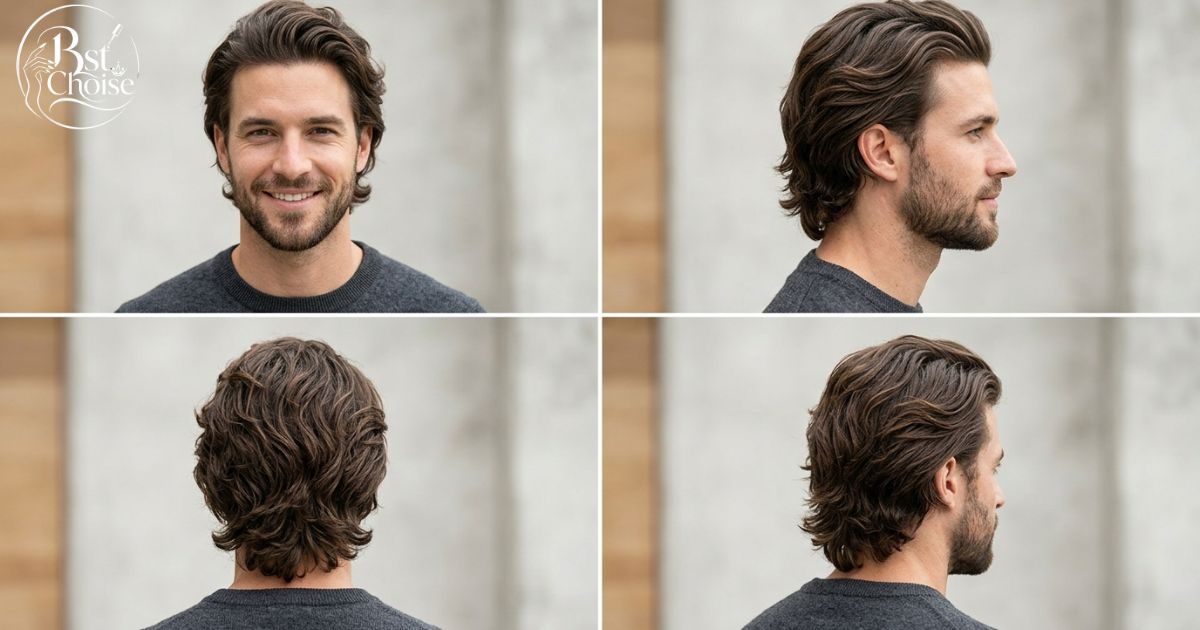

The bro flow haircut has become one of the most requested men’s hairstyles for guys who want length without looking unkempt. It’s built on movement, hair grows out through the crown, sides, and back, then gets shaped so it sweeps naturally away from the face instead of just hanging there.
What makes it so popular is how forgiving it is. Straight hair gives you a sleek, streamlined flow. Waves add natural body. Curls turn it into something fuller and more textured. And because the cut relies on shape rather than a rigid style, it grows out gracefully instead of looking patchy after a few weeks like a fade might.
This guide breaks down 25 bro flow variations, plus how to pick the right one for your face shape, hair type, and lifestyle, along with maintenance tips and exactly what to say to your barber.
Why The Bro Flow Works So Well For Men
The bro flow sits in a sweet spot between “I put effort into this” and “this just happens to look great.” Because the length runs continuously from the crown down through the sides, there’s no harsh line separating short and long sections the way there is with a fade, which is exactly why it holds up so well between barber visits.
It’s also one of the more versatile cuts on the market right now:
- Works across straight, wavy, curly, and coarse textures
- Can be dressed up for the office or left loose for the weekend
- Grows out far more forgivingly than fades or tapers
- Pairs naturally with beards and stubble
- Leaves plenty of room to make it your own rather than a copy-paste style
The one thing that makes or breaks it is balance, enough length to move, but not so much weight that it stops flowing and starts flopping.
How To Choose A Bro Flow That Fits Your Hair
Before you pick a version from a photo, look at your own texture. Straight hair behaves completely differently under scissors than wavy or curly hair, and copying a style built for someone else’s density can leave you frustrated three weeks in.
Thicker hair usually needs weight taken out from underneath so it doesn’t puff outward. Finer hair needs the opposite treatment, length preserved and layering kept minimal so the style doesn’t look thin or wispy.
| Hair Type | Best Approach |
| Straight | Light layering with a smooth, directional sweep |
| Wavy | Longer layers that let natural movement show |
| Thick | Internal thinning to remove bulk, not length |
| Fine | Minimal layering to protect density |
| Curly | Cut with the curl pattern, not against it |
1. Classic Swept-Back Flow
This is the bro flow in its purest form, hair combed back from the forehead with just enough length to keep moving toward the crown and nape.
- Best for: A timeless, no-fuss everyday look
- Face shapes: Oval, square, heart
- Hair type: Straight to wavy, medium density
- Maintenance: Trim every 8–12 weeks
- Products: Light styling cream or sea salt spray
Pro tip: Let it air-dry partway before styling so you can see where it naturally wants to fall.

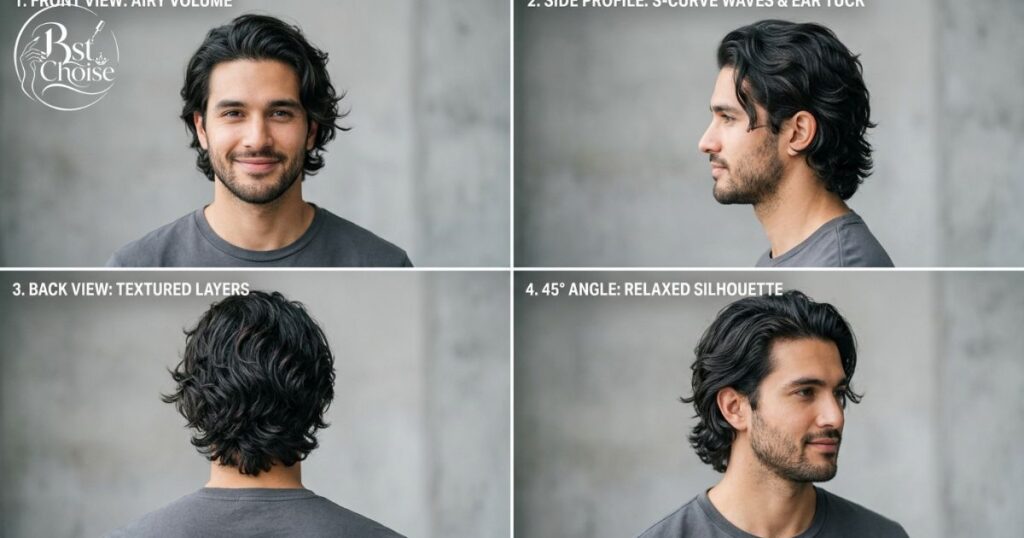
2. Wavy Flow With Natural Movement
Waves do most of the styling work for you here. Rather than fighting the bend with a brush, the cut is shaped to follow it, giving the finished look built-in texture and lift.
- Best for: Guys who want texture without much daily effort
- Face shapes: Oval, diamond, oblong
- Hair type: Loose to medium waves
- Maintenance: Every 8–10 weeks
Pros: Low daily effort, natural volume. Cons: Can turn frizzy in humid weather.
3. Polished Flow For A Professional Look
A tidier take on the flow, with a cleaner outline and slightly more controlled ends, enough personality for the weekend, enough polish for Monday morning meetings.
- Best for: Office and client-facing roles
- Face shapes: Oval, square, diamond
- Hair type: Straight, slightly wavy
- Maintenance: Every 6–10 weeks
Barber tip: Ask for a clean perimeter without disconnecting the length on top.

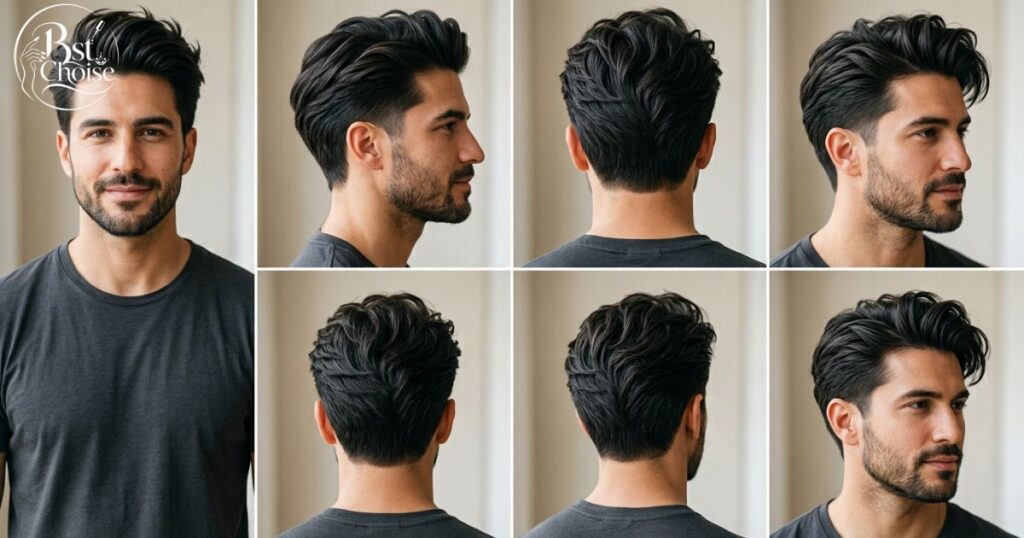
4. Thick Hair With Controlled Layers
Dense hair can flow beautifully, but left unmanaged it tends to expand sideways instead of backward. Internal layering redirects that bulk so it works with the shape instead of against it.
- Best for: High-density hair
- Face shapes: Oval, square, oblong
- Hair type: Thick, straight to wavy
- Maintenance: Every 8–10 weeks
Common mistake: Over-thinning, which leaves the ends looking wispy instead of full.
Read More: 20 Low Burst Fade Mullet Styles That Look Sharp, & Effortless Cool
5. Long Flow With Face-Framing Layers
Longer pieces around the front soften the face before blending into the rest of the length, a strong option for guys ready to commit to a fuller, longer silhouette.
- Best for: Committed long-hair growth
- Face shapes: Oval, heart, diamond
- Hair type: Straight, wavy, thick
- Maintenance: Every 10–12 weeks
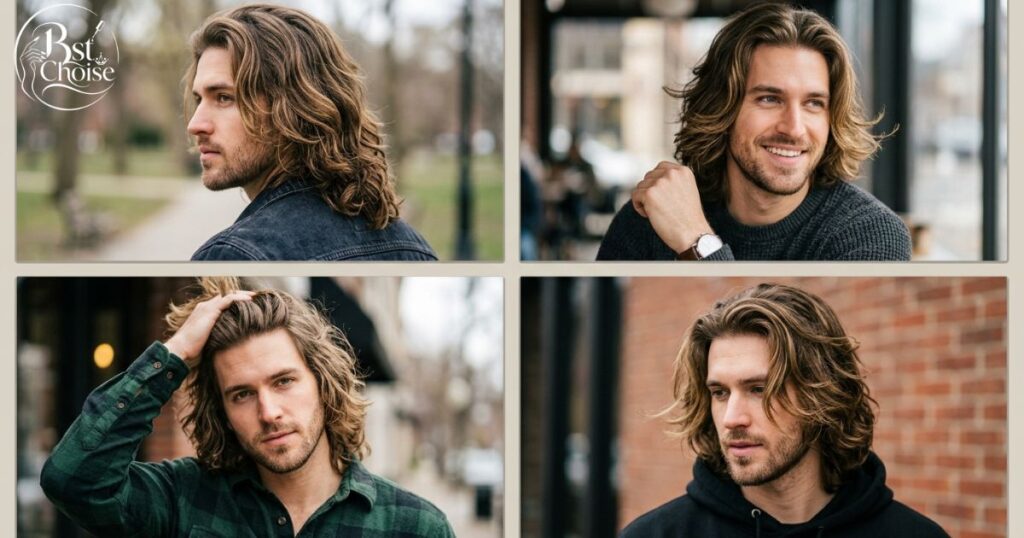
6. Medium-Length Flow With A Soft Finish
The transitional length, long enough to sweep back, short enough that it’s still low-maintenance. A great pick if you’re growing out a shorter cut and don’t want an awkward in-between phase.
- Best for: Guys transitioning from short hair
- Face shapes: Oval, square, round
- Hair type: Straight, wavy, medium density
- Maintenance: Every 6–8 weeks
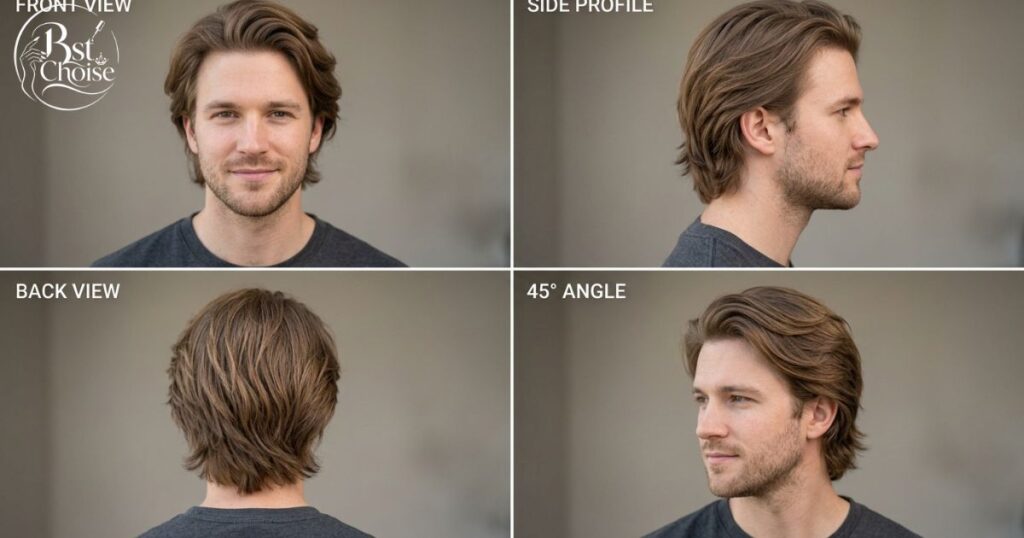
7. Straight Hair With A Clean Direction
Straight strands naturally hold a crisp, continuous line, which makes this one of the easiest flow variations to style day-to-day. Some crown layering keeps it from lying too flat.
- Best for: A smooth, understated finish
- Face shapes: Oval, square, oblong
- Hair type: Fine to thick, straight
- Maintenance: Every 7–10 weeks
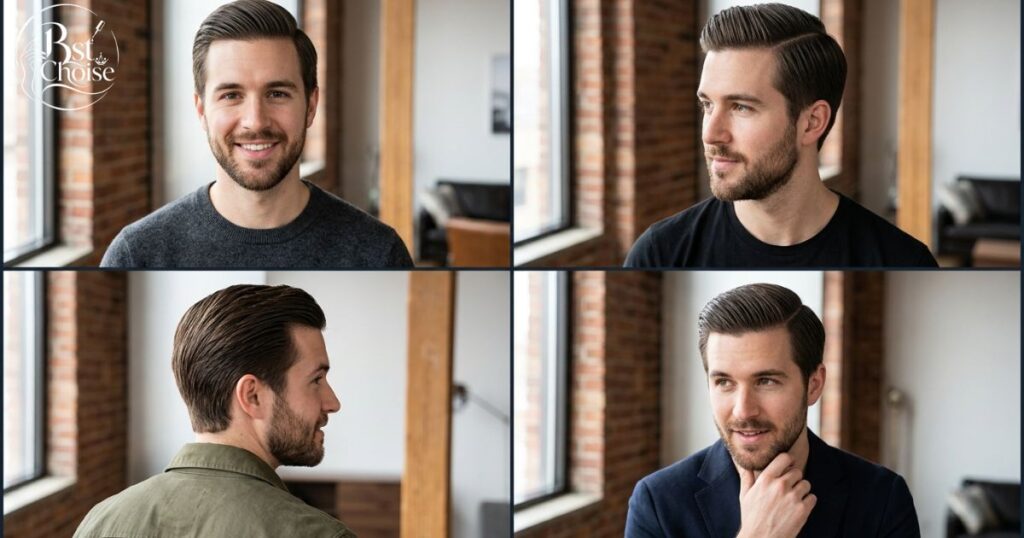
8. The Relaxed Flow With A Middle Part
A loose center part gives the flow a more fashion-forward, slightly youthful edge while keeping the same backward movement through the sides.
- Best for: A casual, modern update
- Face shapes: Oval, diamond, heart
- Hair type: Straight, wavy
- Maintenance: Every 8–12 weeks
Styling tip: Skip the ruler-straight part, let it fall where your hair naturally separates.
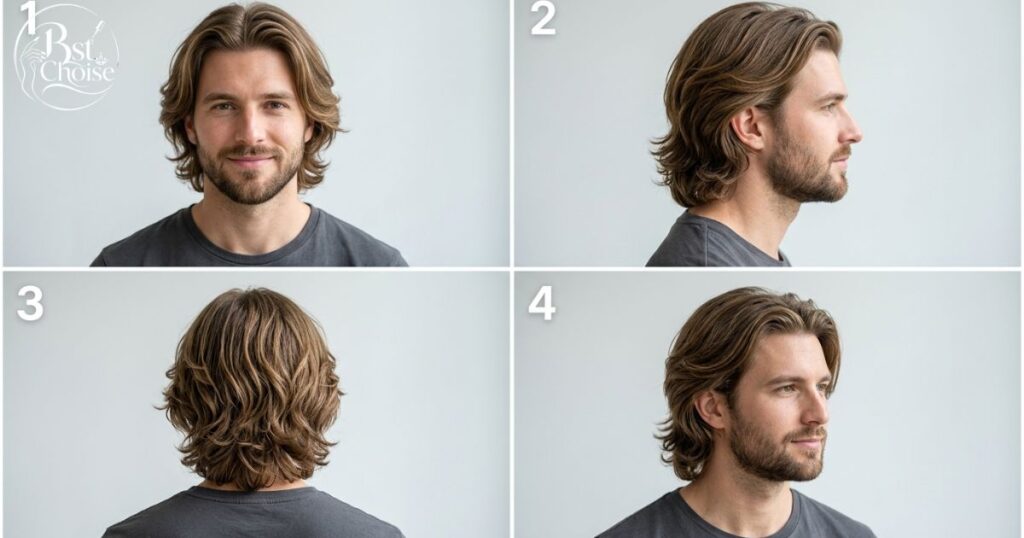
9. The Beard-Connected Flow
Pairing longer hair with a well-kept beard creates one continuous, rugged silhouette. The two don’t need to be sharply defined against each other, a soft transition usually looks more natural.
- Best for: Men who already wear medium-to-full facial hair
- Face shapes: Oval, square, oblong
- Hair type: Straight, wavy, thick
- Maintenance: Hair every 8–10 weeks, beard every 1–3 weeks

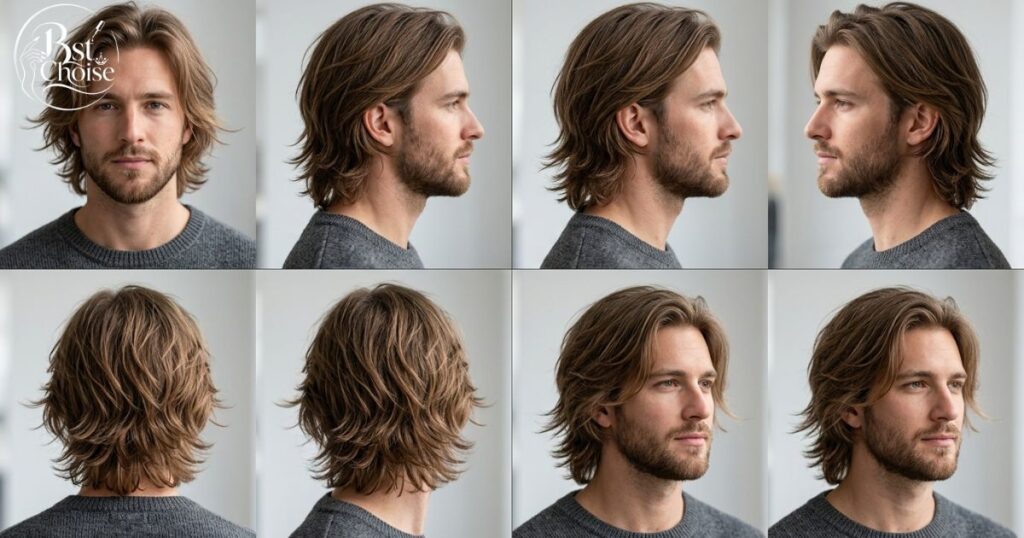
10. Feathered Ends For Extra Movement
Feathering breaks the ends up so they separate rather than falling as one solid section, a lighter, more dynamic take on the flow.
- Best for: Avoiding a heavy, curtain-like finish
- Face shapes: Oval, heart, oblong
- Hair type: Straight, wavy, medium-thick
- Maintenance: Every 8–10 weeks
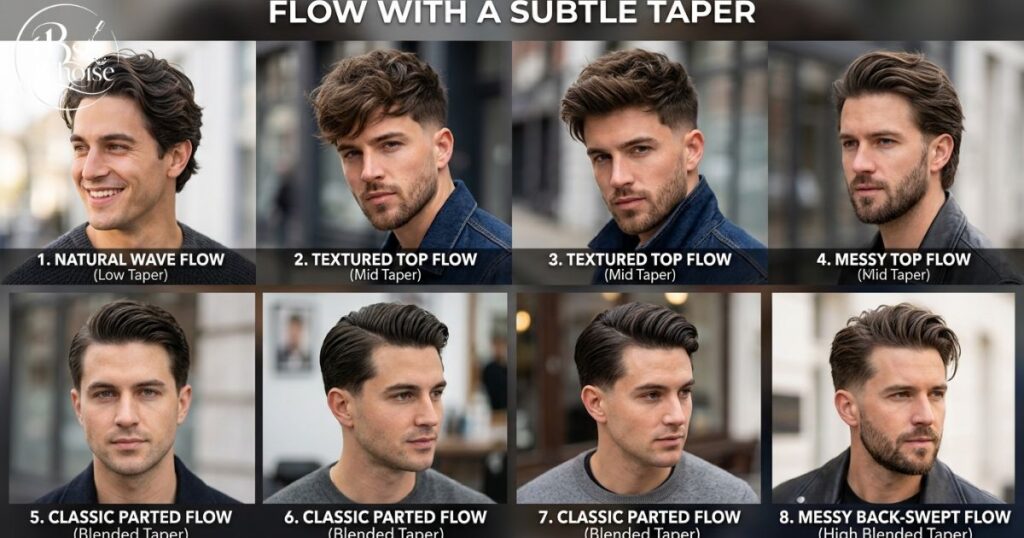
11. Flow With A Subtle Taper
A soft taper around the neckline and sideburns tightens up the perimeter while the top and length stay fully intact, a good middle ground for guys who still want a “just left the barber” look.
- Best for: A cleaner-edged, professional-friendly flow
- Face shapes: Oval, square, round
- Hair type: Straight, wavy, thick
- Maintenance: Taper every 4–6 weeks
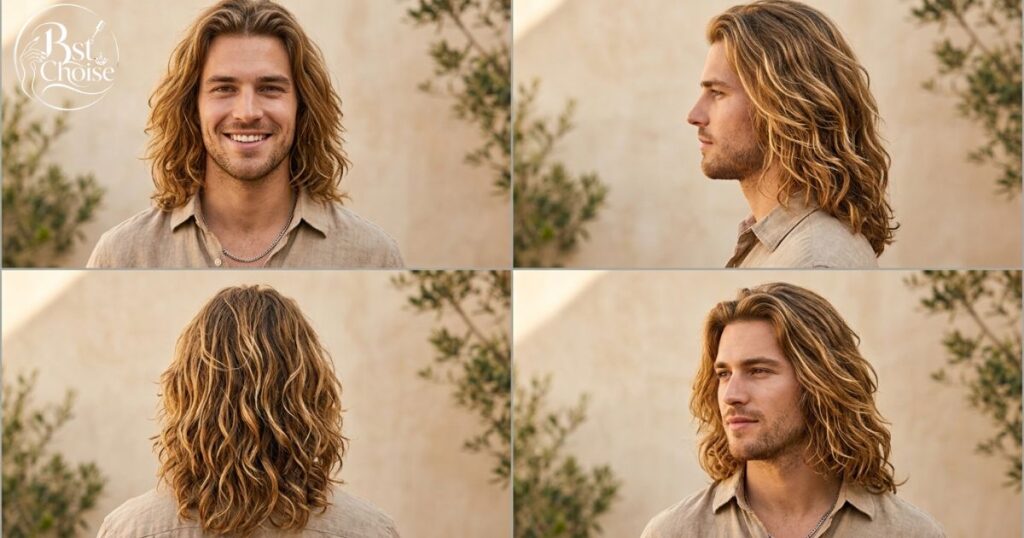
12. Sun-Kissed Flow With Natural Texture
This version leans into dimension, a little natural lightening at the ends and enough texture to keep the length from ever looking flat.
- Best for: A relaxed, summer-ready vibe
- Face shapes: Oval, square, diamond
- Hair type: Wavy, straight, medium-thick
- Maintenance: Every 8–12 weeks
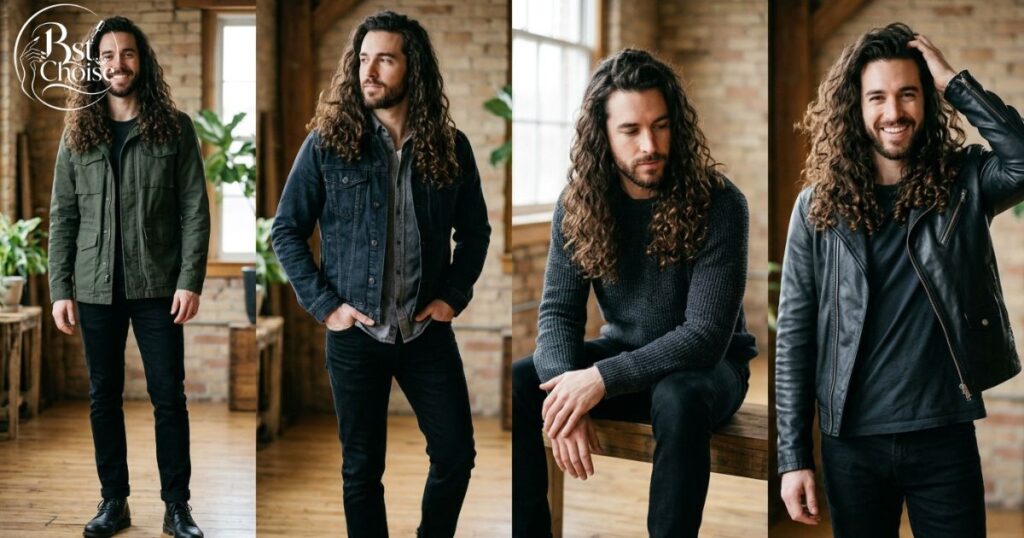
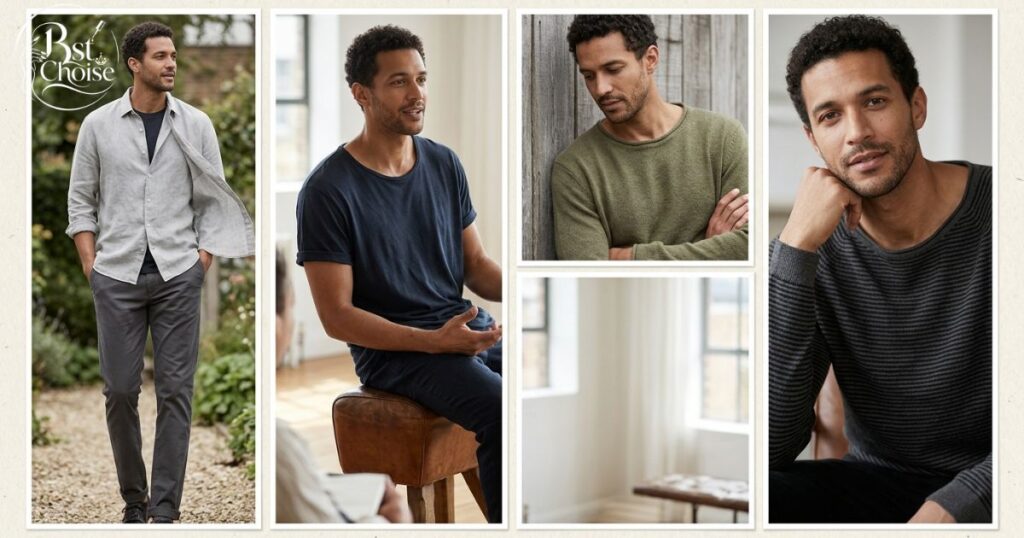
13. Curly Flow With A Longer Silhouette
Curls add natural volume that straight or wavy hair can’t replicate. The cut should respect shrinkage, curls always look shorter dry than wet, and use longer layers to control weight.
- Best for: Embracing natural curl pattern
- Face shapes: Oval, diamond, square
- Hair type: Curly, coarse, dense
- Maintenance: Every 8–12 weeks
Barber tip: Cut with shrinkage in mind, not just wet length.
14. The Casual Side-Swept Flow
A loose diagonal direction across the front adds a touch of structure while keeping the overall vibe relaxed, less formal than a slick side part, more shaped than a fully free flow.
- Best for: Casual-but-groomed everyday wear
- Face shapes: Round, oval, square
- Hair type: Straight, wavy, medium-thick
- Maintenance: Every 7–10 weeks
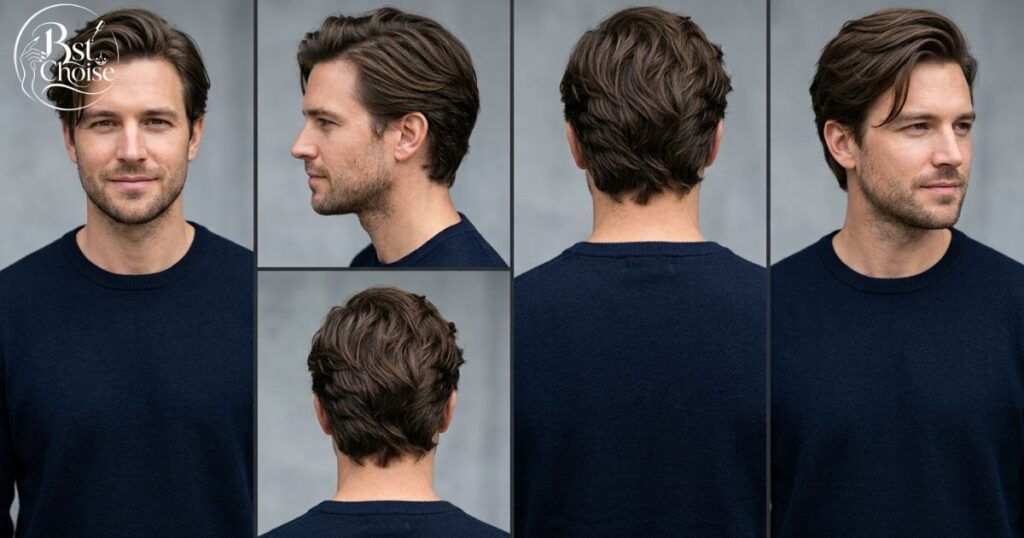
15. The Grown-Out Flow With Purposeful Shape
Growing your hair out doesn’t have to mean living through months of shapelessness. Regular trims that remove damaged ends, not length, keep the silhouette intentional the whole way through.
- Best for: Guys committed to the long-term grow-out
- Face shapes: Oval, square, oblong
- Hair type: Straight, wavy, thick
- Maintenance: Every 10–12 weeks
What to tell your barber: “Trim the ends, don’t take length.”
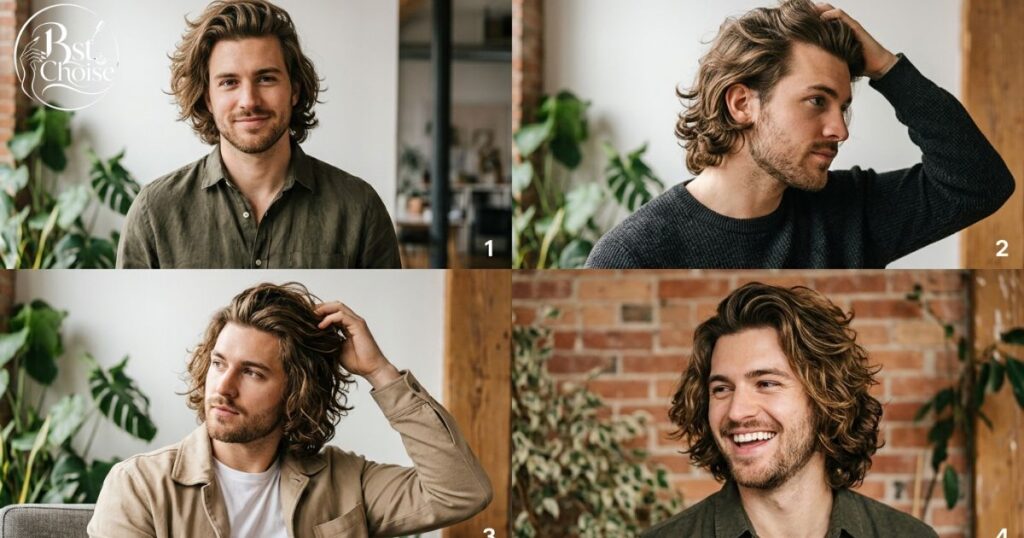
16. Low-Key Flow For Fine Hair
Fine hair can still flow nicely as long as the cut avoids heavy layering. Keeping density intact through the top prevents the style from thinning out visually.
- Best for: Fine or thinning hair types
- Face shapes: Oval, heart, square
- Hair type: Fine, straight to slightly wavy
- Maintenance: Every 8–10 weeks
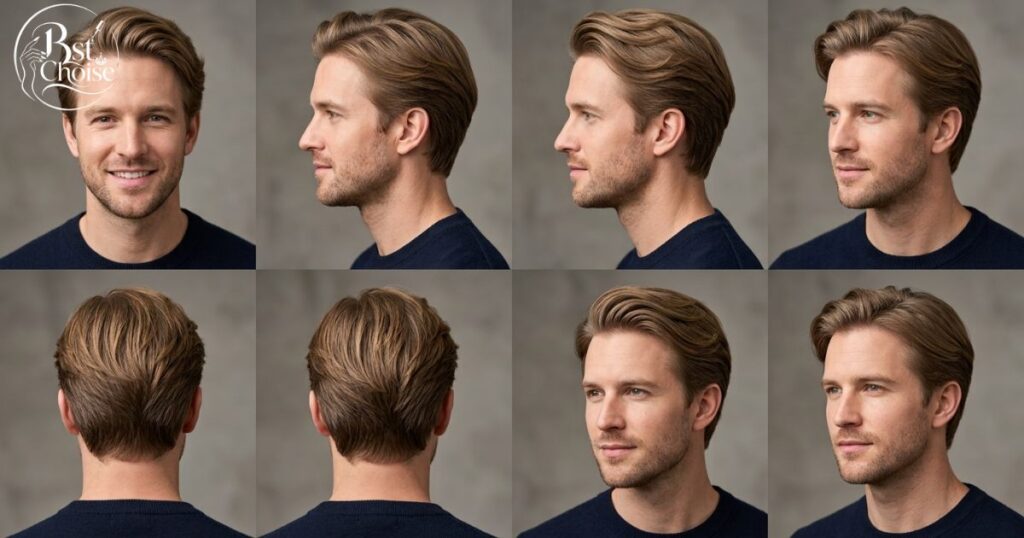
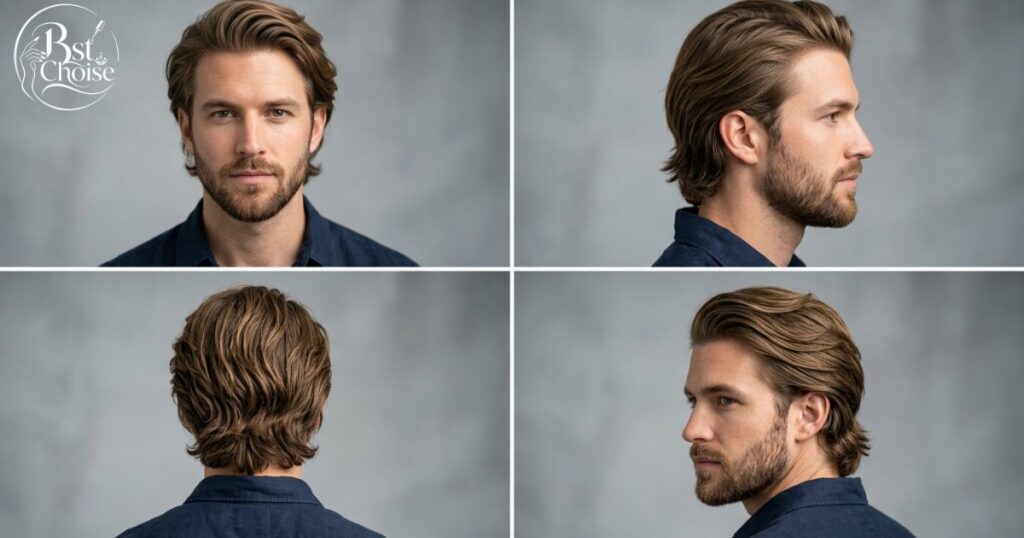
17. Brushed-Back Flow With Subtle Shine
A touch of shine gives the flow a polished edge without tipping into a full slick-back, a good option for dinners or events where you want a smarter version of your everyday cut.
- Best for: Dressing the flow up for occasions
- Face shapes: Oval, square, diamond
- Hair type: Straight, wavy, medium-thick
- Maintenance: Every 8–10 weeks
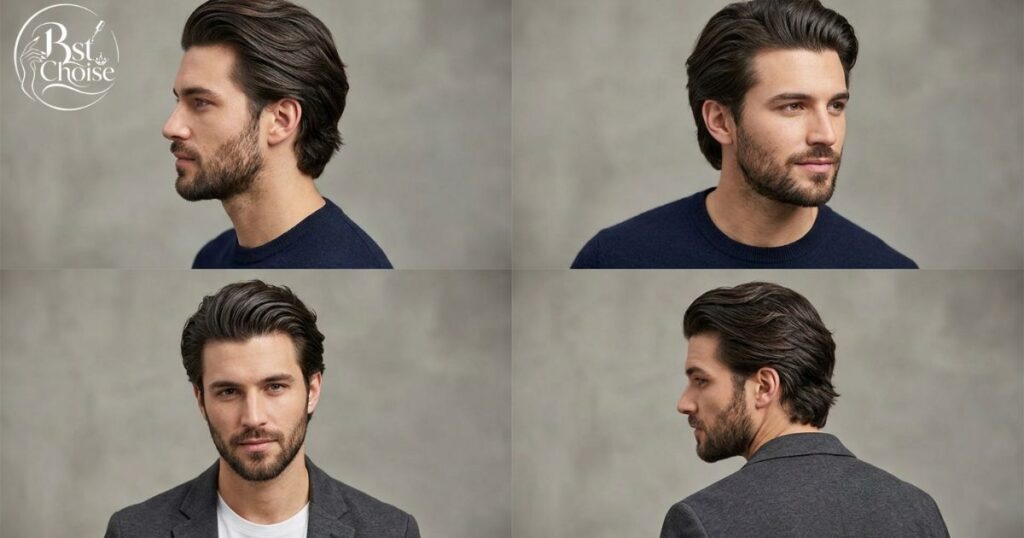
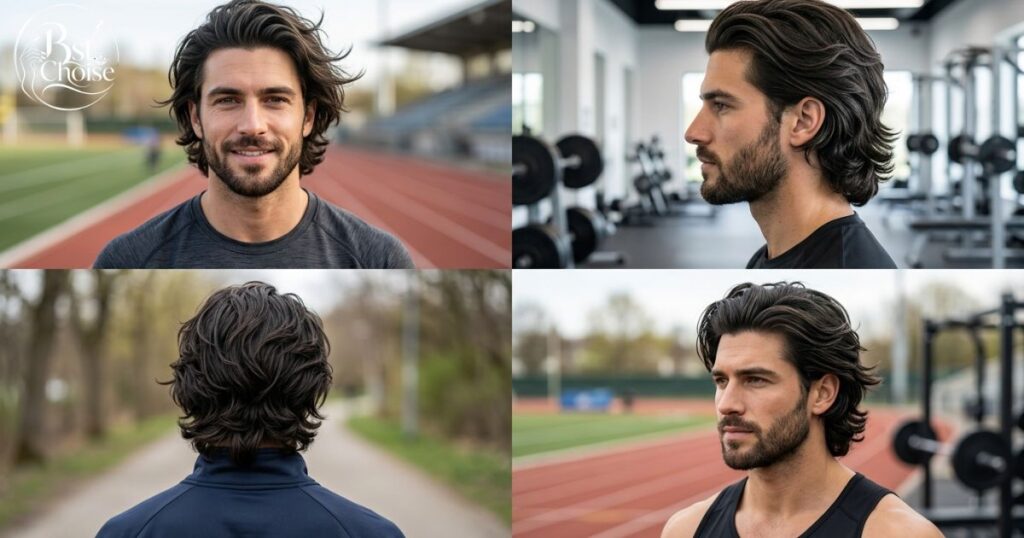
18. Athletic Bro Flow
Built for movement, literally. This version keeps enough length to flow while trimming excess bulk around the ears and neck so it stays manageable during workouts.
- Best for: Active lifestyles
- Face shapes: Oval, square, round
- Hair type: Straight, wavy, thick
- Maintenance: Every 6–8 weeks
19. Flow With A Soft Neckline
Instead of a sharp, defined edge, the neckline is left to blend gradually, which keeps the whole cut feeling cohesive as it grows.
- Best for: Understated, low-maintenance grooming
- Face shapes: Oval, square, oblong
- Hair type: Straight, wavy, thick
- Maintenance: Every 8–12 weeks
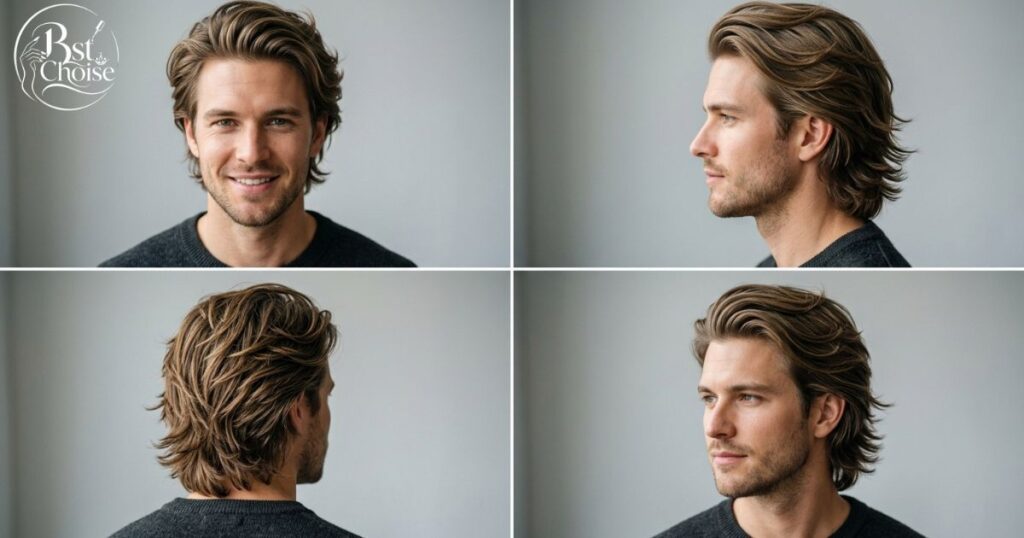
20. The Layered Flow For Maximum Movement
Strategic layering turns heavy hair into something far more fluid. Done right, the layers stay connected rather than creating visible “steps.”
- Best for: Medium-to-thick hair that needs de-bulking
- Face shapes: Oval, diamond, oblong
- Hair type: Straight, wavy, thick
- Maintenance: Every 8–10 weeks
21. The Rugged Long-Hair Flow
A deliberately less polished finish that leans into a natural, outdoorsy character, best suited to hair that already has waves or coarse texture to work with.
- Best for: A rugged, low-polish look
- Face shapes: Oval, square, oblong
- Hair type: Wavy, thick, coarse
- Maintenance: Every 10–12 weeks

22. Bro Flow With A Clean Sideburn
A precisely shaped sideburn adds intention around the face while the rest of the length stays full, a small detail that makes a noticeable difference.
- Best for: Subtle refinement
- Face shapes: Oval, square, round
- Hair type: Straight, wavy
- Maintenance: Sideburn cleanup every 4–6 weeks
23. The Wind-Swept Finish
Deliberately uneven, this version skips symmetry in favor of an energetic, just-been-outside look that pairs especially well with natural waves.
- Best for: Effortless, casual movement
- Face shapes: Oval, diamond, heart
- Hair type: Wavy, straight, medium-thick
- Maintenance: Every 8–12 weeks
Styling tip: Finish with fingers, not a comb, for a more natural result.

24. The Refined Flow For Special Occasions
A smoother, more controlled version for weddings, dinners, or anywhere you need the relaxed character of long hair with a more polished edge.
- Best for: Formal events
- Face shapes: Oval, square, diamond
- Hair type: Straight, wavy, medium-thick
- Maintenance: Every 8–10 weeks
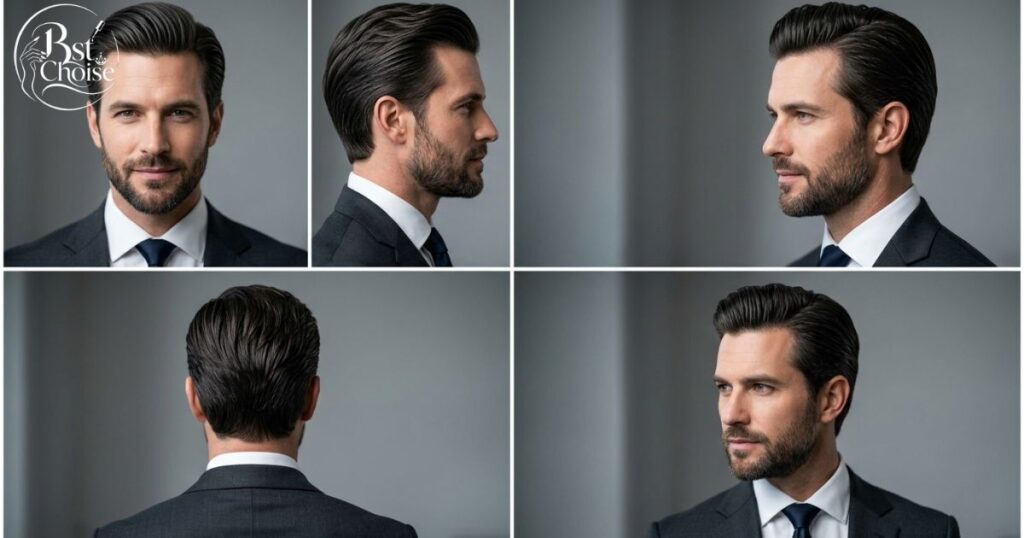
25. The Signature Bro Flow
The final variation isn’t really a single style, it’s a combination of length, layering, and shape tailored specifically to your own texture and face. That personalization is what separates a genuinely good bro flow from a copy of someone else’s haircut.
- Best for: A fully personalized long style
- Face shapes: Adjustable to most, with the right layering
- Hair type: Any, with tailored layering
- Maintenance: Every 8–12 weeks
Barber tip: Bring a reference photo, but tell your barber how you want the hair to fall, not just how it should look in a still image.

Choosing the Right Bro Flow for Your Face Shape
The bro flow adapts well to most face shapes, but small adjustments to length and direction can make a real difference in how balanced the final look feels.
Oval Face
You have the most flexibility here. Middle parts, brushed-back styles, and longer layers all tend to work without issue.
Square Face
Softer, wavier layers help ease the contrast against a strong jawline rather than emphasizing it.
Round Face
Add height at the crown and sweep the length back or to the side to visually elongate the face.
Oblong Face
Skip the ultra-long, flat versions. Medium length with a bit of width at the sides creates better balance.
Diamond Face
Flowing layers around the cheekbones soften angles while balancing a narrower forehead and jawline.
Heart-Shaped Face
A little volume around the forehead and fuller sides help balance a narrower chin.
How Hair Type Changes the Final Result
The same bro flow can look dramatically different depending on your natural texture:
- Straight hair – smooth and clean but can look flat without some layering
- Wavy hair – naturally textured and one of the easiest types to style
- Curly hair – fullest, most distinctive result if cut with shrinkage in mind
- Thick hair – needs internal thinning to avoid bulk
- Fine hair – needs density preserved rather than layered away
How to Maintain a Bro Flow Without Losing the Shape
Long hair still needs regular barber visits, just less frequently than a fade. A trim every 8–12 weeks removes split ends and keeps the shape intact without sacrificing the length you’re growing.
At home, prioritize conditioning over piling on styling products. Longer ends dry out faster, especially with regular heat styling, so a good leave-in conditioner does more for the overall look than another can of pomade.
A wide-tooth comb is gentler on longer hair than a standard brush, and it’s especially useful for wavy or curly versions where you want to preserve texture rather than smooth it away.
Simple Styling Routine for Everyday Wear
- Towel-dry hair until it’s damp, not wet.
- Work a small amount of lightweight styling cream through the mid-lengths and ends.
- Blow-dry on low-to-medium heat, directing hair backward with your fingers.
- Add a light mist of sea salt spray for extra texture, if desired.
- Finish by running fingers (not a comb) through the hair for a natural, undone look.
The goal throughout is movement, not stiffness, a bro flow that can’t move isn’t really a flow anymore.
Common Bro Flow Mistakes to Avoid
- Cutting off too much length, the whole style depends on having enough to work with
- Over-thinning thick hair, leaves ends looking weak instead of full
- Overusing product, heavy pomades kill the relaxed, natural movement
- Ignoring the crown, poor shaping here makes the rest of the cut sit awkwardly
- Fighting your natural part, work with your growth pattern, not against it
- Skipping trims entirely, even long hair needs occasional maintenance
- Making the neckline too sharp, clashes with the softer overall silhouette
What to Tell Your Barber
Rather than just saying “bro flow,” describe how you want the finished result to behave. Cover:
- How much length you want to keep
- Whether you want it swept straight back or to one side
- How much movement or lift you want at the crown
- Natural layers vs. more structured layering
- How clean (or soft) you want the neckline
- Whether the sides should stay full or get a subtle taper
A photo helps, but your barber still needs to assess your actual density, texture, and growth pattern before adapting any reference style to your head.
Frequently Asked Questions About Bro Flow Haircuts
How long does hair need to be for a Bro Flow?
There’s no exact minimum, but you generally need enough length on top and sides for the hair to sweep backward. Medium-to-long hair gives the clearest result.
Is a Bro Flow easy to maintain?
Yes, once it’s shaped correctly. Daily upkeep is mostly conditioning, directional drying, and a small amount of lightweight product.
Does a Bro Flow work with straight hair?
Yes, straight hair actually creates one of the smoothest, cleanest versions of the style.
Can curly-haired men wear a Bro Flow?
Definitely. Curly hair adds extra volume and character as long as the cut accounts for curl shrinkage.
How often should I trim a Bro Flow?
Roughly every 8–12 weeks for a natural version, though tapered or cleaner necklines may need touch-ups sooner.
Can a Bro Flow look professional?
Yes, especially with a tidy perimeter, moderate length, and restrained styling products.
Should a Bro Flow have layers?
Most versions benefit from at least some layering to help the hair move naturally, though the amount depends on your density and texture.
What products are best for a Bro Flow?
Lightweight creams, sea salt sprays, mousse, and leave-in conditioners work best, choose based on your texture rather than chasing maximum hold.
Conclusion
The best bro flow isn’t the longest one, it’s the one shaped around how your hair actually grows. Straight hair gives you a clean, polished line; waves add effortless texture; curls and thicker hair bring extra volume and personality.
If you’re growing into this style, expect a few awkward weeks along the way, and keep your barber in the loop with regular trims that protect length instead of removing it. Get the proportions right, and the bro flow will end up looking like it happens naturally, because, in the end, that’s the whole point.

